Is Retatrutide Better Than Ozempic? A Comparison of Results, Safety and How They Work

Get our latest weight-loss and health guides straight to your inbox.
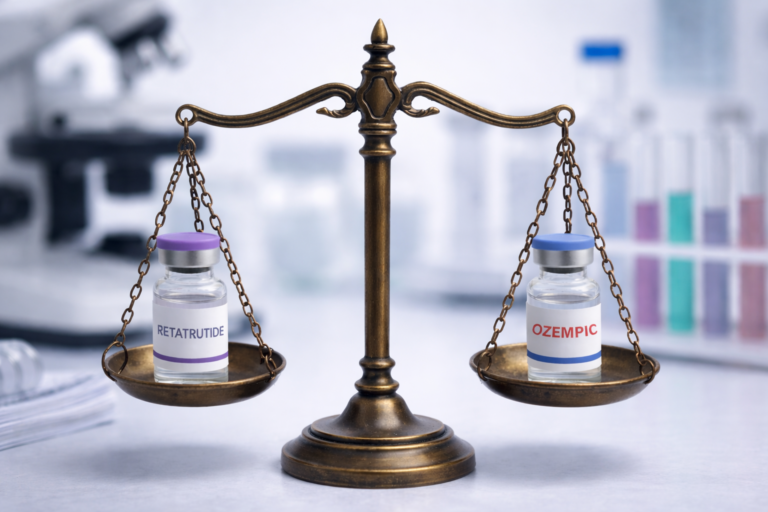
Separate trials do not establish that retatrutide is better than Ozempic. Retatrutide research is promising, but the comparison must distinguish the medicine, dose, population and outcome.
Ozempic remains a licensed medicine for type 2 diabetes in the UK; it is not an obsolete treatment or the UK weight-management brand of semaglutide. See the UK product information.

How Do Retatrutide and Ozempic Work?
Although both medicines affect appetite and metabolic regulation, they work in different ways.
Ozempic: GLP-1 Agonist
Ozempic (semaglutide) works by activating GLP-1 receptors, which helps:
-
Reduce appetite and food cravings
-
Slow gastric emptying
-
Improve blood sugar control
-
Support gradual weight reduction in many patients
It belongs to the same medicine class as Wegovy, although the licensed indications differ.
What is different about retatrutide?
Retatrutide acts on GIP, GLP-1 and glucagon receptors. Ozempic acts on GLP-1 receptors. This difference is scientifically interesting, but it does not by itself show that a medicine is more effective, safer or appropriate for a particular person.
How should the weight-loss results be compared?
Lilly’s TRIUMPH-1 phase 3 report describes substantial weight reduction compared with placebo. Its treatment-regimen analysis reported a 25.0% average reduction at 80 weeks in the 12 mg group, compared with 3.9% with placebo. Those are trial-group findings, not prescribing instructions or a personal forecast.
The comparator was placebo, not Ozempic. The findings therefore do not establish superiority over Ozempic. Likewise, results from a semaglutide obesity study cannot automatically be labelled an Ozempic result: brand, dose and patient population matter.
Four checks before comparing two headlines
- Were the treatments compared directly in the same randomised trial?
- Were participants living with diabetes, obesity or another condition?
- Were the dose, follow-up period and outcome definitions comparable?
- How did the analysis account for treatment discontinuation?
A useful comparison also includes adverse effects, reasons for stopping and outcomes that matter to patients, rather than selecting only the largest percentage.
Safety and tolerability need their own assessment
Gastrointestinal adverse effects were common in TRIUMPH-1, and some participants stopped treatment because of adverse events. A promising average benefit is not proof that everyone will tolerate treatment. The licensed Ozempic safety information and investigational retatrutide findings should be read in their own clinical contexts.

What does this mean for access?
Research publication does not authorise an online product claiming to contain retatrutide. The developer describes retatrutide as investigational. Puri Pharmacy does not prescribe or supply the experimental research peptides discussed in these articles.
UK rules also distinguish licensed medicines from specific lawful unlicensed-medicine pathways. A blanket claim that every unlicensed medicine is illegal is inaccurate; equally, those pathways are not a general permission to sell research products for self-treatment. Read the MHRA guidance and our UK peptide regulation guide.
Read the main retatrutide evidence and UK status guide for the wider research context. Do not change prescribed treatment because of a research headline.
Follow Rahul’s peptide analysis
Subscribe to Puri Pharmacy’s health updates, including Rahul Puri’s explanations of peptide evidence, safety and UK regulation. This is an educational newsletter, not access to peptide treatment.
By subscribing, you agree to receive Puri Pharmacy’s health emails. Read our privacy policy.