Osteoporosis Symptoms and Risk Factors: Could You Have Osteoporosis Without Knowing?

Get our latest weight-loss and health guides straight to your inbox.
Osteoporosis can be difficult to recognise because it often develops without obvious symptoms.
You may feel completely well while your bones gradually become weaker. For some people, the first indication that something is wrong is breaking a bone after a relatively minor fall or injury.
This is why understanding the risk factors for osteoporosis can be just as important as looking for symptoms.
At a glance
- Osteoporosis can develop without obvious symptoms.
- A fracture after a minor fall warrants a clinical discussion.
- A screening result does not replace clinically indicated DXA.
The NHS osteoporosis guide explains symptoms and causes. NOGG guidance describes formal fracture-risk assessment and the role of DXA.
So what should you actually look out for, and when might it be worth investigating your bone health?
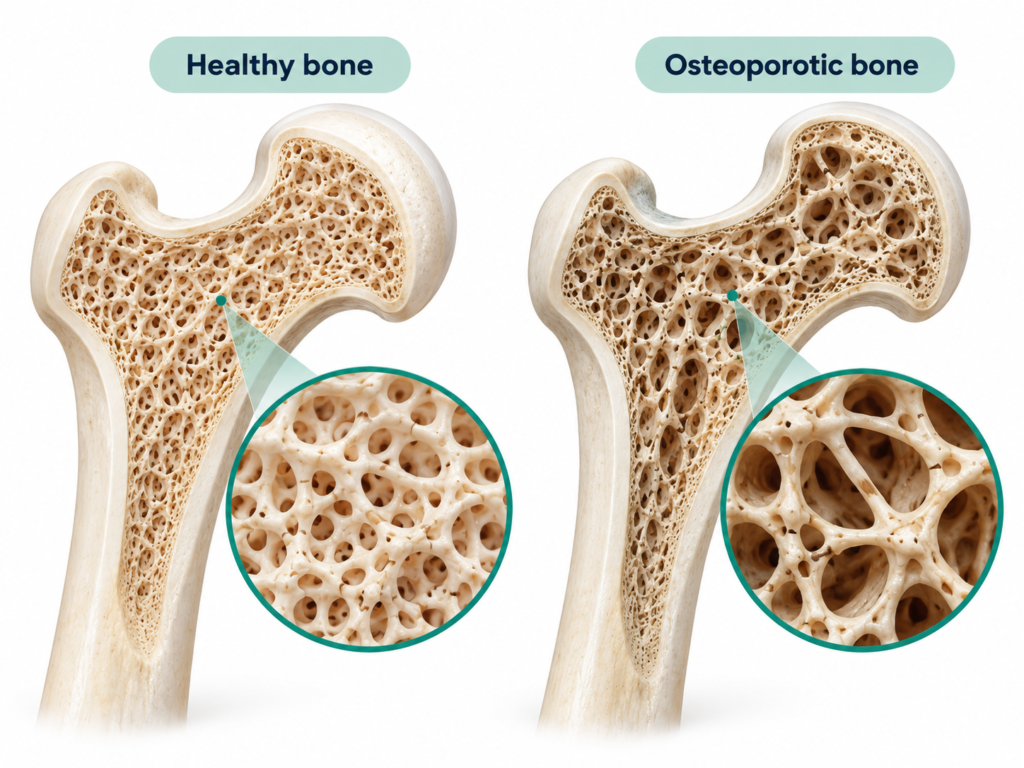
What is osteoporosis?
Osteoporosis is a condition in which bones lose strength and become more likely to break.
Your bones are living tissue. Throughout life, the body continuously breaks down old bone and replaces it with new bone.
Bone strength generally peaks in early adulthood. As we get older, we gradually begin to lose bone.
For some people, bone loss happens more quickly than expected. Over time, this can lead to osteoporosis and an increased risk of fracture.
Osteoporosis can affect both women and men, although the risk increases with age and is particularly important for women after menopause.
What are the early symptoms of osteoporosis?
This is where osteoporosis differs from many other health conditions.
There may be no early symptoms at all.
You cannot normally feel your bone density decreasing.
Osteoporosis itself does not usually cause pain until a bone is fractured.
This is why it is sometimes called a silent condition.
For many people, the first sign is not bone pain or weakness; it is a fracture.
What is a fragility fracture?
A fragility fracture is a broken bone that occurs following an injury that would not normally be expected to break healthy bone.
A typical example would be breaking a bone after falling from standing height.
Common areas affected by osteoporosis include:
Wrist
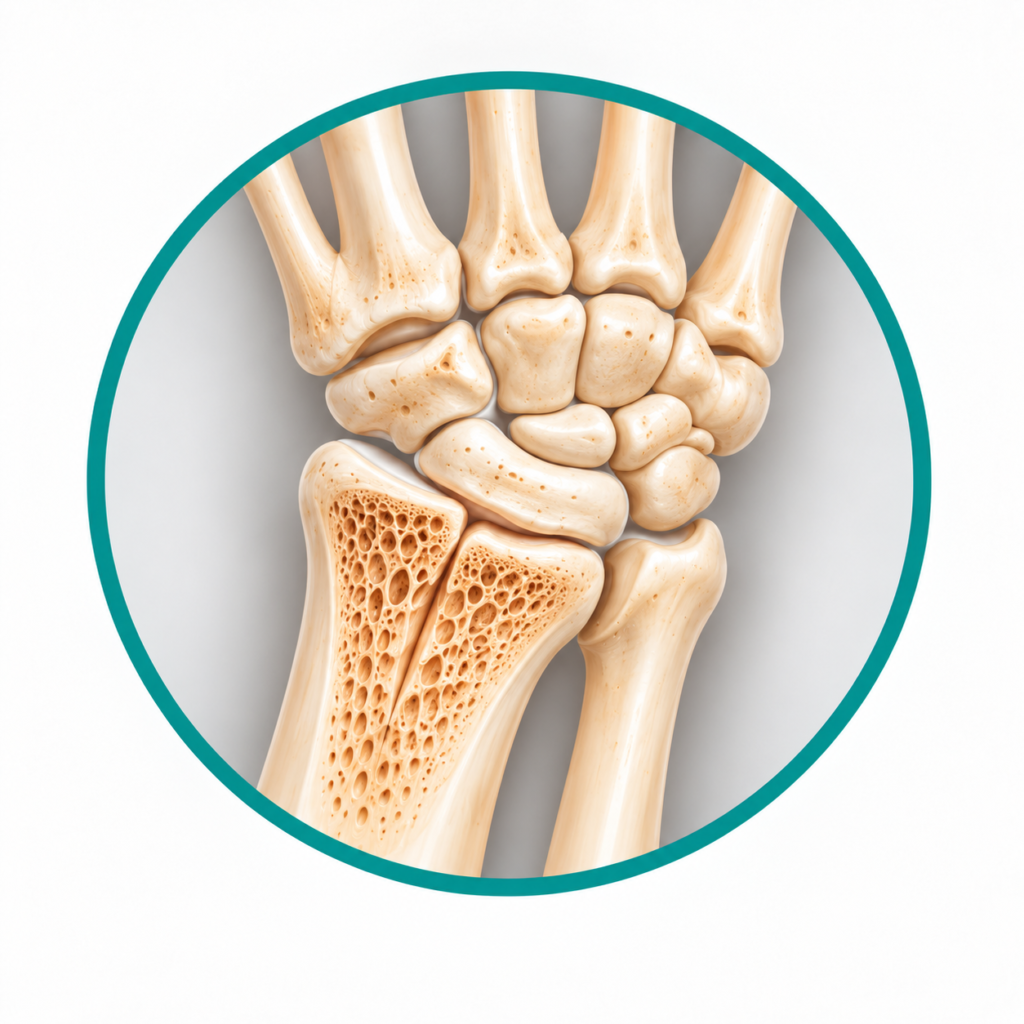
Often after putting your hand out during a fall.
Hip
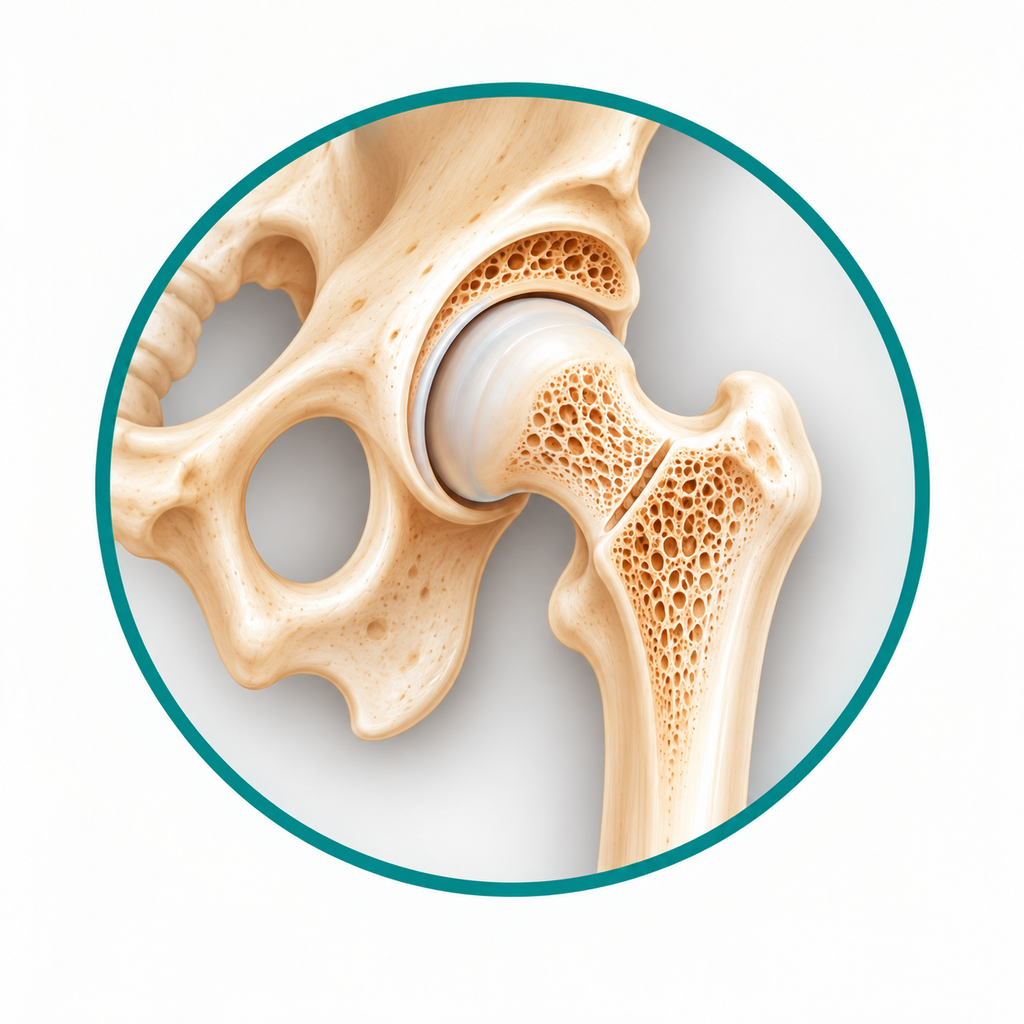
particularly in older adults.
Spine
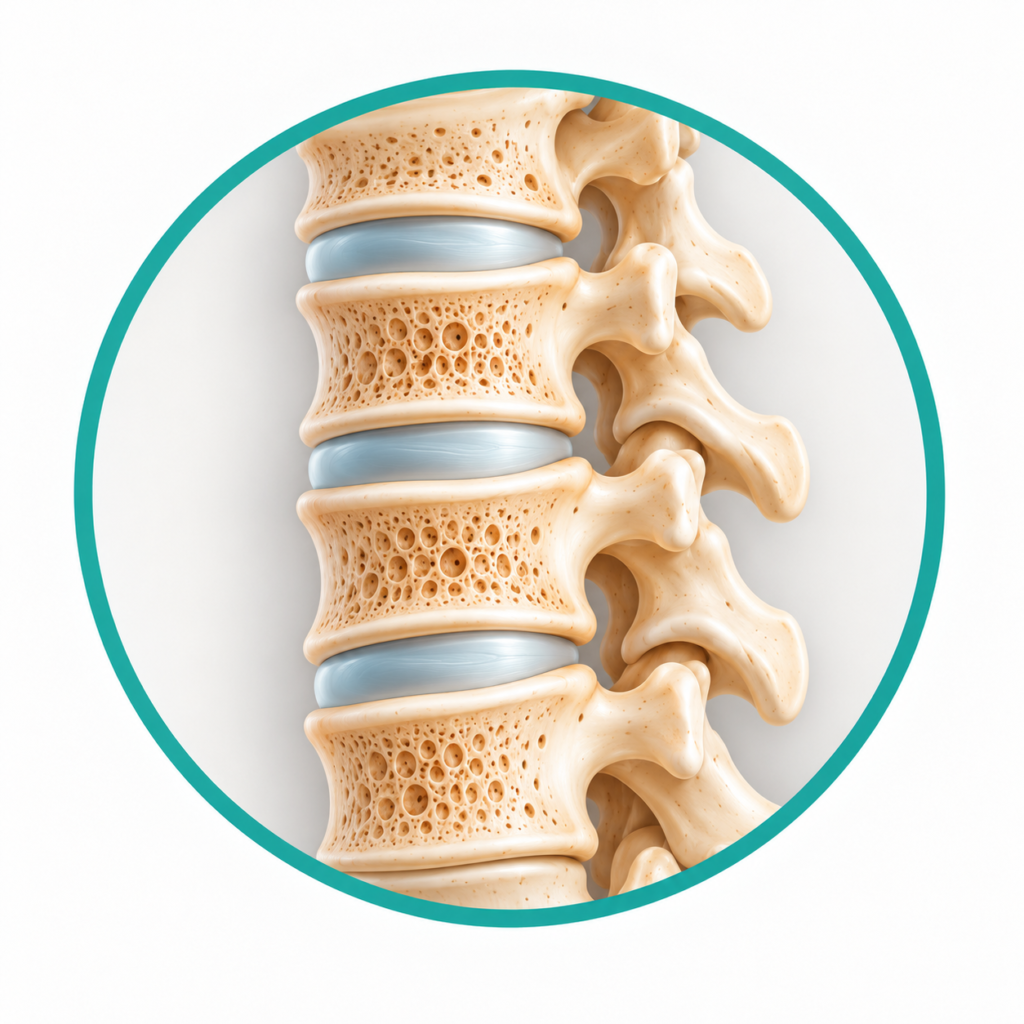
where one or more vertebrae can become compressed or fractured.
Fractures can also occur in other bones.
If you have broken a bone following relatively minor trauma, particularly as you get older, it is worth discussing whether your underlying bone health should be assessed.
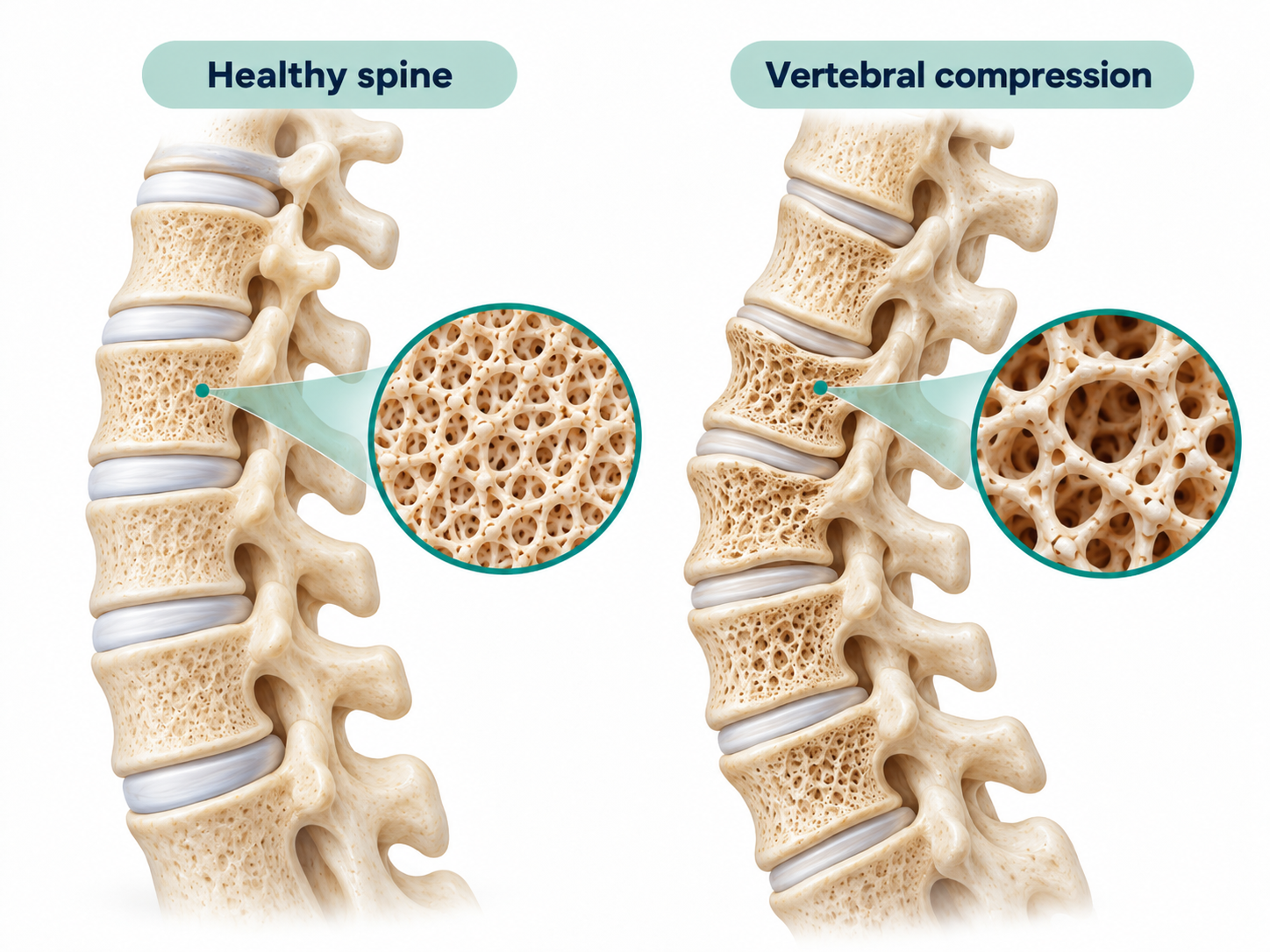
What are the symptoms of osteoporosis in the spine?
Spinal or vertebral fractures deserve particular attention because they are not always obvious.
Unlike breaking your wrist or hip, a vertebral fracture may involve one of the bones of the spine being partially compressed.
Possible signs can include:
Unexplained back pain
New or persistent back pain can have many causes, and osteoporosis is certainly not the only explanation.
However, unexplained back pain in someone with osteoporosis risk factors can sometimes warrant further investigation.
Loss of height
Multiple spinal fractures can gradually reduce the height of the spine.
You may notice that you appear shorter than previously or that clothing fits differently.
A more curved or stooped posture
Compression of the spinal vertebrae can cause an increasing forward curvature of the upper back.
This is sometimes associated with osteoporosis-related vertebral fractures.
Sudden back pain
A vertebral fracture can occasionally cause sudden significant back pain following relatively modest movement or strain.
Seek medical assessment for new severe pain.
Does osteoporosis hurt?
Osteoporosis itself is not usually painful.
Pain more commonly comes from a fracture caused by weakened bone.
Spinal fractures can sometimes result in persistent back pain, altered posture or muscular discomfort.
This means the absence of pain does not necessarily mean that your bones are healthy.
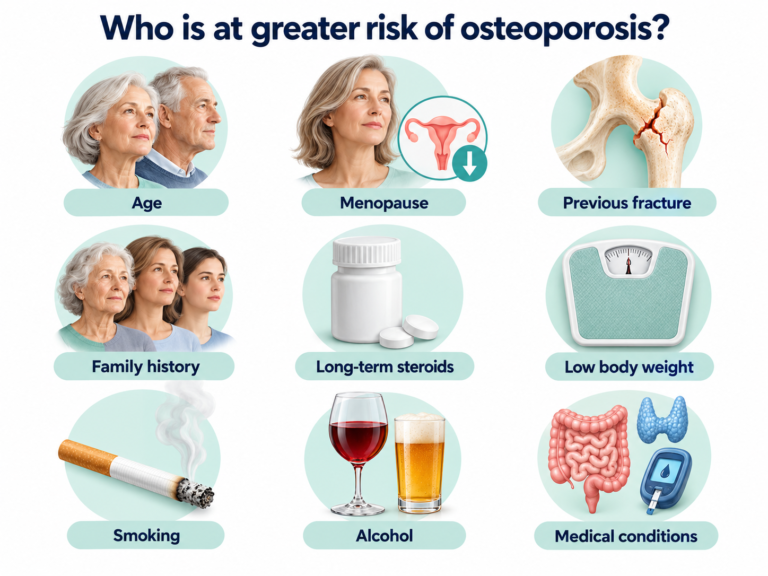
Who is most at risk of osteoporosis?
There is rarely one single cause.
A combination of age, genetics, hormones, medicines, medical conditions, and lifestyle influences fracture risk.
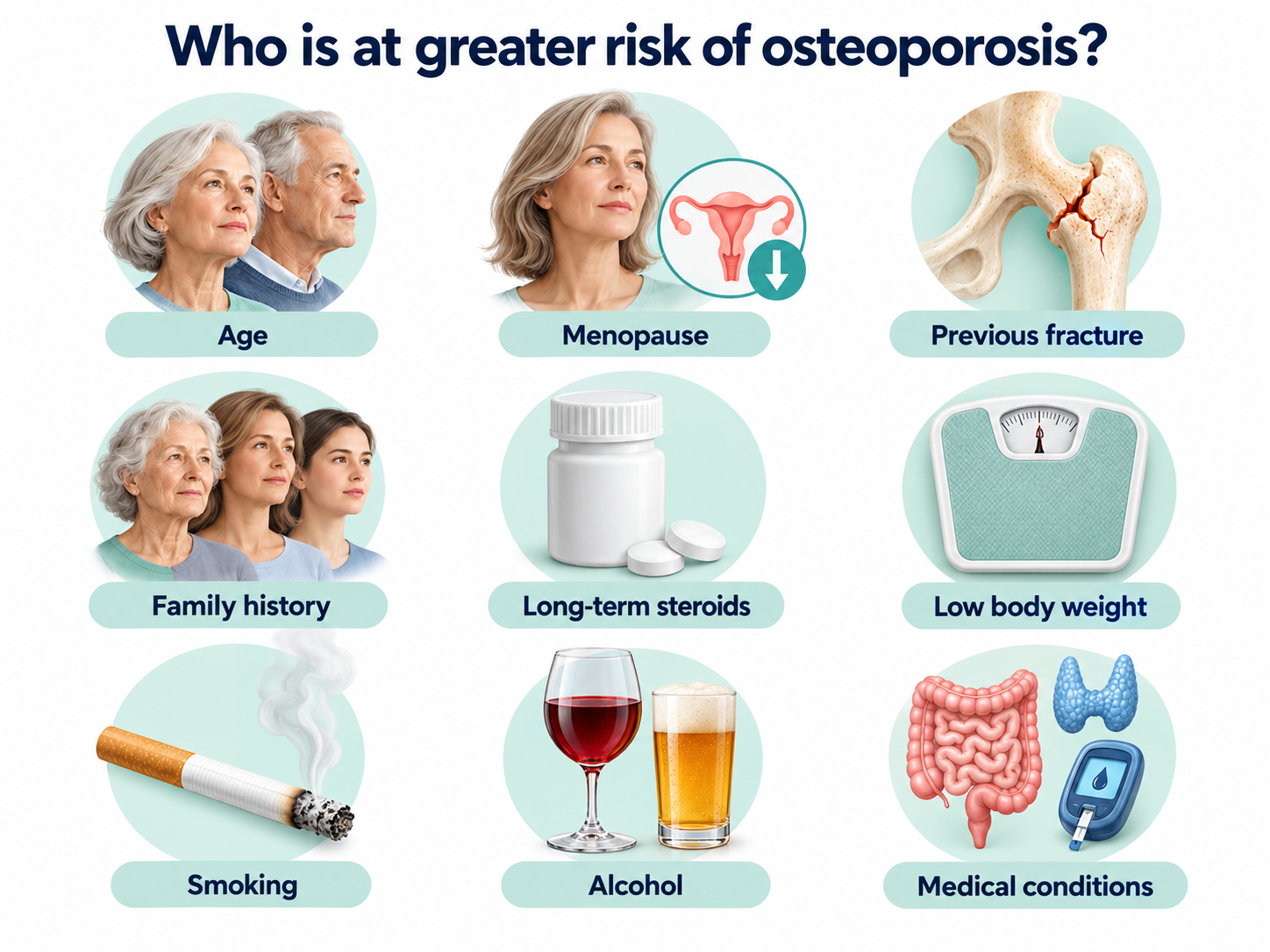
Increasing age
Bone strength naturally decreases as we get older.
Age therefore becomes one of the strongest predictors of osteoporosis and fracture.
Ask about fracture-risk assessment if your age or clinical history raises concerns. NOGG guidance recommends assessment in postmenopausal women and men aged 50 or over with a clinical risk factor; this is not an automatic scan recommendation.
Menopause and osteoporosis
Menopause is one of the most important factors affecting bone health in women.
Oestrogen helps maintain healthy bones.
During and after menopause, oestrogen levels fall, and bone loss can accelerate.
The risk can be particularly relevant in women who experience early menopause before the age of 45.
Menopause alone does not mean you have osteoporosis, but it becomes increasingly important when combined with other risk factors.
Read next: Menopause and bone health
Can men develop osteoporosis?
Yes.
Osteoporosis is often perceived as a women’s health condition, but men can also develop it.
Age remains an important risk factor.
Lower testosterone levels can also contribute to reduced bone density in some men, because sex hormones play an important role in maintaining normal bone strength.
Other risk factors such as long-term steroid treatment, smoking, excessive alcohol intake, low body weight and certain medical conditions apply to men as well as women.
Does family history matter?
Yes.
Your genetics contribute significantly to your bone strength.
A particularly relevant risk factor is having a parent who experienced a hip fracture.
Family history does not guarantee that you will develop osteoporosis, but it should form part of an overall fracture-risk assessment.
Previous fractures
Having already experienced a fragility fracture can be an important warning sign.
A fracture after relatively minor trauma may indicate that your bones were weaker than expected.
A previous fragility fracture is therefore one risk factor clinicians consider when assessing future fracture risk.
If this has happened to you, it is more appropriate to discuss formal osteoporosis assessment with your GP or another appropriate healthcare professional rather than relying solely on a private bone-health check.
Steroid medicines and osteoporosis
Long-term treatment with systemic corticosteroids such as prednisolone can increase osteoporosis risk.
These medicines treat many inflammatory and autoimmune conditions, including some forms of asthma and arthritis.
However, prolonged systemic corticosteroid exposure can disrupt the normal processes that maintain bone.
The NHS identifies taking oral glucocorticoids for three months or longer as an important osteoporosis risk factor.
Do not stop steroid medication because you are worried about your bones.
Instead, ask the clinician managing your treatment whether they should assess your fracture risk.
Read next: Long-term steroids and bone health
Low body weight
Being significantly underweight is associated with increased osteoporosis and fracture risk.
NICE includes a low BMI among the factors that can prompt formal fracture-risk assessment.
Body weight is only one part of the picture, but it becomes particularly relevant alongside other factors such as menopause, previous fractures or family history.
Smoking
Smoking is associated with poorer bone health and increased fracture risk.
It can also interact with other factors that become more important with age.
Stopping smoking therefore benefits bone health as well as cardiovascular, respiratory and cancer risk.
Alcohol and bone health
Regularly drinking larger amounts of alcohol can increase fracture risk.
Alcohol may affect bone health directly, and higher intake can also increase the likelihood of falls.
If you drink alcohol, remaining within recommended UK limits forms part of protecting your long-term bone health.
Medical conditions that can affect bone health
Several medical conditions can increase the likelihood of secondary osteoporosis.
Examples include certain:
Inflammatory conditions, including rheumatoid arthritis.
Digestive and malabsorption conditions, such as coeliac disease and inflammatory bowel disease.
Hormonal conditions, including overactive thyroid or parathyroid disorders and conditions associated with reduced sex hormones.
Chronic kidney or liver disease.
Conditions resulting in prolonged immobility.
Having one of these conditions does not automatically mean you have osteoporosis.
It means your wider clinical history may need to be considered when assessing fracture risk.
Other medicines can affect bones too
Corticosteroids are the best-known example, but they are not the only medication that may affect bone health.
Some treatments that significantly reduce oestrogen or testosterone levels can increase osteoporosis risk.
This includes certain treatments used for breast and prostate cancer.
Never stop prescribed medication because of information you have read online. Speak to your GP, pharmacist or specialist if you are concerned.
How do healthcare professionals assess osteoporosis risk?
Osteoporosis assessment is not based simply on whether you have symptoms.
Clinicians look at your overall fracture risk.
Two commonly used UK tools are:
FRAX
and
QFracture
These consider factors such as age, sex, weight, previous fractures, smoking, alcohol, steroid treatment and medical history to estimate the risk of experiencing an osteoporotic fracture.
Depending on the result, a DXA bone-density scan may then be recommended.
A DXA scan uses very low-dose X-rays to measure bone mineral density, generally at the hip and spine.
Read next: Bindex versus DXA
Is osteopenia the same as osteoporosis?
No.
Osteopenia describes bone mineral density below the expected range but not yet at the conventional DXA threshold for osteoporosis.
It does not necessarily progress to osteoporosis.
Your overall fracture risk remains important.
Someone with osteopenia and multiple clinical risk factors can sometimes have a more significant fracture risk than the term “osteopenia” alone might suggest.
Ask your clinician how low bone density relates to your overall fracture risk.
Can you check your bone health before symptoms appear?
Yes.
The appropriate assessment depends on your age, medical history and risk factors.
If you have experienced a fragility fracture, significant unexplained back symptoms, long-term systemic steroid treatment or another major osteoporosis risk factor, speak to your GP or appropriate healthcare professional.
For people who are generally well but want to understand their bone health more proactively, a private bone-health assessment can provide additional information.
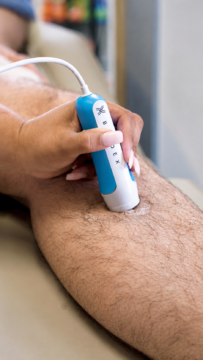
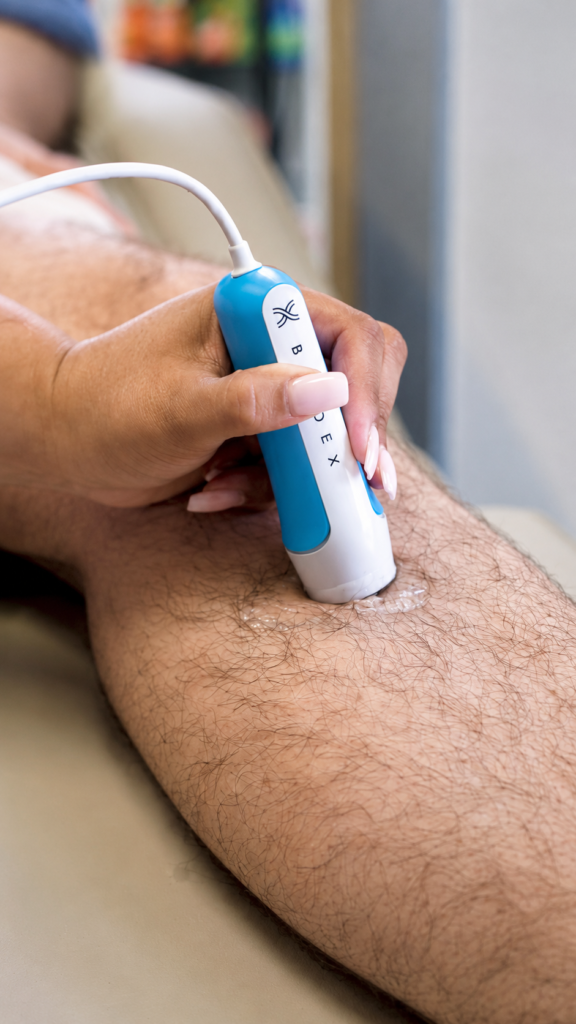
At Puri Pharmacy, our Bone Health & Osteoporosis Risk Assessment uses Bindex® ultrasound to help assess your probability of osteoporosis.
The test measures cortical bone thickness at the tibia and generates a Density Index.
It does not replace a DXA scan or a formal osteoporosis diagnosis when clinically indicated.
The purpose is to help you understand your bone health and decide whether further investigation may be appropriate.
What happens if increased osteoporosis risk is identified?
The important part of bone-health assessment is what happens next.
Depending on your circumstances, next steps might include:
- discussing your fracture risk with your GP;
- formal FRAX or QFracture assessment;
- DXA scanning;
- blood tests to investigate possible secondary causes;
- reviewing medication;
- improving calcium and vitamin D intake;
- appropriate weight-bearing and resistance exercise;
- or osteoporosis treatment where clinically indicated.
- A screening or risk-assessment result should therefore never be considered in isolation.
Frequently Asked Questions
What are the first signs of osteoporosis?
Osteoporosis often has no early symptoms. For some people, the first indication is a fragility fracture following a relatively minor fall or injury. Spinal fractures can sometimes cause unexplained back pain, loss of height or increasing curvature of the upper back.
Can you have osteoporosis and feel completely healthy?
Yes.
Bone density can decrease without causing pain or other obvious symptoms. That is why age and recognised risk factors matter when deciding whether further assessment is appropriate.
Does osteoporosis cause pain?
Not usually by itself.
Pain is generally associated with fractures caused by weakened bones. Vertebral fractures can cause persistent back pain in some people.
Can men get osteoporosis?
Yes.
Although osteoporosis is more common in women, particularly after menopause, it also affects men. Increasing age, low testosterone, steroid treatment, medical conditions and lifestyle factors can all increase risk.
What age should you check for osteoporosis?
No single screening age applies to everyone.
Ask about fracture-risk assessment if your age or clinical history raises concerns. NOGG guidance recommends assessment in postmenopausal women and men aged 50 or over with a clinical risk factor; this is not an automatic scan recommendation.
People under 50 are not generally routinely assessed unless significant risk factors are present.
Is osteoporosis the same as osteopenia?
No.
Osteopenia describes lower-than-normal bone mineral density that has not reached the threshold usually associated with osteoporosis on DXA scanning.
Can osteoporosis be treated?
Yes.
Depending on fracture risk, treatment can include bone-strengthening medicines alongside appropriate exercise, calcium and vitamin D intake, smoking cessation, alcohol moderation and measures to reduce falls.
Make treatment decisions with an appropriate healthcare professional.
Thinking About Your Bone Health?
You do not need to wait until your bones hurt before thinking about bone health.
If you have significant clinical risk factors or have already experienced a fragility fracture, speak to your GP or another appropriate healthcare professional about formal osteoporosis assessment.
If you want to understand your bone health proactively, Puri Pharmacy offers a £89 Bone Health & Osteoporosis Risk Assessment using Bindex® ultrasound at our Hillingdon and Southall pharmacies.
Your appointment includes a review of relevant risk factors, the Bindex measurement, your result and a discussion about appropriate next steps.