Long-Term Steroids and Bone Health: Do You Need a Review?


Get our latest weight-loss and health guides straight to your inbox.
Long-term steroid tablets can increase the risk of osteoporosis and fractures. If you take them regularly, ask your prescribing clinician about your bone-health plan rather than waiting for symptoms or booking a screening test on its own. The medicine, dose, duration and your other risk factors all matter. See NHS guidance on steroids.
Do not stop or reduce prescribed steroids yourself. Some treatments need to be reduced gradually, and stopping suddenly can make you unwell. Keep taking your medication as prescribed, and discuss concerns with your doctor. NHS guidance on steroids.
PURI PHARMACY · BONE HEALTH
Taking steroids? Check the right next step
Start with your prescribing clinician’s advice. If you are considering a local bone-health assessment, ask our team whether it suits your circumstances.
£89 · Around 20 minutes
Risk-factor review, Bindex ultrasound screening, your result explained and advice on next steps.
Suitability is assessed individually. Steroid-related risk needs review with your prescribing clinician. Bindex does not replace a clinically required DXA scan.

Which steroid medicines matter for bone health?
This guide concerns prescribed corticosteroids used for conditions such as inflammatory disease and asthma. These differ from anabolic steroids. Tablets and other treatments that act throughout the body need particular attention; an inhaler or cream should not automatically be treated as equivalent to a long course of tablets. NHS guidance on steroids.
Steroids can affect the balance between bone formation and breakdown. Risk varies with exposure, and repeated courses of tablets are worth mentioning even if each course was short. For inhalers, the underlying condition and any additional tablet courses complicate the picture. Royal Osteoporosis Society.
When should you ask for a review?
Ask when long-term oral treatment is being planned, or at your next prescribing review if treatment is already underway. Do not wait until you have taken tablets for several months to ask. NHS Specialist Pharmacy Service monitoring guidance recommends considering fracture-risk assessment for people taking oral corticosteroids and identifies situations requiring baseline bone mineral density measurement.
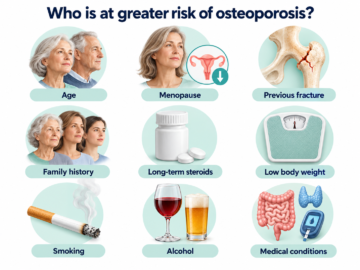
Previous fractures after a minor fall, older age, menopause, low body weight and family history can change the assessment. Your clinician considers these alongside your treatment. In people at sufficiently high risk, bone-protective treatment may be needed without waiting for a scan. UK NOGG guidance.
A practical checklist for your appointment
| Bring or explain | What to ask |
|---|---|
| Medicine name, form and current dose | Does this treatment need a bone-health monitoring plan? |
| Start date, expected duration and previous courses | How does my overall exposure affect the assessment? |
| Previous fractures and how they happened | Do I need a fracture-risk review, DXA or specialist advice? |
| Existing scan results and bone medicines | When should my current plan be reviewed? |
| Other medicines and supplements | Are my calcium and vitamin D intake appropriate? |
For example, if you use an inhaler daily and have also needed several tablet courses, take both details to the review. Listing only your regular inhaler leaves out information the clinician may need.
Do you need DXA, Bindex screening or neither?
These are different questions. A fracture-risk assessment considers your clinical history. A DXA scan measures bone mineral density and may support diagnosis and monitoring. The right plan may include DXA, treatment, or further clinical assessment, depending on your risk. UK NOGG guidance.
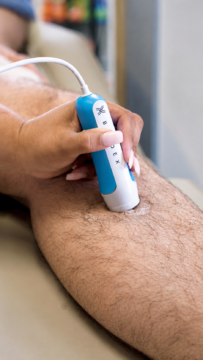
Puri Pharmacy’s bone-health assessment includes risk-factor review and Bindex ultrasound screening. Bindex produces a Density Index; it is not the same measurement as a DXA bone mineral density result and is not a stand-alone osteoporosis diagnosis.
Do not use a reassuring screening result to cancel a DXA referral, stop bone-protective treatment or delay a steroid-related review. If your prescriber has already recommended investigation or treatment, follow that plan. Tell our team about it before arranging additional screening.
What can you do alongside a clinical plan?
Discuss calcium and vitamin D intake, physical activity suited to your condition, and ways to reduce falls. Smoking and alcohol intake are also worth reviewing. These measures support bone health but do not replace treatment when it is indicated. Royal Osteoporosis Society.
You do not need to decide which supplement or bone medicine to take from an article. Ask your clinician or pharmacist what fits your diet, health conditions and current prescriptions. To understand the tests, read Bindex versus DXA. If you are considering an appointment, use our bone-health assessment preparation guide.

Frequently asked questions
Does everyone taking steroids need a bone scan?
No. The form, dose, duration and your overall fracture risk matter. Some people need DXA; others may need a different clinical plan. A pharmacy screening appointment is not automatically the right starting point. UK NOGG guidance.
Is a steroid inhaler the same risk as steroid tablets?
No. Tell your clinician about your inhaler dose and any tablet courses as well. Do not stop an inhaler because of concerns raised by this article. Royal Osteoporosis Society.
Can one short course cause osteoporosis?
One short course does not automatically mean you have osteoporosis. Mention repeated courses and past long-term treatment during a review so your clinician can assess the full picture. Royal Osteoporosis Society.
Are calcium and vitamin D enough?
Not necessarily. Your clinician may advise supplements, but people at higher fracture risk can need specific bone-protective treatment. Supplements should not replace a prescribed treatment plan. UK NOGG guidance.
PURI PHARMACY · BONE HEALTH
Make your next bone-health conversation useful
Bring your medicine list and any existing bone-health plan. If you are considering our assessment in Hillingdon or Southall, tell the team about steroid treatment and previous fractures before booking.
£89 · Around 20 minutes
Risk-factor review, Bindex ultrasound screening, your result explained and advice on next steps.
Suitability is assessed individually. Steroid-related risk needs review with your prescribing clinician. Bindex does not replace a clinically required DXA scan.