How to Prepare for a Bone Health Assessment

Get our latest weight-loss and health guides straight to your inbox.
To prepare for a Bindex bone-health assessment, bring an up-to-date list of your medications, details of any previous fractures, and any relevant scan reports. Choose clothing that lets you uncover your lower leg, and write down the questions you want answered.
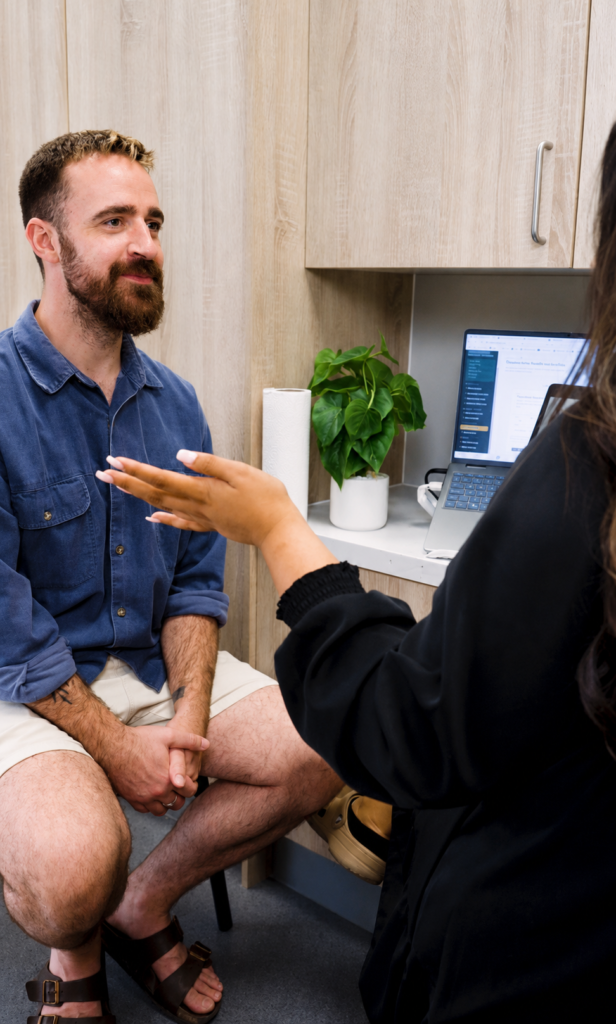
The discussion matters as much as the measurement. Your age, medical history and reasons for attending help the healthcare professional decide how to interpret the result and what to do next.
This guide is for people considering an in-person bone-health assessment at Puri Pharmacy in Hillingdon or Southall. If your appointment is for a hospital DXA scan, follow the instructions from that scanning department.
First, check which assessment you have booked
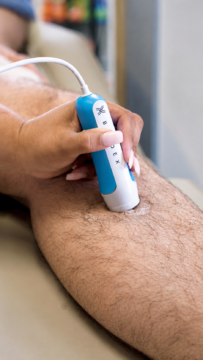
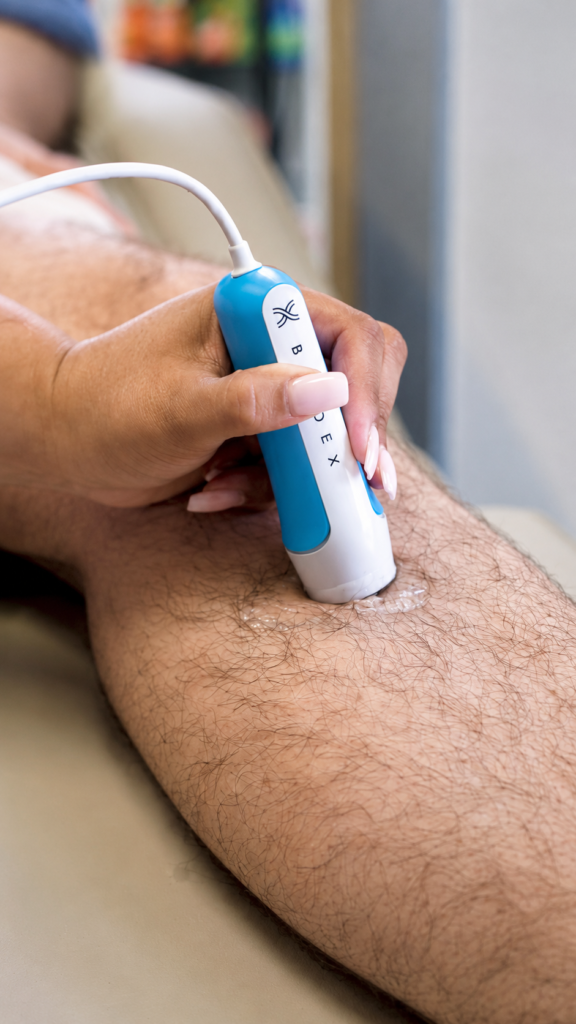
Bindex uses ultrasound at the shinbone to help assess osteoporosis probability. It is a screening assessment, rather than the same measurement as a DXA scan. DXA uses low-dose X-rays to measure bone mineral density, usually at the hip and spine. Our Bindex versus DXA guide explains the difference.
If your doctor has already referred you for DXA, keep that referral. Do not arrange a pharmacy screening assessment as a replacement for a clinically required scan or treatment-monitoring appointment.
What to bring: your appointment checklist
- Your medicines list: include prescribed medicines, over-the-counter products and supplements, with doses if you know them. A current repeat-prescription list or clear photographs of the packaging can help.
- Previous fracture details: note which bone broke, roughly when it happened and how the injury occurred. For example, a wrist fracture after a fall from standing height is important information.
- Existing reports: bring any DXA results, relevant letters or information about previous osteoporosis assessment or treatment. You do not need to repeat investigations simply because you are attending somewhere new.
- Relevant family history: mention osteoporosis and particularly a hip fracture in a parent, if known.
- Your questions: explain what prompted you to attend and what you hope to understand. If you do not know a date or medical detail, say so rather than guessing.
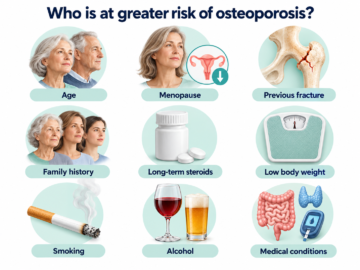
The NHS osteoporosis guide identifies menopause, low body weight, family history and certain medicines among the factors associated with increased risk. These details help the clinician understand your circumstances; a risk factor alone does not establish a diagnosis.
Information that may be especially useful for you
| Your reason for attending | What to tell the healthcare professional |
|---|---|
| Menopause | When your periods stopped, whether menopause occurred early, and any hormone treatment. |
| Family history or older age | Known family fractures, previous assessments and any recent falls. |
| Long-term medicines | Which medicines you take and for how long, especially oral steroids or hormone-related treatments. |
| Previous fracture | The site, date and circumstances, and whether a fracture clinic or GP assessed your bone health. |
| Low body weight or recent weight loss | Your weight history, appetite, dietary restrictions and any difficulty eating enough. |
| GLP-1 treatment | The medicine, changes in weight and appetite, and any concerns about food intake. Use alone does not establish that you need Bindex screening. |
| Sport or endurance training | Training load, rest, fuelling, menstrual changes where relevant and any stress fractures. |
For athletes, being active alone is not a reason to assume weak bones. Inadequate energy intake relative to training can affect bone health. Recurrent stress fractures or missed periods need a clinical discussion, rather than reassurance from a screening result alone. This is explained in a British Journal of General Practice review of relative energy deficiency in sport.
What should you wear?
Choose comfortable clothes that can be moved clear of the lower leg, such as loose trousers. Bindex requires access to the skin at the tibial measurement site. If clothing, mobility or assistance needs could make this difficult, speak with the team before attending.
Hospital DXA instructions about metal fastenings relate to X-ray imaging. Do not confuse this with preparation for an ultrasound assessment at your shin.
Should you fast or stop any medicines?
Check your appointment confirmation for instructions and ask the team if anything is unclear. If another test is booked at the same visit, it may have different preparation requirements.
Do not stop prescribed medicines or change supplements on your own to prepare for screening. For DXA appointments, the Royal Osteoporosis Society advises bringing a medicines list and says patients can normally eat and drink as usual. Follow any specific instructions from your own scanning department.
What happens at Puri Pharmacy?
Our Bone Health & Osteoporosis Risk Assessment includes a discussion of relevant risk factors, a Bindex ultrasound measurement and an explanation of the result and next steps. The appointment is around 20 minutes and currently costs £89. It is available in Hillingdon and Southall.
For more about the measurement itself, read our Bindex assessment guide.
Before you leave, ask: What does this result mean alongside my history? Do I need to discuss it with my GP? Is further investigation appropriate? What information should I share with the clinician already looking after me?
When should you speak to your GP first?
A fracture after a minor injury, unexplained back pain, height loss or a change in posture may need medical assessment. The Royal Osteoporosis Society lists these among reasons a clinician may consider a bone-density scan. Do not delay that discussion while waiting for routine screening.
A Bindex assessment does not identify an acute fracture, guarantee that you will not break a bone or replace your existing osteoporosis care plan.
Frequently asked questions
Do I need to know every detail of my medical history?
No. Bring what you have and be clear about anything you are unsure of. Your medicines list, previous fracture details and existing reports are useful starting points.
Should I buy calcium or vitamin D before attending?
You don’t need to buy supplements just because you have booked an assessment. Bring details of products you already use and discuss your diet and any advice you have previously received.
Does taking a GLP-1 medicine mean I need a scan?
Not automatically. Tell the healthcare professional about your treatment, weight change and food intake. The appropriate assessment depends on your wider history and clinical circumstances.
Can an athlete use this assessment to rule out a stress fracture?
No. Pain or a suspected stress fracture needs appropriate clinical assessment. Bindex screening does not diagnose the injury or establish that continuing training is safe.
Planning your appointment in Hillingdon or Southall
Check the branch and appointment details before travelling. You can view our bone-health assessment and enquire about suitability. Tell the team about existing referrals or investigations so the appointment answers the right question for you.