

Get our latest weight-loss and health guides straight to your inbox.
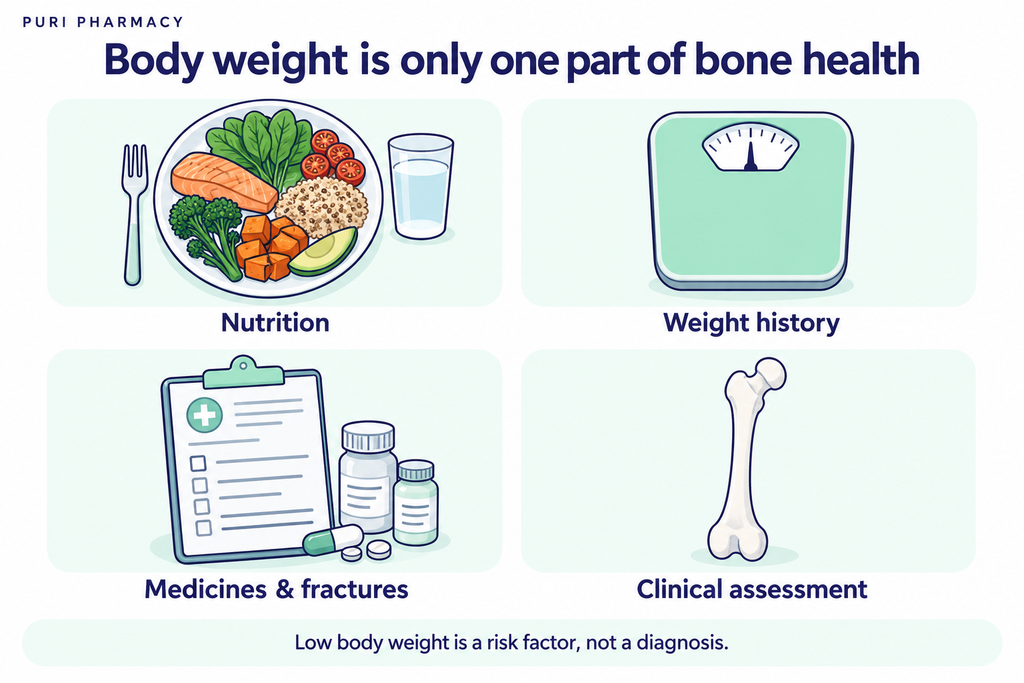
Low body weight can increase your risk of osteoporosis and fractures, but it does not tell you whether you have either condition. The useful next step is to consider your weight history alongside age, nutrition, hormones, medicines and previous fractures. A bone-health review may help decide whether you need advice, screening or a DXA scan. NHS osteoporosis guidance.
At a glance
- Low body weight is one risk factor, not a diagnosis.
- Unexplained weight loss needs GP assessment first.
- Your history determines whether screening or DXA is appropriate.
If you are losing weight without trying, speak to your GP. A routine bone-screening appointment cannot explain why your weight is falling and should not delay investigation. NHS advice on unintentional weight loss.
Low weight and worried about your bones?
Explore what our bone-health assessment includes and ask whether it fits your circumstances. Your GP should assess unexplained weight loss first.
Suitability is assessed individually. Bindex screening does not replace a clinically required DXA scan or investigation of weight loss.
What counts as low body weight?
For adults, a BMI below 18.5 is commonly described as underweight. The Royal Osteoporosis Society risk checker identifies this as a factor associated with osteoporosis and broken bones. BMI compares weight with height; it does not measure bone density.
Being naturally slim does not automatically mean you have weak bones. Equally, being above this BMI threshold does not rule out a bone-health problem. Your weight over time and other risks matter more than using a single number as a diagnosis.
Why can low weight matter for bones?
Low weight may occur alongside inadequate nutrition or health conditions affecting the body’s ability to maintain bone. In anorexia, reduced nutrition and changes in hormone levels can affect bone strength. That evidence should not be applied to every slim person as though they have an eating disorder. Royal Osteoporosis Society guidance on anorexia and bone health.
For example, someone whose weight has been stable for years needs a different conversation from someone whose clothes are becoming looser without an intentional change in diet or activity. The latter needs assessment of the weight loss itself. NHS advice on unintentional weight loss.
When is a review particularly useful?
Mention low weight when discussing bone health, especially if you also have menopause-related concerns, a parent who broke a hip, long-term steroid treatment or a fracture following a minor fall. These are recognised risk factors, and their combination helps a clinician choose the next step. NHS osteoporosis guidance.
If food restriction is difficult to manage, or an eating disorder is suspected, seek support through your GP or treating team. Bone care belongs within that wider plan. A screening result cannot replace treatment of the underlying problem. Royal Osteoporosis Society guidance on anorexia and bone health.
What to bring to a bone-health conversation
| Information | Why it helps |
|---|---|
| Current height and weight, plus previous measurements | Shows whether low weight is stable or changing. |
| Changes in appetite, eating or activity | Helps explain the context rather than judging weight alone. |
| Medicine list and relevant medical conditions | Identifies other factors affecting bone health. |
| Previous fractures and how they happened | Helps identify whether formal clinical assessment is needed. |
| Existing DXA reports or referrals | Helps avoid paying for a test that duplicates or cannot replace planned care. |
Does low weight mean you need a scan?
Not automatically. Your GP or another appropriate clinician may assess fracture risk and decide whether you need a DXA scan. DXA measures bone mineral density; the test should match the clinical question. NHS osteoporosis guidance.
Puri Pharmacy’s bone-health assessment combines risk-factor review with Bindex ultrasound screening and an explanation of the result. Bindex produces a Density Index; it is not a stand-alone osteoporosis diagnosis or the same measurement as DXA bone mineral density.
Suitability needs particular care in younger adults and people with an eating disorder or an existing clinical bone-health plan. Do not assume a screening device is suitable for every age or cause of low weight. If DXA has been recommended, keep that referral. Our Bindex versus DXA guide explains the distinction.
What can you do while arranging advice?
If you are underweight, ask for help with adequate nutrition rather than following another weight-loss plan. The NHS advice on gaining weight suggests regular meals and snacks, a varied diet and protein-containing foods. A clinician or dietitian can tailor advice to your health and preferences.
Discuss calcium and vitamin D intake and suitable activity. If you have an eating disorder, are medically underweight or have fractures, get individual advice before increasing exercise. Supplements alone do not address the underlying causes of poor bone health in anorexia. Royal Osteoporosis Society guidance on anorexia and bone health.
Frequently asked questions
I have always been slim. Should I worry?
Stable low weight is one piece of your history, not proof of osteoporosis. Bring it up alongside your age, medicines, fracture history and other risk factors so the next step is proportionate.
Can men with low body weight have osteoporosis?
Yes. Osteoporosis affects men as well as women, and low BMI is a recognised risk factor. Assessment should consider the whole clinical picture. NHS osteoporosis guidance.
Can a normal BMI rule out weak bones?
No. BMI is not a bone-density test. Previous fractures, hormone-related conditions, certain medicines and other risks can still matter. NHS osteoporosis guidance.
Should I book screening if my weight is falling unexpectedly?
Speak to your GP first. The cause of unexplained weight loss needs assessment; a bone-screening result cannot diagnose it. NHS advice on unintentional weight loss.
Discuss the right assessment for you
Puri Pharmacy offers in-person bone-health assessments in Hillingdon and Southall. Tell the team about weight changes, medicines, previous fractures and any existing referrals before booking.
Suitability is assessed individually. Bindex screening does not replace a clinically required DXA scan or investigation of weight loss.
 Secure Checkout
 Fast Shipping
 Easy Returns