Mounjaro Meal Plans: High-Protein Diets to Support Weight Loss


Get our latest weight-loss and health guides straight to your inbox.
Planning meals while taking Mounjaro can feel different from planning them before treatment. Your appetite may be smaller, familiar portions may feel too large, and some days you may have little interest in cooking.
This seven-day Mounjaro meal plan gives you a practical starting point: straightforward meals, example quantities, vegetarian alternatives and ways to prepare ahead.
At Puri Pharmacy, we also provide meal plans and personalised weight management support. We can help you discuss how food choices fit your preferences, routine and experience of treatment.
Explore our personalised weight management service
The quantities below are illustrative adult servings, not individual nutritional targets. This menu has not been calculated to meet every person’s calorie or nutrient requirements. Adjust it with appropriate professional advice, particularly if you have kidney disease, diabetes treated with other medicines, food allergies or a prescribed diet.

How to Use This Meal Plan
Start by choosing meals you would genuinely enjoy. You can change the order, repeat favourites and substitute suitable ingredients.
Each main meal combines a protein source with vegetables or fruit and a carbohydrate. This reflects the broader principle of eating a varied, balanced diet; balance does not have to be perfect at every meal.
The example quantities describe ingredients for one person unless stated otherwise. Meat and fish quantities are uncooked weights; rice, pasta and couscous quantities are dry weights. Beans and chickpeas are drained weights.
These are preparation guides, not instructions to finish a particular serving.
Three useful principles
- Plan protein across the day. Include a source at breakfast and lunch as well as dinner.
- Make preparation manageable. Use frozen vegetables, suitable tinned ingredients and planned leftovers.
- Raise difficulties early. Repeatedly being unable to eat or drink enough needs discussion with your prescriber.
A Simple Balanced-Plate Guide
For a main meal, an approximate starting point is:
- One quarter protein: chicken, fish, eggs, tofu, beans or lentils.
- Half non-starchy vegetables: broccoli, peppers, courgettes, leafy greens or similar foods.
- One quarter starchy carbohydrates: rice, potatoes, pasta, bread or other familiar options.
- A modest amount of unsaturated fat: olive oil, nuts, seeds or avocado.
Use this flexibly. A bowl of dhal, a sandwich or a breakfast does not need to resemble a divided plate.
A plate’s proportions also cannot tell you exactly how much protein it contains. Eggs, yoghurt, beans, tofu and chicken provide different amounts in different servings.
How much protein should you aim for?
Guy’s and St Thomas’ NHS guidance suggests 80–100g daily as general advice for people taking weight loss medicines, alongside strength-based activity. Individual needs vary, and chronic kidney disease requires personalised protein advice.
Do not assume this sample menu automatically meets your individual target. Check food labels and discuss your needs with your clinician or dietitian.
Your Seven-Day Mounjaro Meal Plan
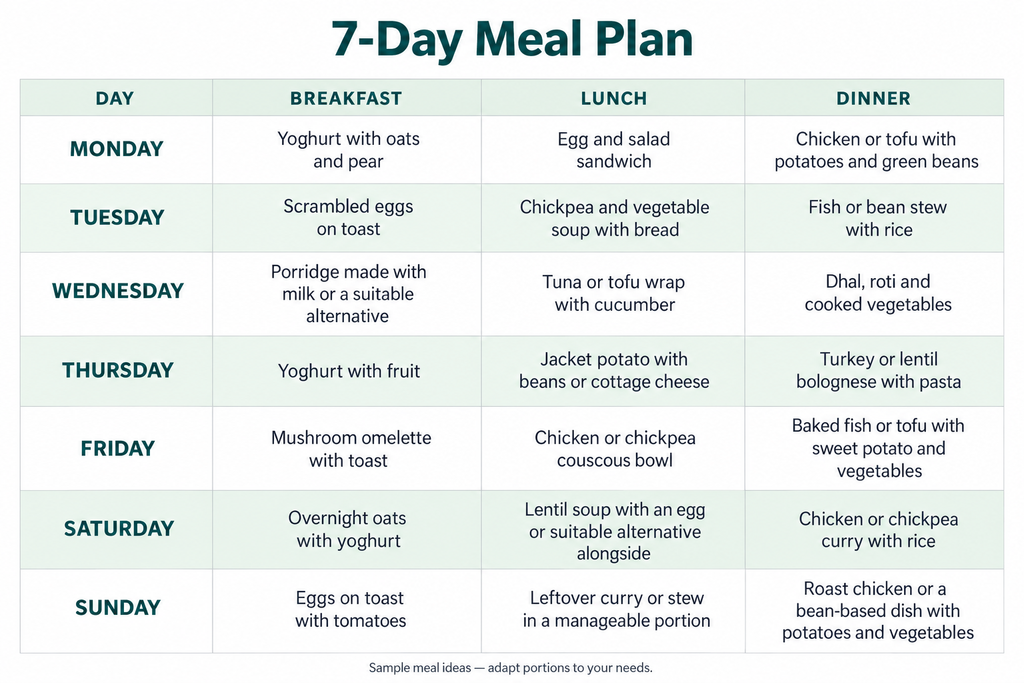
The detailed examples below explain how to prepare each day.
Monday: Start With Familiar Meals
Breakfast: Yoghurt, oats and pear
Example ingredients
- 200g plain Greek yoghurt.
- 30g oats.
- Half a pear, chopped.
Mix together or serve separately. Protein content varies considerably between yoghurts, so check the label rather than assuming every product is equivalent.
Alternative: use a suitable fortified soya yoghurt, checking its protein content.
Lunch: Egg and salad sandwich
Example ingredients
- Two boiled eggs.
- Two slices of wholegrain bread.
- Lettuce and sliced cucumber.
- A little plain yoghurt or mayonnaise, if wanted.
Mash or slice the eggs and assemble the sandwich.
Alternative: replace the eggs with seasoned tofu. Choose bread and fillings that meet any allergy requirements.
Dinner: Chicken or tofu with potatoes and green beans
Example ingredients
- 120–150g chicken breast, or 150–200g firm tofu.
- 150–200g potatoes.
- A serving of green beans.
- A small amount of olive oil and your preferred herbs.
Roast or boil the potatoes. Cook the chicken thoroughly or bake the tofu, and steam the beans.
Preparation tip: cook an extra portion of the protein for Friday only if you freeze it promptly and thaw it safely before use. Do not keep Monday’s cooked chicken refrigerated until Friday.
Tuesday: Make Soup Work for You
Breakfast: Scrambled eggs on toast
Example ingredients
- Two eggs.
- One or two slices of wholegrain toast.
- Tomatoes or another vegetable you enjoy.
Scramble the eggs and serve with toast.
Alternative: use a tofu scramble.
Lunch: Chickpea and vegetable soup
Make two servings, one for today and one to freeze for Saturday.
Ingredients for two servings
- One 400g tin of chickpeas, drained.
- One 400g tin of chopped tomatoes.
- Two carrots, chopped.
- One courgette, chopped.
- About 500ml lower-salt vegetable stock.
- Herbs or mild seasoning.
- Bread to serve.
Simmer the vegetables in stock until tender, add chickpeas and tomatoes, and heat thoroughly. Blend part of the soup if you prefer a smoother texture.
Preparation tip: freeze the second serving after cooling it safely. Label it with the date.
Dinner: Fish or bean stew with rice
Example ingredients
- 120–150g white fish, or 150–200g drained beans.
- Chopped tomatoes.
- Courgette or peppers.
- 40–60g dry rice.
- Herbs and a little olive oil.
Cook the rice separately. Simmer the vegetables and tomatoes, then add the fish and cook thoroughly, or heat the beans through.
Alternative: choose white or brown rice according to your preference and tolerance.
Wednesday: Keep Familiar Cultural Foods
Breakfast: Porridge with yoghurt
Example ingredients
- 40g oats.
- About 200ml milk or a suitable fortified alternative.
- Plain yoghurt alongside, if wanted.
- Fruit of your choice.
Cook the porridge to your preferred consistency. Milk alternatives differ in protein and fortification, so check their labels.
Lunch: Tuna or tofu wrap
Example ingredients
- One wholegrain wrap.
- One small tin of tuna, drained, or about 150g tofu.
- Cucumber and lettuce.
- A little plain yoghurt dressing.
Assemble the wrap and serve extra vegetables alongside if wanted.
Dinner: Dhal, roti and cooked vegetables
Example ingredients
- 60–75g dry red lentils.
- Chopped tomatoes.
- Mild spices.
- One small roti.
- A serving of cooked vegetables.
Rinse and cook the lentils according to the packet instructions. Add tomatoes and seasoning, adjusting the consistency with water.
Serve with roti and vegetables.
Preparation tip: make extra dhal and freeze individual portions for another week. A useful plan should leave you with convenient future meals.
Thursday: Build a Useful Midweek Routine
Breakfast: Yoghurt with fruit and oats
Example ingredients
- 200g plain Greek yoghurt or a suitable alternative.
- A serving of fruit.
- 20–30g oats.
Mix together. There is no problem repeating a breakfast you enjoy and can prepare easily.
Lunch: Jacket potato with beans and cottage cheese
Example ingredients
- One medium potato.
- About 150g baked beans.
- About 75g cottage cheese.
- Salad or cooked vegetables.
Bake the potato and add the fillings.
Alternative: use beans with a suitable dairy-free topping. The nutritional content will differ, so consider the whole meal.
Dinner: Turkey or lentil bolognese
Example ingredients
- 120–150g turkey mince, or about 150–200g cooked lentils.
- Chopped tomatoes.
- Mushrooms and grated carrot.
- 50–70g dry pasta.
- Herbs.
Cook the turkey thoroughly, or heat the cooked lentils in the sauce. Simmer with vegetables and tomatoes, then serve with pasta.
Preparation tip: make a second portion for the freezer if that helps your routine.
Friday: Use Convenient Ingredients
Breakfast: Mushroom omelette with toast
Example ingredients
- Two eggs.
- A handful of sliced mushrooms.
- One slice of wholegrain toast.
Cook the mushrooms, add the beaten eggs and cook the omelette through.
Alternative: make a tofu scramble with mushrooms.
Lunch: Chicken or chickpea couscous bowl
Example ingredients
- About 100–120g cooked chicken, or 150g chickpeas.
- 40–50g dry couscous.
- Cucumber, tomatoes or cooked vegetables.
- Lemon juice and a little olive oil.
Prepare the couscous according to the packet instructions and combine the ingredients.
Gluten-free alternative: use rice or quinoa instead of couscous.
Dinner: Baked fish or tofu with sweet potato
Example ingredients
- 120–150g fish, or 150–200g firm tofu.
- 150–200g sweet potato.
- A serving of vegetables.
Bake the sweet potato and protein, and serve with vegetables.
Choose mild seasoning if that is more comfortable for you.
Saturday: Keep Cooking Simple
Breakfast: Overnight oats with yoghurt
Example ingredients
- 40g oats.
- About 150g yoghurt.
- Enough milk or a suitable alternative for your preferred consistency.
- Fruit.
Mix in a covered container and refrigerate overnight.
Lunch: Soup with an egg or tofu
Use the chickpea soup you froze on Tuesday. Thaw and reheat safely.
Serve with an egg or a suitable tofu option if wanted, and bread according to your needs.
Dinner: Chicken or chickpea curry with rice
Make two servings, keeping one for Sunday lunch.
Ingredients for two servings
- About 250–300g chicken, or one 400g tin of chickpeas, drained.
- One 400g tin of chopped tomatoes.
- Vegetables such as spinach, peppers or courgette.
- Mild spices and a small amount of oil.
- Rice prepared separately.
Cook the chicken thoroughly, or heat the chickpeas through. Add tomatoes, vegetables and seasoning.
Preparation tip: set aside Sunday’s portion before serving. Cool and refrigerate it safely.
Sunday: Use Leftovers and Prepare Ahead
Breakfast: Eggs on toast with tomatoes
Example ingredients
- Two eggs.
- One or two slices of toast.
- Tomatoes.
Prepare the eggs as you prefer, ensuring they are suitable for your individual circumstances.
Lunch: Leftover curry
Reheat Saturday’s curry thoroughly. Prepare fresh rice if wanted.
Use a serving you can comfortably manage. You do not have to finish leftovers simply to avoid waste.
Dinner: Roast chicken or a bean-based dish
Example ingredients
- Chicken, or a bean-based alternative.
- Potatoes.
- Carrots, green beans or other vegetables.
- Your preferred seasoning.
Choose a meal that fits your household. Preparing one family meal with adaptable servings is often more practical than cooking a separate “diet dinner”.
Snacks: Optional, Depending on Your Needs
Snacks can be useful, but they are not a compulsory addition to every day.
Ideas include:
- Plain yoghurt.
- A boiled egg.
- Cottage cheese with crackers.
- Fruit with a modest portion of nuts.
- Edamame beans.
- A suitable milk or soya drink.
Choose snacks around your overall intake and individual nutritional needs. If you take medicines that can cause low blood sugar, follow your clinician’s advice about meal timing.
Make This Plan Personal With Puri Pharmacy
A sample menu cannot account for your work schedule, favourite foods, medical history or changing appetite.
At Puri Pharmacy, we provide meal plans and personalised weight management support. We can discuss how to use meal ideas around your routine and review difficulties you experience during treatment.
Tell us:
- Which foods you enjoy.
- Your dietary requirements.
- What you normally cook.
- When eating becomes difficult.
- What support you need to make the plan manageable.
In-person care is available in Southall and Hillingdon, with remote support nationwide.
See our weight management service and what’s included

Build Your Shopping List
Choose your alternatives before shopping. You do not need to buy both the meat and vegetarian versions.
Protein foods
Select the eggs, yoghurt, chicken, fish, tofu, beans, chickpeas and lentils needed for your chosen meals.
Check what you already have, then calculate quantities from the recipe examples. Remember that some recipes make two servings.
Carbohydrates
Choose oats, bread, wraps, potatoes, rice, pasta, couscous and roti as needed.
Several meals use the same ingredients. Freezing suitable bread products can help reduce waste.
Fruit and vegetables
Choose the fruit and vegetables you enjoy, using frozen options where convenient.
The plan uses overlapping ingredients such as tomatoes, cucumber, carrots, courgettes and green vegetables.
Cupboard ingredients
Check for chopped tomatoes, lower-salt stock, olive oil, herbs and mild spices.
Before buying everything, decide whether you will follow all seven days or start with a smaller number of meals.
Preparing and Storing Food Safely
Cool cooked food and refrigerate it within one to two hours. Eat refrigerated leftovers within 48 hours or freeze them. Reheat only once, making sure the food is steaming hot throughout.
Rice needs particular care: cool it quickly, ideally within one hour, refrigerate it and use it within 24 hours. Reheat only once. If uncertain, prepare fresh rice instead.
Follow packet instructions and use-by dates. Keep raw meat separate from ready-to-eat foods.
Adapting Meals When Appetite Is Smaller
A meal may be more manageable divided into two smaller sittings. You can also start with a smaller serving and reconsider if you remain hungry.
If nausea is a problem, plain or cooler foods may be easier to tolerate. Avoid lying down soon after eating.
For constipation, review fluids, gradually include fibre and keep moving as you are able. Do not assume the same dietary adjustment will suit every digestive symptom. NHS guidance supports smaller meals and individual symptom management.
Persistent difficulty eating is a reason to contact your prescriber. Do not rely on a meal plan to resolve severe or worsening symptoms.
Remember Your Fluids
Drink regularly throughout the day. Guy’s and St Thomas’ guidance recommends at least two litres of low-calorie, unsweetened fluids daily, unless individual circumstances require different advice.
Follow any fluid restriction prescribed by your clinician.
When Food Advice Is Not Enough
Seek immediate medical help for severe, persistent abdominal pain, particularly if it spreads to your back, with or without vomiting. This may indicate pancreatitis; stop Mounjaro and seek immediate help if pancreatitis is suspected.
Vomiting and diarrhoea can cause dehydration. Seek prompt advice if you cannot keep fluids down or are becoming dehydrated.
Do not wait for a routine review when urgent symptoms occur.
Frequently Asked Questions
Is this a personalised Mounjaro meal plan?
No. It is an example week of meals. Your individual portions, targets and substitutions may need professional advice.
Do I need to follow it exactly?
No. Repeat favourites, change the order and use suitable alternatives. A realistic routine matters more than following a menu rigidly.
Can I eat rice, bread and pasta?
Yes. They can form part of balanced meals. You do not automatically need to remove carbohydrates.
Is the vegetarian option nutritionally identical?
No. Substitutions can change protein, calories and other nutrients. Check labels and consider the overall meal.
Should I count calories?
That depends on your needs and agreed approach. This menu does not provide a prescribed calorie target.
What if the portions feel too large?
Start with a manageable serving and discuss your intake if you repeatedly struggle to eat enough.
Can I use familiar South Asian meals?
Yes. Dhal, roti, rice, beans and other familiar foods can fit into a plan. Consider the complete meal, preparation and serving size.
Does the plan guarantee weight loss?
No. It is a planning resource, and individual outcomes vary.
Can Puri Pharmacy help me adapt it?
Yes. Speak to our team about our meal plans and personalised weight management support.
Your Next Step
For a fuller explanation of nutrition during treatment, read our guide to what to eat on Mounjaro.
If you want clinical care alongside practical support, explore Puri Pharmacy’s service.
Explore personalised weight management care
Start your eligibility questionnaire
Treatment is subject to clinical assessment. This article does not replace individual medical or dietetic advice.