What to Eat on Mounjaro: A Practical Diet and Meal Planning Guide


Get our latest weight-loss and health guides straight to your inbox.
Wondering what to eat on Mounjaro? Start with smaller, balanced meals that include protein, vegetables or fruit, and carbohydrates, along with regular fluids. This guide covers food choices, meal ideas and common eating difficulties. At Puri Pharmacy, we also provide meal plans and personalised support to help you put the advice into practice.
What should you eat when Mounjaro reduces your appetite? How do you put together balanced meals when you feel full quickly? And what should you do if nausea makes your usual foods difficult to manage?
These are important questions during treatment. Eating less is only part of the picture: you also need an approach that supports your nutritional needs and fits your everyday life.
A useful starting point is smaller, balanced meals containing protein, vegetables or fruit, and a source of carbohydrate, with fluids throughout the day. No single menu suits everyone.
At Puri Pharmacy, we offer a personalised weight management service with clinical reviews, meal plans and practical support. We can help you apply the advice in this guide to your preferences, routine and experience of treatment.
Why Your Diet Still Matters on Mounjaro
Mounjaro contains tirzepatide, which can reduce appetite and help you feel fuller for longer. Use it alongside dietary changes and physical activity, not as a replacement.
A smaller appetite can change how you shop, cook, and eat. You may leave more food on your plate, lose interest in meals or find that your usual portions feel uncomfortable.
The practical question becomes: how can you make the food you do eat count?
Rather than concentrating only on eating fewer calories, consider the overall pattern:
- Are your meals varied?
- Do they contain a source of protein?
- Are you drinking regularly?
- Can you manage your meals comfortably?
- Are symptoms preventing you from eating or drinking?
These questions also give your prescriber useful information during a review.
Is There a Specific Mounjaro Diet?
You don’t need to buy special “Mounjaro foods” or replace everything in your kitchen.
A balanced diet can include familiar foods such as bread, rice, potatoes, eggs, fish, beans, dhal, yoghurt and fruit. The NHS Eatwell Guide recommends variety across the main food groups, with balance achieved over a day or week rather than perfectly at every meal.
Your plan should also be realistic. A menu that requires expensive ingredients or an hour of cooking every evening may not suit you if you work shifts or prepare meals for a family.
At Puri Pharmacy, we can discuss how to adapt your usual meals instead of expecting you to follow an unfamiliar diet.
Protein: An Important Part of Your Meals
Protein supports muscle maintenance. Weight loss can involve losing muscle as well as fat, so adequate protein and suitable strength-based activity deserve attention during treatment.
Guy’s and St Thomas’ NHS guidance suggests 80–100g of protein daily for the general population taking weight loss medicines. This is a general guide, not an individual prescription; people with chronic kidney disease need personalised advice.
Practical protein choices
Build meals around foods you enjoy:
- Eggs or an omelette.
- Chicken, turkey or lean meat.
- Fish, including suitable tinned options.
- Plain Greek yoghurt, milk or cottage cheese.
- Tofu, tempeh or soya products.
- Beans, chickpeas and lentils.
Think beyond dinner. Breakfast and lunch are also good opportunities to include protein.
For example:
Your usual meal
An option to discuss or try
| Toast on its own | Toast with eggs or cottage cheese |
| Vegetable soup | Lentil soup, or soup with beans added |
| Rice and vegetables | Rice with vegetables and fish, tofu or dhal |
| Fruit as your whole lunch | Fruit alongside a suitable protein-containing meal |
| Porridge | Porridge made with milk, with yoghurt alongside if tolerated |
These are meal-building examples, rather than equivalent portions or personalised prescriptions.
Do you need protein shakes?
Not automatically. Food is a useful starting point. A shake may help some people who struggle to meet their needs, but consider it in the context of their overall intake.
Tell us if you regularly cannot finish meals. We can discuss your eating pattern and whether you need additional nutritional advice.
Carbohydrates: You Do Not Need to Remove Them
Bread, rice, pasta and potatoes can be part of a balanced diet. Starchy carbohydrates provide energy, and higher-fibre varieties can contribute to your fibre intake.
Examples include:
- Oats and porridge.
- Wholegrain bread or chapati.
- Rice, pasta or couscous.
- Potatoes or sweet potatoes.
- Other grains you enjoy and normally cook.
The aim is to fit these foods into manageable meals alongside other food groups.
For instance, you could pair a bowl of rice with dhal and vegetables. You could serve pasta with tuna or beans and a vegetable-based sauce.
If you are unsure about portions, bring examples of your usual meals to your review. That is more useful than relying on a rigid rule about avoiding carbohydrates.
Vegetables, Fruit and Fibre
Fruit and vegetables provide fibre, vitamins and minerals. Fresh, frozen and tinned options can all contribute to a varied diet.
You can make them easier to include without creating extra work:
- Add frozen vegetables to a curry or stew.
- Use tinned tomatoes as the base of a sauce.
- Add fruit to breakfast.
- Keep suitable ready-to-eat vegetables available.
- Make soup in batches and freeze individual servings.
Choose forms you can manage comfortably. A large raw salad may feel less appealing than a small serving of cooked vegetables.
If your fibre intake is low, increase it gradually. Don’t assume every digestive symptom calls for the same dietary change; constipation, diarrhoea, and bloating may need different advice.
Healthy Fats: Include Them Thoughtfully
Foods such as olive oil, nuts, seeds and avocado can fit into your meals.
Practical examples include:
- A small amount of olive oil in cooking.
- A sprinkle of seeds on yoghurt.
- Some avocado with eggs on toast.
- A modest portion of nuts as part of a snack.
You don’t need to make every meal fat-free. Equally, adding generous amounts of oil, nut butter or dressing can make a meal quite different from what you intended.
If richer meals worsen symptoms, discuss that pattern with your prescriber.
Dairy and Fortified Alternatives
Milk, yoghurt and cheese can provide protein and calcium. Suitable dairy alternatives can also fit into a balanced diet.
If you choose plant-based products, check their labels. Products vary in protein content and whether they are fortified.
A useful meal-planning habit is to identify where these foods fit naturally: milk in porridge, yoghurt at breakfast, or a suitable alternative in a snack.
Tell us about allergies, intolerances and dietary preferences when discussing your plan.
How Much Should You Eat on Mounjaro?
No calorie target fits every patient.
Your needs depend on factors including your size, activity, health conditions and treatment experience. A number taken from an online article cannot account for all of those.
Before setting a target, consider your current pattern. Are you eating regular meals, or going most of the day without food? Are you managing a varied intake, or surviving on a few foods because of symptoms?
At Puri Pharmacy, we can discuss these questions during your review and recommend further nutritional support where appropriate.
Repeatedly being unable to eat deserves attention. Don’t treat it as evidence that you need a higher dose.
How to Build a Balanced Meal
Use this flexible sequence:
- Choose your protein: eggs, fish, chicken, tofu, beans or lentils.
- Add vegetables or fruit: whichever suits the meal and your preferences.
- Include a carbohydrate: rice, potatoes, bread, pasta or another familiar option.
- Consider flavour and preparation: choose something you will enjoy and can comfortably tolerate.
- Serve a manageable portion: you can reconsider the amount if you remain hungry.
For example, that might become:
- Scrambled eggs, toast and tomatoes.
- Chicken, potatoes and cooked vegetables.
- Dhal, rice and a vegetable dish.
- Tofu, noodles and stir-fried vegetables.
- Tuna and bean salad with bread.
You do not need every meal to look like a diagram. Think about your overall pattern across the day.
The Balanced Plate: A Simple Starting Point
Know the Basics, but Unsure What to Eat Each Day?
We can help you put the advice into practice. Puri Pharmacy provides meal plans and personalised weight management support, with opportunities to discuss your appetite, food preferences and treatment progress.
For a main meal, use these approximate proportions:
- ¼ of your plate: protein, such as chicken, fish, eggs, tofu, beans or lentils.
- ½ of your plate: non-starchy vegetables, such as broccoli, peppers, courgettes, leafy greens or mushrooms.
- ¼ of your plate: starchy carbohydrates, such as rice, potatoes, pasta or wholegrain bread.
- A modest amount of unsaturated fat, such as olive oil, nuts or avocado.
This is a flexible visual guide, not a requirement to finish a large plate. Adapt the serving to your appetite and tolerance. Breakfasts and mixed dishes do not need to follow these proportions exactly.
Make Your Protein Target Personal
Include protein across the day rather than relying on dinner alone. A palm-sized portion can help you judge a serving, but different foods contain different amounts of protein.
At Puri Pharmacy, we can discuss an appropriate target and help you translate it into meals you enjoy. Your health, body size, activity and overall intake matter; kidney disease requires particular care.
Adjust Meals When You Feel Sick
Smaller meals eaten more frequently may be easier to manage. You could split a meal into two smaller sittings rather than force yourself to finish it. Cooler foods may also be easier to tolerate when hot-food smells trigger nausea.
Persistent symptoms or difficulty keeping fluids down require clinical advice.
Drink Regularly
Around two litres of fluids daily is a useful general starting point unless your clinician has advised otherwise. Fluids support hydration and can help with constipation, but they do not guarantee constipation prevention.
A Seven-Day Meal Plan for Inspiration
This menu is a collection of ideas, not a calorie-controlled or nutritionally complete prescription. Portions, ingredients and substitutions need to reflect your individual needs, allergies and tolerances.
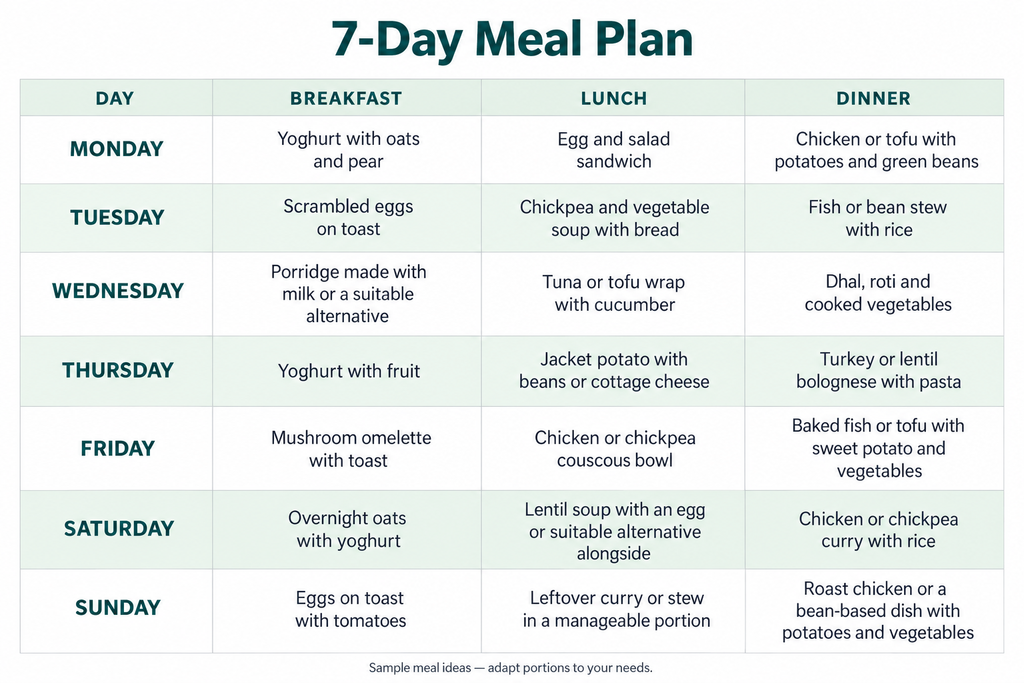
Make Your Meal Plan Work for You
This sample menu is a starting point. Your routine, dietary preferences and experience of treatment deserve individual attention.
Our team can provide meal plans and help you discuss how to use them around family meals, work and changes in appetite.
If a snack fits your needs, options could include yoghurt, an egg, fruit with some nuts, or cottage cheese with crackers.
You can also explore our seven-day meal plan.
How we help you use a meal plan
A plan becomes more useful when you can adapt it. Tell our team:
- Which meals you would actually eat.
- What you normally cook at home.
- Whether you need vegetarian or other dietary options.
- Which foods you are struggling to tolerate.
- How much time you have for preparation.
We can help you use meal ideas as a practical starting point, not a strict timetable.
Can You Keep Eating Familiar Cultural Foods?
Yes. Your preferences should be part of the conversation.
For example, if you regularly eat South Asian meals, options to discuss might include dhal, chana, rajma, roti, rice, yoghurt, eggs, fish or chicken dishes.
Rather than replacing them with foods you rarely eat, consider:
- Where the protein comes from.
- Whether the serving feels manageable.
- How vegetables fit into the meal.
- Whether preparation or richness affects your symptoms.
The same principle applies to any cuisine: start with what you eat, then identify useful adjustments.
Eating Around Work and Family Life
A meal plan should hold up through a busy day.
For shift work, consider which meals you can prepare ahead and where you will store them. For family meals, choose dishes that allow you to serve yourself a suitable portion rather than cook an entirely separate dinner.
Convenient options might include:
- A portion of homemade dhal or stew from the freezer.
- Eggs and toast.
- A jacket potato with a filling.
- A ready-to-use tin of beans added to soup.
- Yoghurt and other ingredients for a quick breakfast.
You do not need to cook every component from scratch to have a useful plan.
What to Drink on Mounjaro
Drink regularly rather than waiting until the evening to catch up.
Guy’s and St Thomas’ guidance recommends at least two litres of low-calorie, unsweetened fluids daily for people taking weight loss medicines. Follow individual advice if you have a fluid restriction or a condition affecting your fluid needs. Water, tea, coffee and sugar-free squash are among the options listed.
Consider practical reminders: a drink with meals, a bottle at your desk, or drinks available during a shift.
If you are vomiting or have diarrhoea, pay particular attention to fluid intake. Ask for advice if you cannot maintain it.
Foods and Drinks to Limit
Avoid creating an unnecessarily long list of banned foods.
For everyday healthy eating, foods and drinks high in fat, salt or sugar are generally best consumed less often and in smaller amounts.
When symptoms occur, tolerance matters too. A large takeaway meal may affect you differently from a smaller meal. Strong smells or rich foods may be difficult when you feel sick.
A short food-and-symptom record can help you describe the pattern. Record the meal, approximate portion, symptoms and timing—without turning the diary into a judgement of whether you were “good” or “bad”.
Adjusting Meals When You Have Side Effects
Dietary changes can sometimes help symptoms, but they cannot replace clinical assessment when symptoms are severe or persistent.
Nausea and heartburn
Try smaller meals, plain foods and avoid lying down soon after eating. Options such as toast, porridge, rice, eggs or plain yoghurt may be easier to manage. Avoid foods that clearly worsen symptoms.
Constipation
Review your fluid intake, gradually include fibre-containing foods, and keep moving as you are able. Speak to your pharmacist if constipation continues.
Diarrhoea
Pay attention to hydration and seek advice if it persists or affects your ability to eat and drink. Avoid applying a strict elimination diet without discussing it.
Contact your care team if symptoms worsen, you cannot keep fluids down, your urine becomes dark or you feel lightheaded.
What if You Have Very Little Appetite?
Keep preparation simple and plan manageable opportunities to eat.
You might find a small meal easier than your previous serving. Convenient foods can help when you have little motivation to cook.
If low appetite repeatedly prevents adequate eating, tell your prescriber. Explain what you can manage, how long this has been happening and whether symptoms are contributing. NHS guidance recognises that appetite changes can make planning and eating more difficult.
At Puri Pharmacy, this is something to discuss during treatment—not something you have to solve alone before contacting us.
Supporting Your Progress Beyond Food
Food planning is one part of a broader routine.
The NHS recommends that adults undertake strengthening activities on at least two days each week and aim for at least 150 minutes of moderate activity, or 75 minutes of vigorous activity, weekly. Adapt activity to your ability and seek advice where needed.
For your review, consider practical progress as well as weight:
- Are your meals easier to organise?
- Are you managing treatment comfortably?
- Can you maintain your normal daily activities?
- What is making the plan difficult to follow?
These questions can help identify the support you need next.
When to Seek Urgent Medical Help
Severe, persistent abdominal pain, especially if it spreads to your back, with or without vomiting, requires immediate medical help. It may indicate pancreatitis. Stop taking Mounjaro and seek immediate medical help if pancreatitis is suspected.
Vomiting and diarrhoea can also cause dehydration and affect kidney function. Seek prompt advice if you cannot keep fluids down or are becoming dehydrated.
If you take insulin or a sulphonylurea, discuss the risk of low blood sugar with your clinician.
Do not wait for a routine appointment when urgent symptoms occur.
Personalised Weight Management at Puri Pharmacy
General advice explains the principles. Personalised support helps you work out how to use them.
At Puri Pharmacy, we can provide meal plans and discuss how they fit your food preferences, appetite and daily routine. Clinical reviews give you an opportunity to raise concerns about progress, tolerability, and difficulties with eating.
Our support can include:
- Meal planning: practical ideas to help organise your food choices.
- Personalised conversations: applying advice to your preferences and circumstances.
- Treatment reviews: discussing your experience and concerns.
- Help with everyday difficulties: identifying where your plan needs adjustment.
- Further assessment where appropriate: recognising when you need specialist support.
In-person care is available in Southall and Hillingdon, with remote support available.
Explore Puri Pharmacy’s personalised weight management service.
Frequently Asked Questions
Can I eat normally on Mounjaro?
You can include familiar foods in a balanced diet. Your appetite and comfortable portion size may change, so use your treatment reviews to discuss how you are managing.
Can I eat bread, rice and pasta?
Yes. These foods can fit alongside protein and vegetables. Removing an entire food group isn’t automatically required.
What is a good breakfast?
Options include eggs on toast, porridge made with milk, or yoghurt with oats and fruit. Choose ingredients and a serving that suit you.
Can I eat curry or other South Asian meals?
Yes. Dhal, beans, rice, roti and other familiar foods can be part of your plan. We can discuss preparation, portions and the overall balance.
Do I need to follow the meal plan exactly?
No. The sample menu offers inspiration. It is not a personalised nutritional prescription, and you may need to make substitutions.
Can I drink coffee?
Coffee can contribute to fluid intake. If you notice it aggravates symptoms or affects sleep, discuss adjustments. Consider what you add to the drink too.
How many calories should I eat?
A suitable target depends on your individual circumstances. Ask for advice rather than assuming an online figure applies to you
What if I am barely eating?
Contact your prescriber if this keeps happening. Explain what you can manage and whether nausea, vomiting or other symptoms are involved
Do I need supplements?
Ask your clinician or dietitian to review your needs, particularly if your intake is limited. Consider supplements alongside your overall diet and medical history.
Can Puri Pharmacy help me with meal plans?
Yes. We can provide meal plans and help you discuss how to use them around your preferences and routine. Tell us what you find difficult so the conversation addresses your actual needs.
Get Support With Your Next Step
Whether you are exploring treatment or need help managing your current routine, our team can discuss your needs and the support available.
Explore our weight management service.
This article provides general information and does not replace individual medical or dietetic advice.