How we remove earwax: microsuction, irrigation and clinical judgement

Get practical health advice and updates on Puri Pharmacy services straight to your inbox.
At Puri Pharmacy, we remove troublesome earwax using microsuction or irrigation, following an examination and suitability check. Microsuction draws wax out through a fine suction tube. Irrigation uses a controlled flow of water to wash softened wax out of the ear canal.
The clinical decision is choosing an appropriate method for the ear in front of us: its history, the examination findings and how comfortably treatment can proceed. This guide explains those decisions for adults attending our Hillingdon and Southall clinics.
Why do some ears need wax removal?
Earwax, or cerumen, is part of the ear’s normal protection. It contains oils and shed skin, helps trap particles and usually moves out naturally. A small amount of wax is expected; an ear does not need to be stripped completely clean. Cambridge University Hospitals explains the role of earwax.
Removal becomes useful when a build-up contributes to symptoms or prevents a necessary examination. NICE guidance for adults recommends removal in those circumstances. A feeling of blockage alone does not establish the cause, so the examination matters before treatment is chosen.
What we check before choosing a method
We begin with your symptoms: which ear is affected, when the problem started and whether you have pain, discharge or a change in hearing. Tell us about previous ear operations, grommets, eardrum perforations and difficult experiences with wax removal.
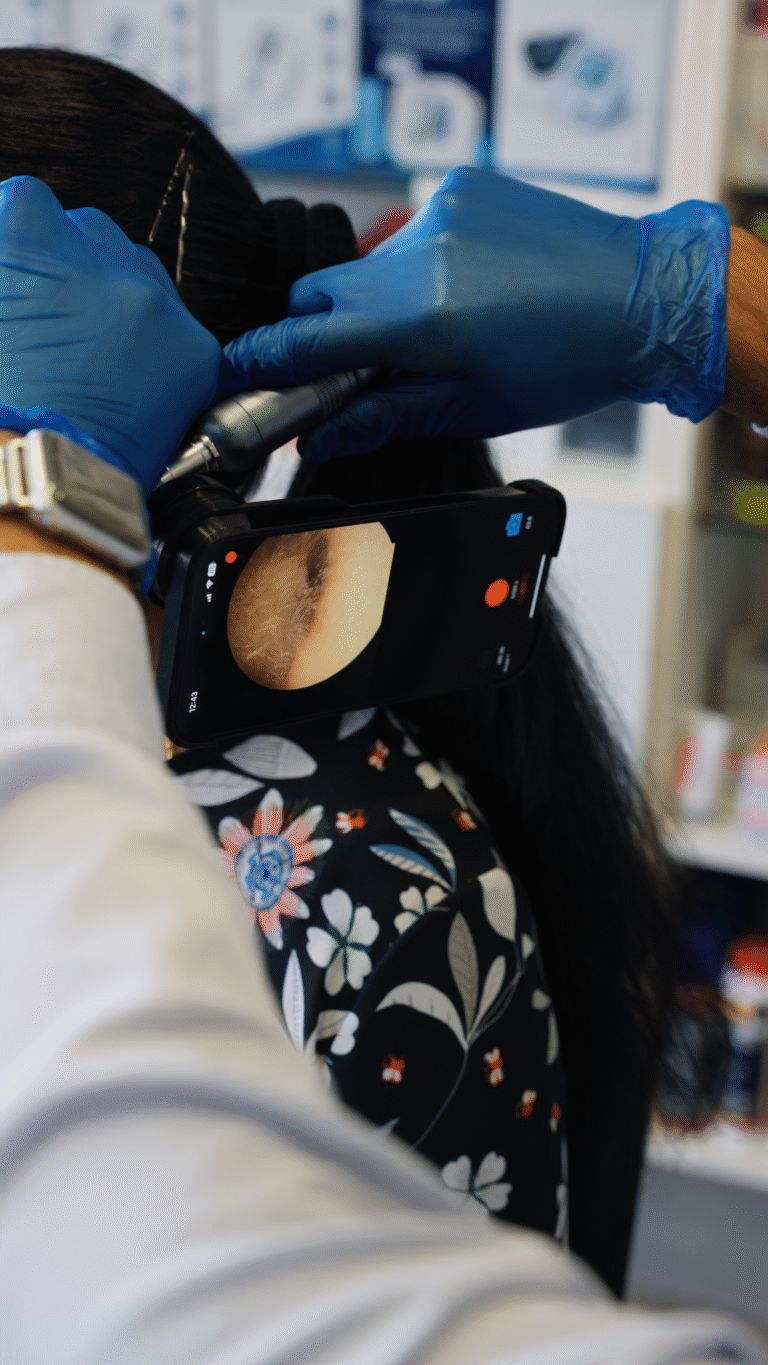
Looking into the ear allows the clinician to assess the canal and visible wax. An otoscope provides light and magnification; a wax plug may obscure the eardrum. The findings and your history help determine whether removal can proceed, whether preparation is needed or whether another assessment is more appropriate.
Before treatment, we explain the proposed method, its relevant risks and alternatives, and obtain your consent. You should understand what is planned and how to ask for a pause.
How microsuction and irrigation work
Microsuction: removing wax under direct vision
A clinician views the ear canal with suitable magnification and uses a fine suction tube to draw wax out. No flushing water is introduced. The view lets the clinician follow the wax and the instrument during removal. Guy’s and St Thomas’ NHS information describes this dry method and situations where avoiding irrigation can be helpful.
You will hear the suction. Some people find the sound loud; compacted wax or a sensitive canal can make treatment uncomfortable. Tell the clinician if you need to cough, move or stop, so they can pause before you move your head.
Possible complications include a grazed ear canal, bleeding and infection. Tinnitus or hearing changes have also been reported after microsuction. UCLH’s patient information explains these risks. The clinician should explain the risks relevant to your ear before you decide.
Irrigation: washing softened wax out
Electronic irrigation uses purpose-designed equipment to deliver water into the ear canal and help dislodge wax. Preparation matters: NICE recommends wax-softening treatment before adult irrigation. We advise on preparation that fits your history and the proposed procedure.
Electronic irrigation is different from traditional manual syringing. NICE advises against manual syringing in adults, while recognising electronic irrigation as an option when the practitioner has the appropriate training, equipment and knowledge of contraindications.
Water-based removal is unsuitable in some circumstances, including certain eardrum problems, previous operations or infections. These need assessment before proceeding. Betsi Cadwaladr University Health Board explains how ear history affects the choice of method.
| Question | Microsuction | Electronic irrigation |
|---|---|---|
| How is wax moved? | A fine tube draws wax out using suction. | A controlled flow of water helps wash wax out. |
| Is water used to flush the ear? | No. | Yes. |
| What influences the choice? | The examination, ear history, access to the wax and tolerance of the procedure. | The examination, ear history, preparation and whether introducing water is suitable. |
NICE recognises both methods and identifies their comparative effectiveness as a research question. That does not support declaring one method universally best for every patient.
How the findings can change the treatment plan
These examples illustrate clinical decisions; they are not individual patient case histories.
- Hard, compacted wax: further softening or a staged appointment may make removal more manageable. Continuing simply to finish in one visit may be inappropriate.
- A perforation, grommet or previous ear operation: the history can rule out routine irrigation or require specialist advice. A dry method still needs its own suitability assessment.
- Pain or discharge suggesting infection: the priority is assessing that problem. Puri does not proceed with routine wax removal when an infection prevents treatment.
If irrigation remains unsuccessful after a second attempt, NICE recommends referral to a specialist ear-care or ENT service. More attempts are not automatically the next step.
Why preparation is individual
Softening drops can help with a wax blockage, but the product and instructions should fit your circumstances. Do not use ear drops if you have a perforated eardrum. Ask for advice first if you have had ear surgery or have pain or discharge. The NHS earwax guidance explains self-care and when to seek help.
For practical information about attending, read our microsuction appointment and preparation guide.
What happens after the wax has been removed?
At Puri, we explain the findings, aftercare and any further steps. Tell us how your original symptoms feel after treatment. If removal was incomplete, the next plan should explain why, what preparation is needed and whether another method or referral is appropriate.
Keep objects out of the ear canal and follow the advice given for your ear. If your hearing has not returned after wax treatment, NHS guidance recommends seeing a GP. Removing a blockage and investigating continuing hearing loss are different clinical tasks.
Questions patients ask about wax removal
Can I choose microsuction?
Tell us your preference and any previous experience. The clinician will explain whether it is suitable after examining your ear. The method needs to fit the findings as well as your preference.
Will wax removal restore my hearing?
It may improve hearing when wax is responsible for the difficulty. It cannot resolve every cause of hearing loss. Persistent hearing difficulty needs assessment, even if wax was successfully removed.
Is a home ear vacuum the same as clinical microsuction?
No. Clinical microsuction involves a trained practitioner examining and viewing the ear during removal. The NHS says there is no evidence that consumer ear vacuums or ear candles remove wax. Avoid inserting cotton buds or other objects into the canal.
Do I need regular wax removal appointments?
There is no automatic schedule for everyone. Some people need repeat care; others never need removal. If blockage recurs, discuss a plan based on your symptoms and examination rather than assuming every ear needs routine cleaning.
How this fits into care at Puri Pharmacy
Our trained pharmacy team offers microsuction and irrigation in Hillingdon and Southall. Our team includes independent prescribing pharmacists, giving you access to further advice when your symptoms need a different approach.
Depending on the problem, that may mean a GP referral, a separate private prescribing consultation or an eligible NHS Pharmacy First assessment. The established Pharmacy First earache pathway is for ages 1–17. Further consultations depend on suitability and availability; any private consultation and medicine fees are explained separately.
Key takeaways
- The examination and ear history guide whether and how wax should be removed.
- Microsuction and electronic irrigation work differently; each has suitability considerations.
- Good care includes responding to discomfort and explaining what happens if symptoms remain.
Arrange an ear assessment
For routine concerns, contact your preferred branch. Tell us your symptoms and any previous ear problems so we can help you choose the right appointment. Contact us before booking for anyone under 18.
Hillingdon: 01895 272571
Southall: 020 8574 6848
View our earwax service and appointment options · See what the £65 clinic appointment includes
Sources and service information checked on 2 November 2026. This article explains routine adult earwax care; individual assessment determines treatment.