The pill: what you need to know in 2026

TL;DR:
- The pill is a highly effective contraceptive that prevents pregnancy mainly by suppressing ovulation, thickening cervical mucus, and thinning the uterine lining. Proper adherence, understanding formulations, and managing missed doses are essential to maintain its effectiveness, which exceeds 99% with correct use. Beyond contraception, it offers benefits like cancer risk reduction, lighter periods, and acne management, while rare risks include blood clots that require careful health monitoring.
The pill is a combined oral contraceptive (COC) containing synthetic oestrogen and progestin, taken daily to prevent pregnancy by stopping ovulation. It is one of the most widely used birth control options in the world, and when taken correctly, it is over 99% effective. That figure drops to around 93% with typical use, meaning real-world missed doses and timing errors account for a meaningful gap. Understanding how the pill works, which type suits you, and how to take it correctly makes the difference between those two numbers.
How does the pill work to prevent pregnancy?
The pill works through three simultaneous mechanisms, each acting as a separate barrier to pregnancy. WHO classifies oral contraceptives as daily hormonal pills that prevent pregnancy primarily by suppressing ovulation, which means no egg is released for sperm to fertilise.

The second mechanism involves the cervical mucus. The hormones in the pill thicken this mucus, making it far harder for sperm to travel through the cervix and reach the fallopian tubes. The third mechanism is a change to the uterine lining. The pill thins the endometrium, reducing the likelihood of implantation even if fertilisation were to occur.
The progestin-only pill, often called the mini-pill, works differently. It relies primarily on thickening cervical mucus rather than suppressing ovulation, though some formulations do inhibit ovulation in a proportion of cycles. This distinction matters when choosing between the two, particularly for women who cannot take oestrogen due to migraines, cardiovascular history, or breastfeeding.
Pro Tip: Set a daily alarm on your phone at the same time each day. The WHO recommends consistent daily timing as the single most effective habit for maintaining contraceptive protection.
What are the different types and regimens of the pill?
Pill formulations and schedules vary more than most people realise, and the choice between them affects bleeding patterns, convenience, and how quickly protection begins.
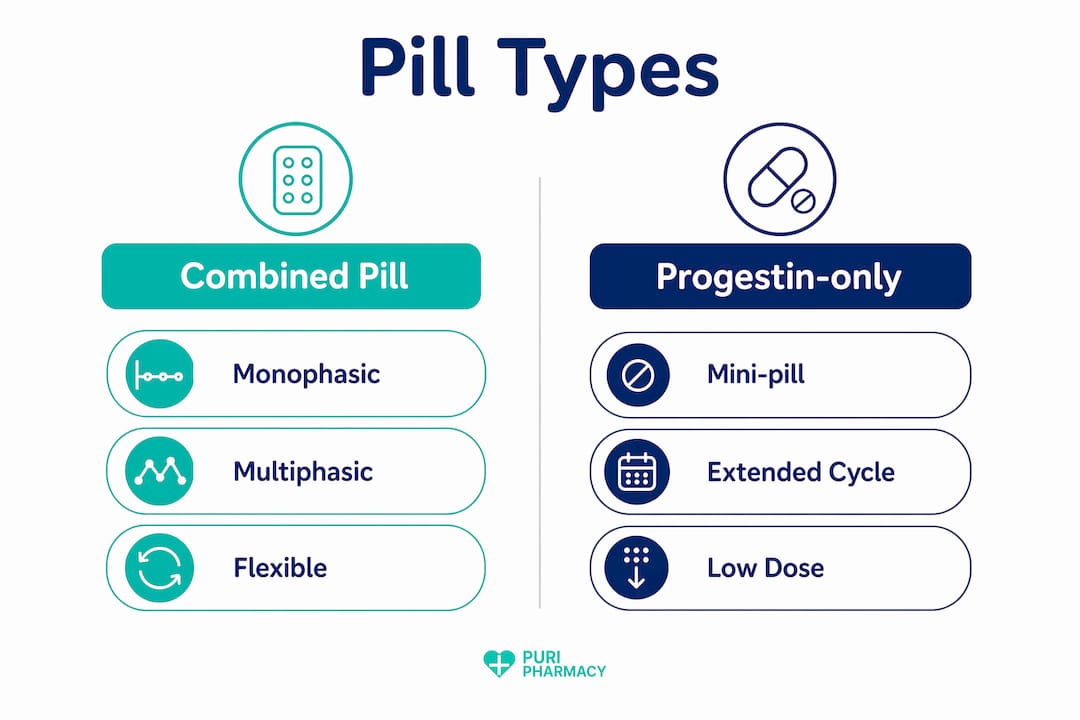
| Type | Hormone content | Regimen | Effect on bleeding |
|---|---|---|---|
| Monophasic COC | Fixed oestrogen and progestin dose | 21 active, 7 inactive pills | Regular withdrawal bleed in pill-free week |
| Phasic COC (biphasic/triphasic) | Varying hormone doses across pack | 21 active, 7 inactive pills | Mimics natural cycle more closely |
| Progestin-only (mini-pill) | Progestin only | 28 active pills, no break | Irregular or absent periods |
| Extended-cycle pill | Fixed oestrogen and progestin | 84 active, 7 inactive pills | Bleed only four times per year |
| Continuous use COC | Fixed dose | No pill-free interval | Periods suppressed entirely |
NHS Inform details these regimen structures, noting that the standard 21/7 pack remains the most commonly prescribed in the UK. Extended-cycle and continuous options are increasingly popular for managing conditions like endometriosis or simply reducing the frequency of periods.
The timing of when you start the pill also determines when protection begins. Starting on day one of your period provides immediate protection. A Sunday start or quick-start method may require up to 12 days before full protection is established, depending on where you are in your cycle. During that window, barrier methods such as condoms are necessary.
Pro Tip: If you are switching from one pill brand to another, start the new pack immediately after finishing the old one without a break. This maintains hormone continuity and avoids any lapse in protection.
What benefits beyond contraception does the pill offer?
The pill’s non-contraceptive benefits are substantial and frequently underestimated when people weigh up birth control options. UCLA Health summarises the evidence showing reduced risk of both ovarian and endometrial cancers among long-term pill users. These protective effects can persist for years after stopping.
Beyond cancer risk reduction, the pill is widely used for period regulation and symptom management:
- Menstrual cramps: The pill reduces prostaglandin production, which directly lowers the intensity of period pain.
- Heavy bleeding: Women with menorrhagia often experience significantly lighter bleeds, reducing the risk of anaemia.
- PMS and PMDD: Hormonal stabilisation across the cycle can reduce mood swings, bloating, and breast tenderness associated with premenstrual syndrome.
- Acne: Formulations containing certain progestins, such as drospirenone, are prescribed specifically for acne management and are licensed for this purpose in the UK.
- PCOS management: The pill regulates irregular cycles and reduces androgen-related symptoms including excess hair growth and acne in women with polycystic ovary syndrome.
- Endometriosis: Continuous or extended-cycle use suppresses the growth of endometrial tissue outside the uterus, reducing pain and slowing progression.
Mayo Clinic confirms that these hormonal contraceptive benefits influence prescribing decisions well beyond pregnancy prevention. For many women, the pill is a therapeutic tool first and a contraceptive second.
What are the potential side effects and risks of taking the pill?
Most women tolerate the pill well, but side effects do occur, particularly in the first three months as the body adjusts to the new hormonal environment. Common side effects include nausea, headaches, breast tenderness, and mood changes. These typically settle within two to three cycles.
The more serious, though rare, risk is blood clots. Mayo Clinic notes that the risk is highest in the first six months of use and varies depending on the specific progestin in the formulation. Women who smoke, are over 35, or have a personal or family history of clotting disorders face a higher baseline risk. This is why a thorough health history review before prescribing is not optional.
Symptoms that require immediate medical attention include:
- Sudden severe chest pain or shortness of breath
- Leg pain, swelling, or redness (possible deep vein thrombosis)
- Severe headache or visual disturbances
- Sudden weakness or numbness on one side of the body
One persistent myth worth addressing directly: the pill does not cause infertility. Fertility returns quickly after stopping, with no long-term impact on reproductive capacity. Another important limitation is that the pill does not protect against sexually transmitted infections. Condoms remain necessary for STI prevention regardless of pill use.
How to take the pill correctly and what to do if you miss a dose
Taking the pill at the same time every day is the foundation of its effectiveness. Linking pill-taking to an existing daily habit, such as brushing your teeth or having breakfast, dramatically reduces the chance of forgetting. The WHO recommends routine-based pill-taking as the most reliable strategy for real-world effectiveness.
There are three common methods for starting the pill:
- First-day start: Begin on day one of your period. Protection is immediate and no backup contraception is needed.
- Quick-start: Begin on any day of your cycle. Use condoms for the first seven days as protection is not yet established.
- Sunday start: Begin on the first Sunday after your period starts. Convenient for scheduling, but requires seven days of backup contraception.
When a pill is missed, the guidance depends on how late it is and where you are in the pack. Devon Sexual Health advises that if a pill is less than 72 hours late and you have been taking the pill correctly beforehand, you may not need backup contraception. Miss two or more pills, or miss pills in the first week of a new pack, and you should use condoms for the next seven days and consider emergency contraception if unprotected sex has occurred.
Pro Tip: If you miss pills near the end of a pack, skip the pill-free interval and start the next pack immediately. This prevents a prolonged hormone-free gap, which is when ovulation is most likely to occur.
Key takeaways
The combined oral contraceptive pill is over 99% effective with perfect use, but correct daily timing, understanding your regimen, and knowing how to manage missed doses are what make that figure achievable in practice.
| Point | Details |
|---|---|
| Effectiveness depends on consistency | Perfect use exceeds 99% effectiveness; typical use drops to around 93% due to missed or late pills. |
| Three mechanisms prevent pregnancy | The pill stops ovulation, thickens cervical mucus, and thins the uterine lining simultaneously. |
| Benefits extend beyond contraception | Reduced cancer risk, lighter periods, acne control, and PCOS management are all evidence-backed benefits. |
| Blood clot risk is real but rare | Risk is highest in the first six months and varies by formulation, smoking status, and personal health history. |
| Fertility returns quickly after stopping | No long-term impact on fertility has been established; cycles typically resume within one to three months. |
What I have learnt from years of advising on contraceptive choices
Most people arrive at a conversation about the pill with one of two misconceptions. Either they believe it is entirely risk-free and are surprised by the blood clot discussion, or they have read something alarming online and are convinced it will cause infertility or permanent hormonal disruption. Neither position reflects the evidence.
What I find genuinely underappreciated is how much the choice of pill formulation matters. Two women on “the pill” may be on entirely different products with different progestins, different oestrogen doses, and different regimens. The experience of one tells you very little about the experience of the other. When someone tells me the pill “didn’t agree with them,” the more useful question is which pill, at what dose, and for how long.
The other thing I would push back on is the idea that side effects in the first few weeks are a reliable signal to stop. The body needs time to adjust. Three months is a reasonable trial period before concluding a formulation is not suitable. That said, mood changes that feel significant, or any of the serious warning symptoms listed above, warrant immediate attention rather than patience.
Accessing the pill through a private prescribing clinic rather than waiting for a GP appointment can make a real difference to continuity of use. Gaps in supply are one of the most common causes of unintended pregnancy among pill users, and that is entirely preventable with the right support in place.
— R
Get the pill and expert advice at Puripharmacy
Puripharmacy, based in west London, offers private prescribing services for contraceptive pills alongside professional medication counselling. Whether you are starting the pill for the first time, switching formulations, or simply need a prescription renewed without a long wait, the team at Puripharmacy can help. Consultations are discreet, straightforward, and carried out by qualified pharmacists who understand the clinical and personal dimensions of contraceptive choice. Visit the pharmacy in person or explore the services online to take the next step.
FAQ
What is the pill and how does it work?
The pill is a combined oral contraceptive containing oestrogen and progestin that prevents pregnancy by stopping ovulation, thickening cervical mucus, and thinning the uterine lining. All three mechanisms work together to reduce the chance of fertilisation and implantation.
How effective is the pill at preventing pregnancy?
With perfect use, the pill is over 99% effective. Typical use, which accounts for missed or late pills, results in around 4 to 7 pregnancies per 100 women per year.
Does the pill protect against STIs?
No. The pill provides no protection against sexually transmitted infections. Condoms must be used alongside the pill if STI prevention is needed.
Will the pill affect my fertility long-term?
Fertility returns quickly after stopping the pill, with no evidence of long-term impact on reproductive capacity. Most women resume normal cycles within one to three months.
What should I do if I miss a pill?
If a pill is less than 72 hours late and prior use has been consistent, take it immediately and continue as normal. Missing two or more pills, particularly in the first week of a pack, requires backup contraception for seven days and possibly emergency contraception depending on recent sexual activity.