Pharmacy first: your complete NHS guide for 2026
TL;DR:
- Pharmacy First is a new NHS England service enabling patients to get free pharmacist consultations and NHS medicines for seven minor conditions without booking a GP appointment. The service is available through participating community pharmacies across England, with medicines supplied subject to standard prescription charges, and is set to expand via independent prescribing in 2026. It emphasizes proper triage, clinical pathway adherence, and the importance of pharmacist-led care in accessible, timely treatment.
Pharmacy First is NHS England’s community pharmacy service that allows patients to receive a free pharmacist consultation and, where appropriate, NHS medicine supply for seven defined minor conditions without booking a GP appointment. Launched in January 2024, the service operates through participating community pharmacies across England and represents a significant shift in how first-contact care is delivered on the high street. Puripharmacy, with branches in Southall and Hillingdon, is among the pharmacies offering this service to west London residents. Understanding what pharmacy first covers, who delivers it, and what it costs will help you use it confidently.
What does pharmacy first cover?
The seven conditions covered under Pharmacy First each have defined age criteria, and treatment is guided by strict clinical pathways. These pathways determine whether a pharmacist can supply a prescription-only medicine directly or whether you need onward referral to a GP or other service.
The seven conditions and their age limits are:
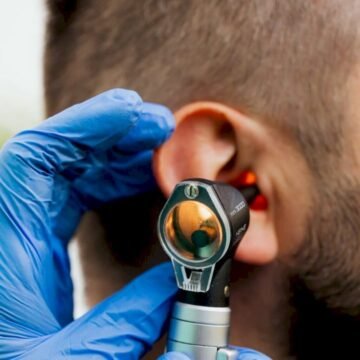
- Earache — children aged 1 to 17
- Impetigo — patients aged 1 and over
- Infected insect bites — patients aged 1 and over
- Shingles — adults aged 18 and over
- Sinusitis — patients aged 12 and over
- Sore throat — patients aged 5 and over
- Uncomplicated urinary tract infection (UTI) — women aged 16 to 64
Pharmacists use Patient Group Directions (PGDs) to supply prescription-only medicines within these pathways. A PGD is a written instruction that allows a pharmacist to supply a specific medicine to a defined group of patients without an individual prescription from a doctor. This is what makes Pharmacy First genuinely different from a standard over-the-counter consultation. If your symptoms fall outside the pathway criteria, whether due to age, complexity, or severity, the pharmacist will refer you to a more appropriate service rather than attempt to treat you regardless.
Pro Tip: If you are unsure whether your condition qualifies, call the pharmacy before walking in. A quick phone call saves time and helps the team prepare for your consultation.
How do you access pharmacy first services?
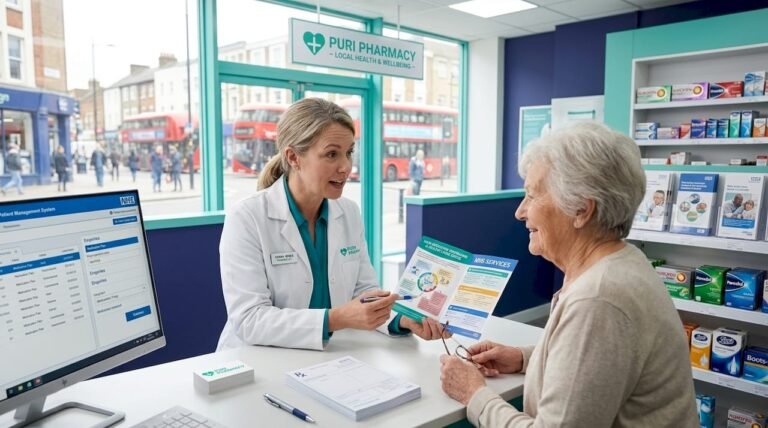
Access is deliberately straightforward. Patients can walk in to any participating community pharmacy without a prior appointment, or they can be referred electronically by a GP surgery, NHS 111, an urgent treatment centre, or an emergency department. Patients who are not registered with a GP are still eligible to use the service. This removes one of the most common barriers to minor illness care.
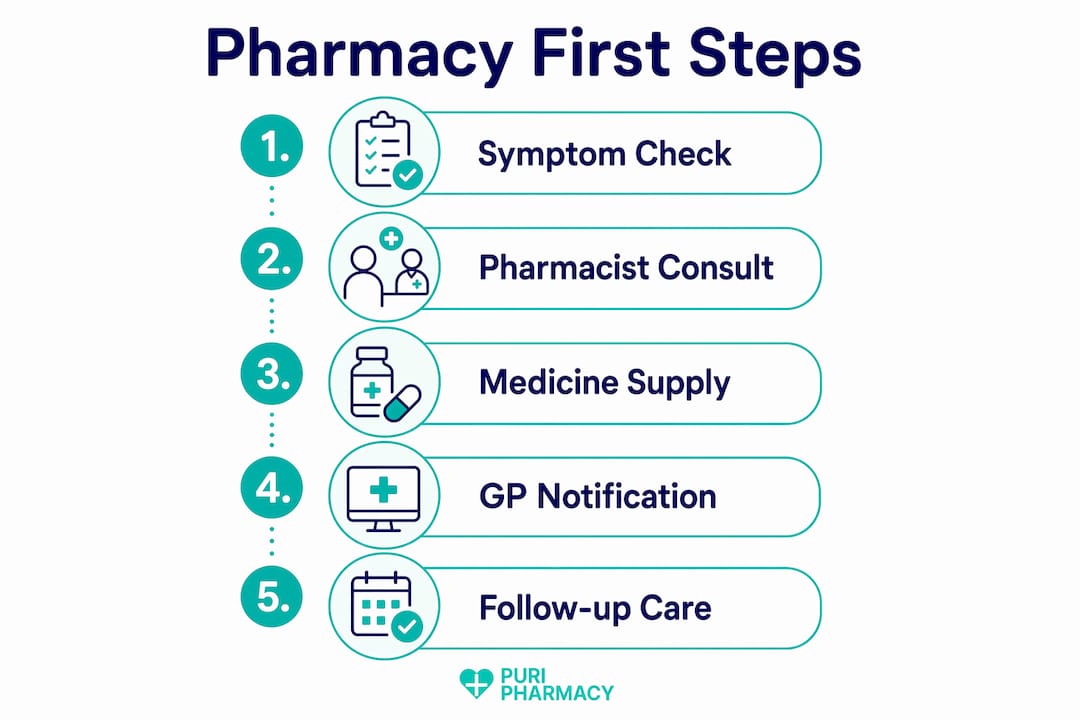
A typical consultation follows these steps:
- Arrive at the pharmacy and inform the team you would like a Pharmacy First consultation for your condition.
- Provide a brief clinical history so the pharmacist can assess whether your symptoms fit the relevant pathway.
- Consult privately with the pharmacist, usually in a dedicated consultation room or, at some pharmacies, via video link.
- Receive advice and treatment if your condition fits the pathway. This may include a prescription-only medicine supplied directly by the pharmacist.
- Your consultation record is shared electronically with your GP surgery to keep your health records up to date.
The consultation details are sent to your GP electronically, which maintains continuity of care and means your doctor has a full picture if you need follow-up treatment. This integration with GP records is one of the service’s most clinically significant features. It means Pharmacy First is not a standalone episode of care but part of your broader NHS health record.
Pro Tip: Bring a list of any medicines you are currently taking to your consultation. This helps the pharmacist check for interactions and speeds up the assessment considerably.
For residents in west London, Puripharmacy’s Southall pharmacy offers walk-in Pharmacy First consultations during opening hours.
What are the costs and who is exempt?
The pharmacist consultation itself is free on the NHS. However, any medicine supplied under Pharmacy First is subject to normal NHS prescription charges. As of 2026, the standard prescription charge is £9.90 per item. This is the same charge you would pay for a medicine collected from a GP prescription.
The table below summarises who pays and who is exempt:
| Patient group | Prescription charge status |
|---|---|
| Children under 16 | Exempt from charges |
| Adults aged 60 and over | Exempt from charges |
| Patients with certain medical conditions (e.g., diabetes, epilepsy) | Exempt with valid exemption certificate |
| Pregnant women or those who gave birth in the last 12 months | Exempt with maternity exemption certificate |
| Patients on qualifying benefits (e.g., Universal Credit, Income Support) | Exempt with valid HC2 certificate |
| Standard adult patients (16 to 59) | Pay £9.90 per item |
If you pay for multiple prescriptions regularly, a prepayment certificate (PPC) from the NHS may reduce your overall costs significantly. A PPC covers unlimited prescription items for a fixed quarterly or annual fee, which is worth considering if you have a long-term condition alongside an acute minor illness.
The cost structure of Pharmacy First mirrors standard NHS prescribing. This is a deliberate design choice. It means patients are not financially penalised for choosing the pharmacy route over a GP appointment, and it keeps the service equitable for those who are exempt.
Common misconceptions about pharmacy first
Several persistent myths circulate about who can deliver Pharmacy First and what it covers. Getting these wrong can lead to frustration or, worse, patients receiving care from someone not authorised to provide it.
- Only pharmacists can deliver Pharmacy First consultations. Pharmacy technicians cannot deliver the service, even those in extended roles. The pharmacist retains full professional responsibility for every consultation.
- Trainee pharmacists may assist under direct supervision, but the qualified pharmacist must oversee and take responsibility for the clinical decision.
- Pharmacy First does not cover weight management or obesity treatment. This is one of the most common points of confusion. Weight management services are commissioned separately and accessed via GP referral or specialist pathways, not through Pharmacy First clinical routes.
- The service is not limited to patients registered locally. You do not need to be registered with a GP near the pharmacy, or registered with a GP at all, to use Pharmacy First.
- Pharmacy First is not a substitute for emergency care. If symptoms suggest a serious or urgent condition, the pharmacist will direct you to A&E or call 999 rather than attempt to treat you within the pathway.
The distinction between Pharmacy First and weight management is worth emphasising. Weight management support through the NHS is a separately commissioned service, typically accessed via your GP or through NHS digital programmes. Conflating the two leads patients to arrive at a pharmacy expecting obesity treatment that the service simply cannot provide.
What is changing with pharmacy first from autumn 2026?
The government has announced a £340 million investment to expand Pharmacy First from autumn 2026, with the central change being the introduction of independent prescribing by qualified pharmacists. This means pharmacists who hold an independent prescriber qualification will be able to prescribe NHS medicines for a broader range of common conditions without needing a Patient Group Direction or GP involvement.
The scale of existing demand makes this expansion logical. Between March 2025 and February 2026, over 3.3 million consultations were delivered under Pharmacy First in England, representing a 43% increase year on year. That figure reflects genuine patient appetite for accessible, fast, pharmacist-led care. The expansion is designed to meet that demand while simultaneously reducing pressure on GP surgeries and A&E departments.
For patients, the practical effect will be a broader range of conditions treatable at the pharmacy without a GP visit. For pharmacists, it represents a significant professional development, with independent prescribers able to exercise clinical judgement across a wider scope. The right professional in the right setting principle that underpins Pharmacy First becomes even more meaningful when the pharmacist can prescribe independently rather than working within pre-set pathways alone.
The expansion also has implications for pharmacy workforce planning. Pharmacies will need to employ or develop independent prescribers to deliver the extended service, which creates both an opportunity and a staffing challenge for community pharmacy operators across England.
Key takeaways
Pharmacy First delivers free NHS consultations for seven minor conditions at community pharmacies, with medicines subject to standard prescription charges and major service expansion confirmed for autumn 2026.
| Point | Details |
|---|---|
| Seven defined conditions | Earache, impetigo, infected insect bites, shingles, sinusitis, sore throat, and uncomplicated UTI each have specific age criteria. |
| Free consultation, charged medicines | The pharmacist consultation costs nothing on the NHS; medicines supplied follow standard prescription charge rules. |
| Pharmacists only | Only qualified pharmacists can deliver Pharmacy First; technicians cannot, regardless of their extended roles. |
| Weight management is separate | Pharmacy First does not cover obesity or weight management; these require GP referral to commissioned services. |
| Major expansion from autumn 2026 | A £340 million government deal enables independent pharmacist prescribing, building on 3.3 million consultations delivered in one year. |
Why pharmacy first matters more than most patients realise
From my experience working in community pharmacy in west London, the most underused aspect of Pharmacy First is not the treatment itself. It is the triage function. Patients often arrive at a pharmacy after spending days wondering whether their symptoms warrant a GP appointment. The pharmacist consultation answers that question definitively, quickly, and without the wait. For a sore throat or a UTI, that speed genuinely matters.
What I find less well understood is the clinical rigour behind the service. The pathway structure is not a bureaucratic formality. It exists because self-limiting conditions can occasionally mask something more serious, and the clinical pathway prompts the pharmacist to ask the right questions. A sinusitis consultation, for instance, includes red flag checks for orbital cellulitis and meningism. Patients rarely know this is happening, but it is.
The weight management confusion is real and worth addressing directly. I regularly speak to patients who arrive expecting help with their weight under the Pharmacy First banner. The honest answer is that Pharmacy First cannot help with that, but other services can. The NHS Digital Weight Management Programme and private options like Wegovy are entirely separate routes, and a good pharmacist will point you in the right direction rather than simply turn you away.
The 2026 expansion is the development I am most interested in professionally. Independent prescribing changes the pharmacist’s role from pathway follower to clinical decision-maker. That is a meaningful shift, and patients who understand it will get considerably more value from their local pharmacy.
— R
How Puripharmacy supports your pharmacy first needs
Puripharmacy offers Pharmacy First consultations at our Southall and Hillingdon branches, with walk-in availability and a private consultation room for every appointment. Our pharmacists are trained across all seven clinical pathways and can supply prescription-only medicines where appropriate.
If you are looking for weight management support beyond what Pharmacy First provides, Puripharmacy offers the NHS Digital Weight Management Programme as well as private options including weight loss services for those who prefer a private route. We also run specialist clinics for earwax removal near Heathrow and across west London. Contact us to find out which services are available at your nearest branch.
FAQ
What conditions does Pharmacy First treat?
Pharmacy First covers seven conditions: earache, impetigo, infected insect bites, shingles, sinusitis, sore throat, and uncomplicated UTI in women aged 16 to 64. Each condition has defined age eligibility criteria.
Is a Pharmacy First consultation free on the NHS?
The consultation with the pharmacist is free. Any medicine supplied as part of the consultation is subject to the standard NHS prescription charge, currently £9.90 per item, unless you hold a valid exemption.
Can a pharmacy technician deliver a Pharmacy First consultation?
No. Only qualified pharmacists can deliver Pharmacy First consultations. Pharmacy technicians are not authorised to do so, even in extended roles. Trainee pharmacists may assist under direct supervision.
Does Pharmacy First cover weight management or obesity treatment?
Pharmacy First does not cover weight management. These services are commissioned separately and accessed via GP referral or NHS digital programmes. Puripharmacy offers both NHS and private weight management options outside the Pharmacy First pathway.
Do I need to be registered with a GP to use Pharmacy First?
No. Patients who are not registered with a GP can still access Pharmacy First at any participating pharmacy. If you are registered, your consultation details will be shared electronically with your GP surgery to update your health records.