Why slow weight loss works: the science explained

TL;DR:
- Slow weight loss, at 1 to 2 pounds weekly, is the most effective method for sustainable fat reduction. It helps preserve muscle mass, maintain metabolic rate, and allows hormonal adjustments to occur gradually, reducing the risk of regain. Building healthy habits alongside moderate calorie deficits ensures long-term success and lasting results.
Slow weight loss is defined as losing approximately 1 to 2 lb (0.45 to 0.9 kg) per week, and it is the most effective strategy for sustainable fat reduction. This pace, recommended by Harvard Health and the National Institute of Diabetes and Digestive and Kidney Diseases (NIDDK), preserves muscle mass, maintains metabolic rate, and gives your body time to adapt hormonally. Rapid weight loss produces faster numbers on the scale but triggers biological responses that make regain almost inevitable. Understanding why gradual weight loss works is not just reassuring. It is the foundation of any plan that actually lasts.
Why slow weight loss works for muscle preservation
Muscle loss is one of the most underappreciated risks of aggressive dieting. Around 25% of weight lost during rapid weight loss is muscle tissue, not fat. That figure matters because muscle is metabolically active. Losing it reduces how many calories you burn at rest, making future weight management harder with every pound shed.

Gradual weight loss, by contrast, gives your body time to draw primarily from fat stores rather than breaking down lean tissue. Dr. Caroline Apovian, a Harvard-affiliated obesity specialist, has highlighted that the combination of resistance training and adequate protein intake is the most reliable way to protect muscle during a calorie deficit. Neither of those interventions requires extreme effort. They simply require consistency over time.
Muscle mass boosts calorie expenditure at rest, which means every kilogram of muscle you retain is working in your favour around the clock. This is the compounding benefit of slow weight loss that crash diets completely forfeit.
Key practices for protecting muscle during weight loss:
- Aim for 1.6 to 2.2 g of protein per kilogram of body weight daily
- Include resistance training at least two to three times per week
- Avoid very low calorie diets (below 800 kcal/day) unless medically supervised
- Prioritise sleep, as growth hormone released during sleep supports muscle repair
Pro Tip: If you are unsure how much protein you need, a registered dietitian or pharmacist-led weight management service can calculate your target based on your current body composition, not just your weight.
How does slow weight loss affect your metabolism?
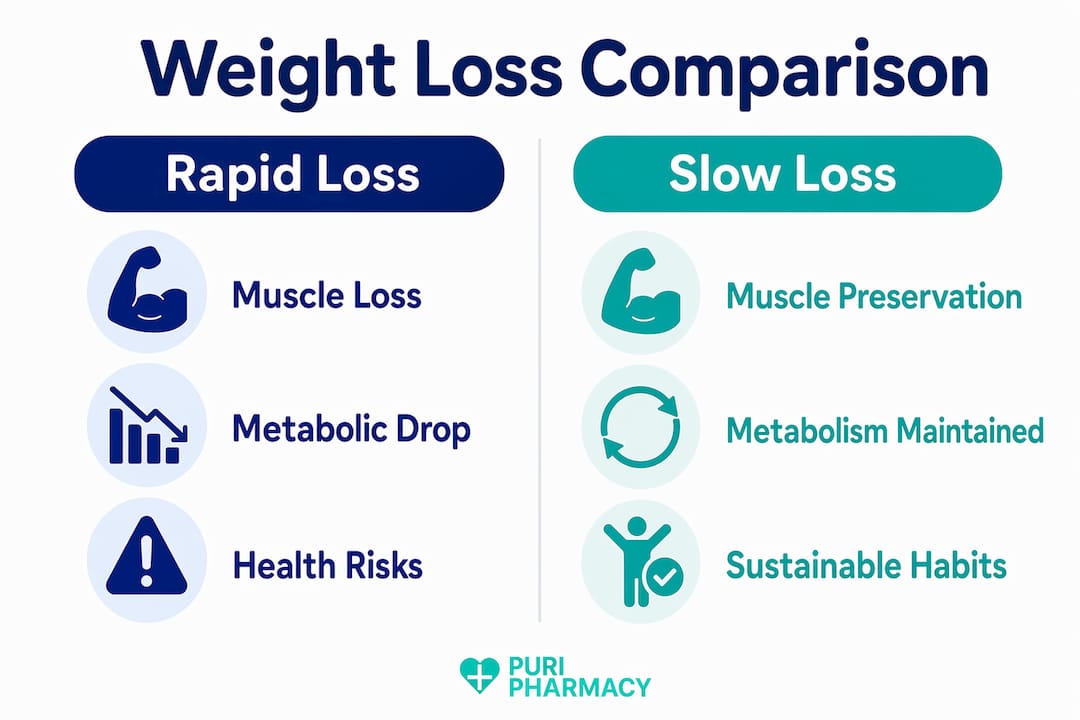
Metabolic adaptation is the body’s survival response to calorie restriction. When you cut calories aggressively, your metabolism slows to compensate, reducing your total daily energy expenditure. Faster weight loss reduces calorie burn rate and increases muscle loss risk, creating a double disadvantage that makes the weight plateau frustrating and regain almost certain.
Hormonal changes compound this problem. Leptin, the hormone that signals fullness, drops sharply with rapid calorie restriction. Ghrelin, the hunger hormone, rises in response. The result is a biological state where you feel hungrier and less satisfied simultaneously. Metabolism slows and hormones shift in response to weight loss, and this is why physical activity, particularly muscle-strengthening exercise, is so important for long-term maintenance.
Slow weight loss allows these hormonal adjustments to occur more gradually, reducing the severity of hunger signals and giving your body time to recalibrate.
“Biological regulation of hunger and metabolism explains the difficulty in maintaining rapid weight loss.” — Cedars-Sinai physician commentary on set-point physiology
| Factor | Rapid weight loss | Slow weight loss |
|---|---|---|
| Metabolic rate | Drops significantly | Maintained more effectively |
| Leptin (fullness hormone) | Falls sharply | Declines gradually |
| Ghrelin (hunger hormone) | Rises sharply | Increases modestly |
| Muscle retention | High risk of loss | Largely preserved |
| Nutrient adequacy | Often compromised | Supported by moderate deficit |
The table above illustrates why the impact of slow weight loss on metabolic health is so much more favourable than rapid approaches. Each of these factors directly influences how easy or difficult it will be to maintain your results once you reach your goal weight.
Does gradual weight loss build better long-term habits?
The behavioural dimension of weight loss is where most plans fail, and it is where gradual approaches have a decisive advantage. Rapid weight loss typically relies on extreme calorie restriction, meal replacement programmes, or elimination diets. These methods produce results quickly but are inherently unsustainable. When the plan ends, the habits that supported it disappear with it.
Slow weight loss aids habit formation critical for long-term lifestyle adherence. A deficit of 500 to 750 calories per day, the range that produces 1 to 2 lb of weekly loss, is achievable through modest dietary adjustments and regular movement. These are changes you can practise, refine, and eventually automate. Crash diets do not teach you how to eat. They teach you how to endure.
The NIDDK’s guidance on weight management consistently emphasises lifestyle sustainability over speed. Gradual weight loss paired with physical activity is the most evidence-backed combination for keeping weight off. That pairing works because it addresses both the physiological and behavioural sides of the problem simultaneously.
Habits that support slow, sustainable weight loss:
- Cooking at home at least four nights per week to control ingredients and portions
- Tracking food intake using an app such as MyFitnessPal or Cronometer for accountability
- Setting a consistent sleep schedule, as poor sleep elevates ghrelin and undermines dietary choices
- Building non-exercise physical activity into daily routines, such as walking to appointments or taking stairs
Patience is not a passive quality in this context. It is an active strategy. Every week you maintain a modest deficit, you are training your body and your mind to operate differently.
Slow vs fast weight loss: which produces better long-term results?
The clinical evidence on this comparison is now substantial enough to draw firm conclusions. Lifestyle interventions outperform semaglutide and surgery for preventing recurrent weight gain over the long term. Semaglutide (sold under the brand name Wegovy) supports ongoing loss during treatment, but rebound weight gain is common after stopping. Bariatric surgery produces dramatic initial results, yet without sustained behavioural change, regain occurs in a significant proportion of patients.
The set-point theory helps explain why. Your body defends a particular weight range through hormonal and neurological mechanisms. Set-point weight changes require months of gradual adaptation, which is precisely why crash diets fail. They do not allow enough time for the body’s defended weight range to shift downward. Slow weight loss, by contrast, gives the set point time to reset, reducing the biological pressure to regain.
Rapid weight loss also carries direct health risks. Rapid loss can cause fatigue, hair loss, and nutrient deficiencies when protein and micronutrients are insufficient. These are not minor inconveniences. Hair loss from telogen effluvium, for example, can persist for months after the diet ends, and fatigue from iron or B12 deficiency undermines the exercise capacity you need to maintain your results.
Pro Tip: If you are considering Wegovy or another GLP-1 medication, pair it with a structured lifestyle programme from the outset. The medication supports loss; the habits protect against regain when treatment ends.
| Approach | Short-term loss | Long-term maintenance | Key risk |
|---|---|---|---|
| Crash dieting | High | Poor | Muscle loss, nutrient deficiency |
| Semaglutide (Wegovy) | High | Moderate (with lifestyle) | Rebound after stopping |
| Bariatric surgery | Very high | Variable | Regain without behaviour change |
| Gradual lifestyle change | Moderate | Best evidence-based outcome | Requires patience and consistency |
The advantages of slow weight loss become clearest when you look at five-year outcomes rather than five-week results. The approach that feels slower in the short term is the one most likely to still be working a decade from now.
Key takeaways
Slow weight loss is the most evidence-backed strategy for sustainable fat reduction because it preserves muscle, protects metabolic rate, and allows the body’s set point to adapt over time.
| Point | Details |
|---|---|
| Optimal pace | Losing 1 to 2 lb per week balances fat loss with muscle preservation and nutrient adequacy. |
| Muscle retention | Around 25% of rapidly lost weight is muscle; resistance training and protein intake protect against this. |
| Metabolic protection | Gradual loss prevents the sharp hormonal shifts that increase hunger and reduce calorie burn. |
| Habit formation | A modest daily deficit builds sustainable dietary and activity habits that outlast any diet plan. |
| Long-term maintenance | Lifestyle interventions produce the most durable weight loss outcomes compared to medication or surgery alone. |
What I have learned from watching people lose weight the right way
The most common mistake I see is treating weight loss as a project with an end date. People set a target, reach it through whatever means necessary, and then return to previous habits. The weight comes back, sometimes with interest, and the cycle repeats. This pattern is not a failure of willpower. It is a failure of strategy.
The physiology is unambiguous. Your body will fight to return to its defended weight range unless you give it enough time and the right conditions to shift that range downward. Slow weight loss is not the cautious option. It is the aggressive option if your goal is permanent change rather than temporary results.
What I advocate for at Puripharmacy is planning maintenance from day one. The exercise habits, the protein targets, the sleep routines: these are not things you add after you lose the weight. They are the mechanism by which you lose it and keep it off. Anyone who tells you otherwise is selling a shortcut that leads back to the start.
The readers who succeed long-term are not the ones who lose the most weight in the first month. They are the ones who are still exercising and eating well six months after they reached their goal. That outcome requires a plan built around gradual, sustainable progress from the very beginning.
— R
How Puripharmacy supports your weight loss journey

Puripharmacy, based in west London, offers structured weight management support designed around the principles of gradual, sustainable progress. Whether you are looking for the NHS Digital Weight Management Programme or want to explore whether Wegovy injections are appropriate for your situation, the team provides personalised guidance that aligns with the science covered in this article. Medication can support your progress, but it works best alongside the behavioural and nutritional habits that protect your results long-term. Visit Puripharmacy’s weight loss service to find out which option suits your goals, or speak to a pharmacist in person at the Southall and Hillingdon clinic.
FAQ
What is a safe rate of weight loss per week?
A safe and realistic rate is 1 to 2 lb (0.45 to 0.9 kg) per week, achievable through a daily calorie deficit of 500 to 750 calories. This pace supports fat loss while preserving muscle mass and ensuring adequate nutrient intake.
Why does rapid weight loss cause weight regain?
Rapid weight loss triggers sharp drops in leptin and rises in ghrelin, increasing hunger while reducing calorie burn. The body’s set point also resists change unless adaptation occurs gradually over several months.
Is slow weight loss better than using medication like Wegovy?
Lifestyle-based gradual weight loss produces the most durable long-term outcomes, including for preventing regain. Wegovy supports active weight loss effectively, but rebound is common after stopping unless sustainable habits are already in place.
How does resistance training help with slow weight loss?
Resistance training preserves lean muscle mass during a calorie deficit, which keeps resting metabolic rate higher. Muscle tissue burns more calories at rest than fat tissue, making it a critical asset for long-term weight management.
How long does it take to see results with gradual weight loss?
At 1 to 2 lb per week, meaningful fat loss of 10 to 20 lb is achievable within two to three months. Progress feels slower initially, but the metabolic and hormonal stability gained makes results far more likely to last.