What is weight relapse? Causes and what to do

TL;DR:
- Weight relapse occurs when significant weight is regained after intentional loss, primarily driven by biological adaptations. Understanding it as a chronic condition rather than personal failure encourages ongoing management and support. Preventative strategies include consistent movement, nutrient-dense eating, regular monitoring, and seeking professional guidance.
Weight relapse is one of the most misunderstood parts of the weight loss journey. Many people assume that regaining weight after losing it reflects a lack of discipline or commitment. The truth is far more complicated, and far more forgiving. Understanding weight relapse properly, including what triggers it, why it happens biologically, and how to distinguish it from normal fluctuations, changes how you approach weight management entirely. This article breaks it all down so you can make sense of what your body is doing and take steps that actually work.
Table of Contents
- Key takeaways
- What is weight relapse, exactly?
- The biology driving weight relapse
- Psychological and behavioural factors
- Fluctuations versus clinically significant relapse
- Practical strategies to manage and prevent relapse
- My view on weight relapse and why the conversation needs to change
- Support for your weight management at Puripharmacy
- FAQ
Key takeaways
| Point | Details |
|---|---|
| Weight relapse is biological | The body actively fights weight loss through hormonal changes and reduced metabolism, not just willpower. |
| Clinical thresholds exist | Regaining more than 10 to 20% of lost weight is the standard clinical definition of significant relapse. |
| Terminology matters | The shift towards “weight recurrence” helps frame this as a chronic condition, not a personal failure. |
| Not all weight gain is relapse | Water retention and temporary fluctuations are common and do not signal clinically significant regain. |
| Support improves outcomes | Long-term monitoring, medication where appropriate, and behavioural changes all reduce relapse risk. |
What is weight relapse, exactly?
The phrase “weight relapse” does not have a single universally agreed definition, which creates genuine confusion for people researching it. You may have come across the terms “weight regain,” “weight recurrence,” and “weight relapse” used interchangeably. They broadly refer to the same thing: recovering a significant amount of weight after intentional loss. But the nuances matter.
Clinically, the most widely used weight regain definition involves specific thresholds. Research on metabolic and bariatric surgery outcomes defines clinically significant weight recurrence as regaining more than 10 to 20% of the maximum weight lost, or returning to a BMI above 35 kg/m² with associated health conditions. These thresholds help clinicians decide when to intervene with additional treatment.
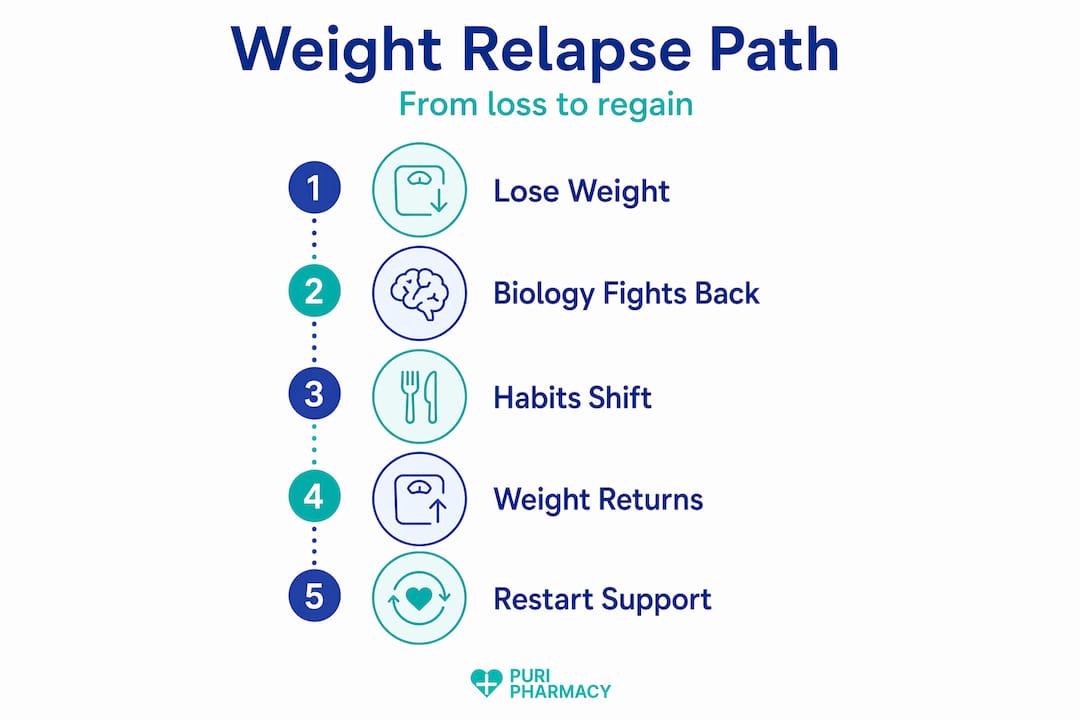
The field is also undergoing a terminology shift. The move toward “weight recurrence” as a preferred clinical term is deliberate. It frames obesity as a chronic condition requiring ongoing management, much like hypertension or type 2 diabetes. This framing reduces the stigma attached to regain and encourages patients to seek help rather than withdraw in shame.
Here is a quick comparison of how these terms are typically used:
| Term | Common usage | Clinical implication |
|---|---|---|
| Weight regain | Everyday language | Any increase in weight after loss |
| Weight relapse | Clinical and behavioural contexts | Significant, sustained reversal of weight loss |
| Weight recurrence | Emerging preferred clinical term | Chronic disease model; weight returning above defined threshold |
Understanding weight relapse through this lens shifts the conversation away from blame entirely and towards management. That shift matters enormously for how motivated and supported you feel throughout your journey.
The biology driving weight relapse
This is where understanding weight relapse becomes genuinely eye-opening. The body does not passively accept weight loss. It actively works to reverse it.
When you lose weight, your metabolism slows down. This is called metabolic adaptation, and it means your body burns fewer calories at rest than it did before you lost weight, even after accounting for your smaller size. Alongside this, hormonal changes increase hunger and reduce the signals that tell you you’re full. Specifically, levels of hormones like leptin and GLP-1 fall after weight loss, while ghrelin (the hunger hormone) rises. The practical result is that you feel hungrier than you did before losing weight, and food feels more rewarding.
There is also the concept of the body’s set-point: a weight range it appears to defend through these counter-regulatory mechanisms. When your weight drops below your set-point, the body treats this as a threat and ramps up appetite while reducing energy expenditure.
The causes of weight relapse linked to medication withdrawal deserve particular attention. When people stop GLP-1 receptor agonists such as Wegovy, the hunger-suppressing effects disappear quickly. Research shows that people stopping GLP-1 drugs regain weight at approximately 0.8 kg per month on average. That rate is roughly four times faster than regain seen after stopping diet alone. The biology was being managed by the medication, and without it, those biological drives return in full force.
Key biological causes of weight relapse include:
- Metabolic slowdown: Resting energy expenditure drops after weight loss and can remain suppressed for years.
- Hormonal counter-regulation: Ghrelin rises and satiety hormones like PYY, CCK, and GLP-1 fall, keeping hunger persistently elevated.
- Set-point defence: The body appears to defend a weight range it considers normal, resisting changes below it.
- Medication withdrawal: Stopping appetite-modifying medications removes biological support, allowing suppressed hunger to resurface rapidly.
Pro Tip: If you are considering stopping a weight management medication, speak to a pharmacist or GP first. A supervised tapering plan or transition strategy can significantly reduce the speed and extent of weight regain.
None of this means weight management is hopeless. It means that treating it like a short-term project, rather than an ongoing health practice, sets most people up for relapse from the start.
Psychological and behavioural factors
Biology is not the whole story. The psychological side of weight management is equally complex, and it shapes whether people maintain their results or slip back over time.

One of the most telling insights from behavioural research is the role of identity. Sustainable long-term maintenance requires more than following a plan. It requires a genuine shift in how you see yourself. People who see themselves as someone who eats well and moves regularly, rather than someone who is “on a diet,” tend to maintain their weight far more effectively. The behaviour becomes part of who they are rather than something they have to force.
On the other side, extreme dieting actively creates the conditions for relapse. Severe restrictive dieting can trigger a starvation response in the body, causing muscle loss and hormone shifts that prime the body to regain weight aggressively once the restriction ends. The harder the crash diet, the more dramatic the rebound tends to be.
Stress is another significant factor. Chronic stress elevates cortisol, which increases appetite and specifically drives cravings for calorie-dense foods. Without effective stress management strategies, even the best dietary intentions can unravel quickly.
Behavioural strategies that reduce the risk of relapse turning into full recurrence include:
- Identifying personal triggers for overeating or abandoning exercise routines
- Building flexible, sustainable habits rather than all-or-nothing rules
- Using social support or professional accountability to stay consistent
- Treating a lapse as data rather than failure, and adjusting the approach accordingly
The distinction between a lapse and a relapse is important. A lapse is a temporary slip. A relapse is a sustained return toward previous patterns. Catching the lapse early, without self-criticism, is what prevents it from becoming something bigger.
Fluctuations versus clinically significant relapse
Not every upward movement on the scale signals weight relapse. This point is critically important for your mental wellbeing and your ability to respond appropriately.
Rapid scale changes after changes in diet or exercise are frequently due to fluid shifts, not fat gain. A salty meal, a heavy training session, hormonal changes across the menstrual cycle, or simply being more hydrated can all add 1 to 3 kg to the scale overnight. This is not relapse. It is physiology.
A small temporary rebound after reaching your lowest weight is also very common and can actually be part of the body stabilising at a new, sustainable level. This is not a red flag; it is often a sign that the body is finding equilibrium.
Here is a practical guide to telling the two apart:
| Type of change | Timescale | Likely cause | Action needed |
|---|---|---|---|
| Small upward fluctuation | Days to 1 week | Fluid retention, diet variation | None. Continue your usual routine. |
| Moderate rebound after nadir | 2 to 4 weeks | Body stabilising after weight loss | Monitor. May be normal stabilisation. |
| Sustained, progressive gain | Over 4 to 8 weeks | Metabolic or behavioural relapse | Seek professional support. |
Pro Tip: Track your weight as a weekly average rather than a daily reading. This smooths out fluctuations and gives you a far more accurate picture of your actual trend over time.
When gain is sustained, crosses the 10% threshold of lost weight, or is accompanied by returning health symptoms, that is the point to contact a healthcare professional. Acting early leads to much better outcomes than waiting until the situation feels out of control.
Practical strategies to manage and prevent relapse
Preventing weight gain after successful loss is not about willpower. It is about creating conditions where your biology and behaviour are working together rather than against each other.
- Sustain movement, not just diet. Physical activity is one of the strongest predictors of long-term weight maintenance. Even moderate daily movement, such as 30 minutes of walking, helps regulate appetite hormones and preserve muscle mass that keeps metabolism higher.
- Eat for satiety, not just calories. Protein-rich meals and high-fibre foods keep you fuller for longer by supporting the very hormonal signals that weight loss suppresses. Prioritising these foods helps offset the biological hunger drive that follows weight loss.
- Maintain realistic expectations. Understanding that your body is biologically motivated to regain weight helps you prepare for the effort required and reduces the shame spiral when it gets hard.
- Use professional support where it fits. For many people, maintaining weight loss without ongoing support is genuinely difficult. The NHS Digital Weight Management Programme offers structured, evidence-based support for eligible individuals.
- Monitor consistently. Regular weight checks, even simple weekly weigh-ins, allow you to catch upward trends early and respond before they become clinically significant.
- Rebuild without judgment after a lapse. If weight has crept back, the worst response is abandoning the effort entirely. Return to the fundamentals, reduce any extreme restrictions that triggered the lapse, and seek additional support if needed.
My view on weight relapse and why the conversation needs to change
I have spoken with many people who have lost significant weight, regained some or all of it, and then quietly stepped back from seeking help because they felt embarrassed. That pattern, repeated constantly, is one of the most damaging consequences of how we collectively talk about weight.
What I have seen clearly is that the people who struggle most with sustained weight management are not the ones who lack commitment. They are often the most committed, having tried the hardest with the most restrictive approaches. The biology works against them, and then the shame compounds it.
Framing weight relapse as a chronic condition rather than a character flaw is not just kinder. It is more accurate. Weight management, for many people, requires the same ongoing professional support that managing blood pressure or blood sugar does. Accepting that is not giving up. It is being realistic about what the body actually does.
What I believe truly helps is building a life structure where healthy choices are the easy choices, not a constant act of resistance. That takes time, personalised support, and often the right medical tools alongside behavioural change. There is no shame in needing all three.
— R
Support for your weight management at Puripharmacy
If you are experiencing weight relapse or want to get ahead of it, Puripharmacy in west London offers practical, professional support tailored to where you actually are in your journey.

For people whose biology needs direct support, Wegovy weight loss injections are available through our private prescribing clinic. Wegovy works by mimicking GLP-1 to reduce appetite and support significant weight loss, and our team can advise on whether it is appropriate for you. We also offer access to the NHS Digital Weight Management Programme for eligible patients, providing structured long-term support. Our approach always includes monitoring and follow-up, because sustained results require sustained care. Contact Puripharmacy to speak with a pharmacist and find the right path forward.
FAQ
What is weight relapse in simple terms?
Weight relapse is the sustained regaining of a significant amount of weight after intentional loss. Clinically, it is often defined as regaining more than 10 to 20% of the maximum weight lost.
Is weight relapse common?
Yes, weight relapse is extremely common. Research consistently shows that most people regain weight within five years of losing it, largely due to biological adaptations rather than behavioural failure.
What triggers weight regain after stopping medication?
When GLP-1 receptor agonists are stopped, the hunger-suppressing effects reverse quickly. People can regain around 0.8 kg per month on average after stopping these medications, making a supervised transition plan important.
How do I know if I am in relapse or just fluctuating?
Temporary fluctuations from fluid shifts or dietary changes typically resolve within a week. Weight relapse involves a sustained, progressive increase over four to eight weeks or more, crossing defined thresholds of total weight regained.
Can weight relapse be prevented?
It can be managed and reduced significantly. Sustained physical activity, protein-rich eating habits, regular monitoring, and professional support where needed are the most evidence-supported approaches to preventing weight gain after loss.