Pharmacy staff checklist: safe advice on weight, aesthetics, and ears
TL;DR:
- Thorough pharmacy consultations are essential for safe weight loss, aesthetic, and earwax removal services, requiring in-person assessments, proper documentation, and prescriber involvement. Skipping these critical safety steps increases the risk of ineffective treatment or harm, emphasizing the importance of patient advocacy and regulatory compliance. At Puri Pharmacy in West London, we adhere to all standards, offering expert, safe care with comprehensive consultations and follow-up support.
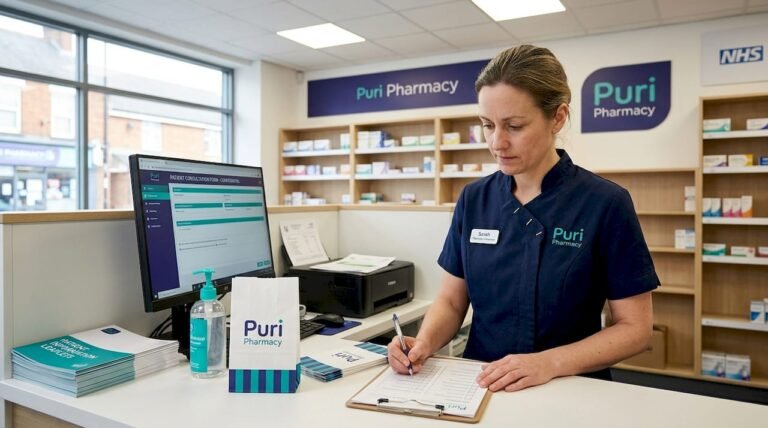
Walking into a pharmacy in West London for weight loss support, a Botox consultation, or earwax removal is far more involved than picking up a prescription. The quality of advice you receive depends almost entirely on whether staff follow a rigorous, step-by-step process before anything is supplied or administered. Get that process right and you are protected. Get it wrong and the consequences range from ineffective treatment to genuine harm. This article gives you a clear, service-by-service breakdown of exactly what thorough pharmacy staff should check, so you can walk in prepared and walk out confident.
Table of Contents
- What should pharmacy staff check for weight loss services?
- Checklist for aesthetics: safe advice on Botox, fillers, and more
- Key checks for earwax removal services
- Comparison of pharmacy staff checklists: what to expect
- Why careful staff checklists matter more than ever
- Get expert pharmacy services near you
- Frequently asked questions
Key Takeaways
| Point | Details |
|---|---|
| Always insist on verification | Ask staff to verify your BMI and conduct in-person checks for weight loss and aesthetics. |
| Know key checklist steps | Safe pharmacies always complete risk assessment, documentation, and follow official guidelines for every service. |
| No shortcuts in aesthetics | Legal injectables require an in-person prescriber exam—remote prescribing is not allowed. |
| Earwax removal requires screening | Proper history checks and hygiene are as important as the procedure itself in pharmacy services. |
| Documentation protects you | Good recordkeeping by staff means your risks are minimised and outcomes are better. |
What should pharmacy staff check for weight loss services?
Weight loss is one of the fastest-growing pharmacy services in the UK, and the speed of that growth has created real inconsistencies in how consultations are handled. Some pharmacies are doing this exceptionally well. Others are cutting corners in ways that put patients at risk. Knowing what a proper consultation looks like means you can spot the difference immediately.
The essential steps pharmacy staff must take for weight loss advice:
- Verify your height and weight in person to calculate your BMI accurately. This cannot be done from a photo or a self-reported figure. Pharmacy staff must independently verify patient BMI and weight before supplying any weight loss medicines or supplements, as required by GPhC risk assessment standards.
- Review your full medication list and medical history for contraindications, including thyroid conditions, pancreatitis, or a history of eating disorders.
- Document the entire consultation, including risk assessments, in a format that can be audited. This is not optional. It is a GPhC requirement.
- Provide tailored counselling that explains how the treatment works, what side effects to expect, and what lifestyle changes support it.
- Arrange a follow-up appointment. NICE guidelines specify an initial assessment, personalised counselling, and a follow-up monitoring appointment every four weeks during the titration phase of medicines such as semaglutide.
One area that trips up patients and some staff alike is the screening for disordered eating. If you have a history of anorexia or bulimia, certain weight loss medicines are not appropriate, and a thorough pharmacist will ask about this sensitively before proceeding. Skipping this step is a significant clinical oversight, not a minor omission.
“Pharmacies that fail to conduct independent, in-person verification of patient weight and BMI before supplying weight loss treatments are not meeting the minimum standard set by the General Pharmaceutical Council.”
Pro Tip: Before your consultation, write down your current medications, any diagnosed conditions, and your weight history. Bringing this information with you makes it easier for staff to complete a thorough assessment quickly and accurately.
It is worth noting that around five per cent of inspected pharmacies have been found to fail on independent verification, relying instead on patient-reported data. That may not sound like a large figure, but it represents real people receiving treatments based on inaccurate information. You can learn more about how a properly structured process works by reviewing the weight loss clinic process or by exploring NHS weight management advice for context on what clinical standards apply.
Checklist for aesthetics: safe advice on Botox, fillers, and more
Aesthetic treatments sit in a uniquely sensitive regulatory space. Unlike a supplement or an earwax removal appointment, injectable treatments involve prescription-only medicines and carry risks that range from bruising to serious vascular complications if administered incorrectly. The checklist for aesthetics is therefore one of the most non-negotiable in pharmacy practice.
What staff must check before any aesthetic treatment:
- Confirm your identity using appropriate documentation. This protects both you and the practitioner.
- Ensure a prescriber conducts a thorough in-person physical examination before any injectable treatment is supplied or administered. Aesthetic injectables like Botox require a face-to-face prescriber assessment. Remote or online prescribing for injectables is not compliant with UK guidance.
- Obtain your full informed consent in writing. This means explaining what the procedure involves, the realistic outcomes, and the potential risks including asymmetry, bruising, infection, and in rare cases, more serious complications.
- Discuss your medical history, including any blood thinners, autoimmune conditions, or previous reactions to aesthetic treatments.
- Confirm the product being used is licenced, and document the batch number and expiry date.
A red flag you should never ignore: if a pharmacy offers you injectable aesthetic treatments through a remote or online consultation, or if no prescriber is available on site and staff still offer to proceed, walk away. This is not a grey area. It is a compliance failure. The BBC has previously exposed clinics operating illegal remote prescribing for Botox, demonstrating that this problem is real and ongoing.
“No pharmacy should supply or administer prescription-only injectable aesthetic treatments without a prescriber conducting an in-person physical examination of the patient. This is not discretionary.”
When it comes to fillers specifically, reputable pharmacy staff will strongly favour reversible hyaluronic acid-based products over permanent fillers. Reversible fillers can be dissolved if something goes wrong, permanent ones cannot. If a clinic pushes you towards a permanent product without clearly explaining this distinction, treat it as a significant warning sign.
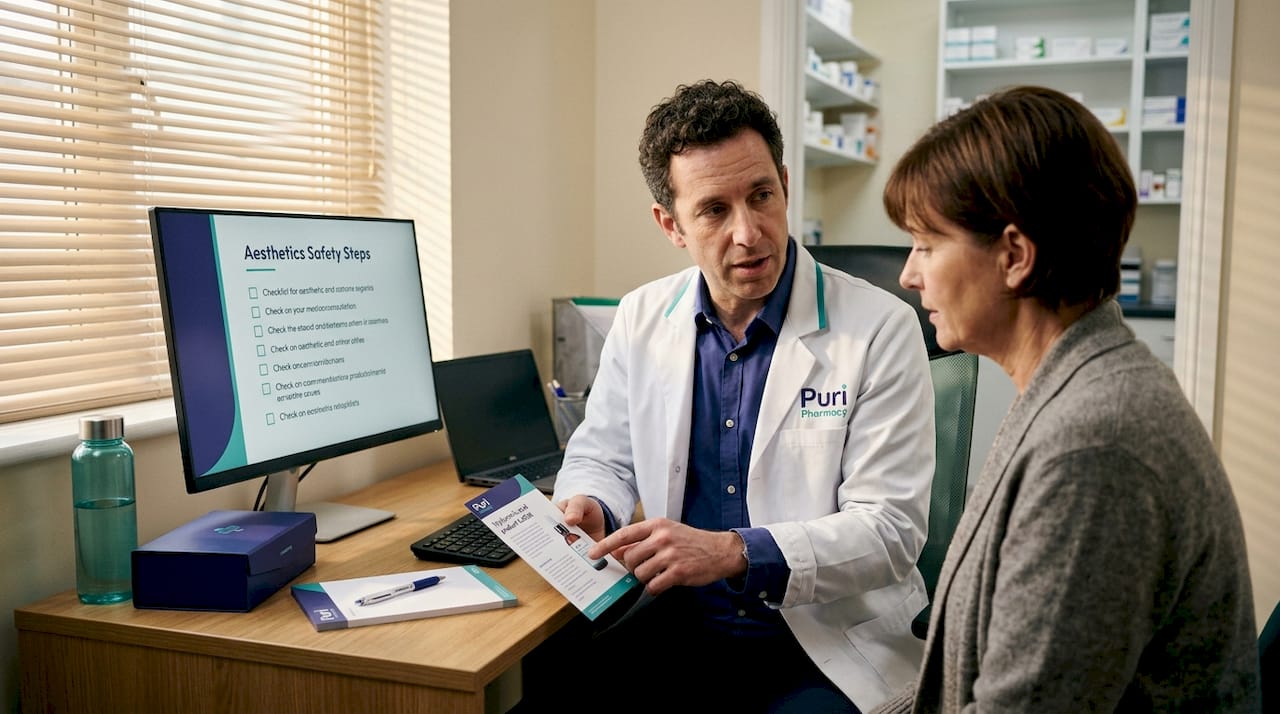
Pro Tip: Ask the prescriber directly whether the product is hyaluronic acid-based and reversible. A practitioner who is confident in their practice will answer this immediately and thoroughly.
You can review how a compliant consultation is structured through the private prescribing steps available at our West London pharmacy, or learn about how repeat prescription safety works for ongoing aesthetic maintenance.
Key checks for earwax removal services
Earwax removal has become increasingly popular as a pharmacy-led service, and for good reason. It is accessible, relatively straightforward, and can make an immediate and dramatic difference to your hearing and comfort. But it is not without risks, and the steps staff take before, during, and after the procedure matter enormously.
What thorough pharmacy staff should cover for earwax removal:
- Review your ear health history. Staff should ask whether you have had ear surgery, a perforated eardrum, current or recent ear infections, or any history of ear disease. Each of these is a contraindication that changes or rules out the service entirely.
- Explain the procedure clearly. Whether the method is microsuction, irrigation, or manual removal, you should know exactly what to expect before anything enters your ear canal.
- Describe realistic outcomes and risks. Earwax removal is generally safe, but temporary dizziness, minor discomfort, or incomplete removal can occur. You deserve to know this upfront.
- Use single-use or fully sterilised equipment. This is a basic infection control requirement. There is no acceptable compromise here.
- Document the procedure in your patient record, including the method used, findings, and any advice given during or after the appointment.
- Advise clearly on aftercare and on when to seek further medical attention, for instance if you experience pain, sudden hearing loss, or discharge after the appointment.
Pharmacies expanding into clinical services face heightened governance requirements from the GPhC, precisely because the stakes of getting these procedures wrong are higher than they are for dispensing a standard prescription. The regulator’s expectation is that every service a pharmacy offers is backed by appropriate governance, training, and documentation.
Pro Tip: Use olive oil ear drops for two to three days before your earwax removal appointment. This softens the wax and often makes the procedure quicker, more comfortable, and more effective.
For more on maintaining good ear health between appointments, you can explore ear health practices that support long-term hearing wellbeing.
Comparison of pharmacy staff checklists: what to expect
For a useful overview, here is how the checklists compare across all three services, which is particularly helpful if you are planning to use more than one at your pharmacy visit.
| Check | Weight loss | Aesthetics | Earwax removal |
|---|---|---|---|
| Identity verification | Yes | Yes (required) | Recommended |
| In-person assessment | Mandatory | Mandatory | Mandatory |
| Medical history review | Yes, detailed | Yes, detailed | Yes, ear-focused |
| Prescriber involvement | Prescriber or pharmacist independent prescriber | Prescriber must be present | Not required |
| Informed consent | Written or verbal | Written | Verbal, documented |
| Documentation | Full GPhC-compliant record | Full record with batch numbers | Procedure notes in patient record |
| Follow-up scheduled | Yes, every 4 weeks during titration | Yes, for review and maintenance | As needed, or if concerns arise |
| Specific screening | BMI, disordered eating history | Contraindications for injectables | Perforated eardrum, ear infections |
| Regulatory standard | GPhC, NICE | GPhC, GMC, Royal College | GPhC governance framework |
The table reveals something important: all three services share a common foundation of in-person assessment, documentation, and medical history review. Where they diverge is in who must be involved (a prescriber is non-negotiable for aesthetics), the depth of the specific screening required, and the ongoing monitoring expectations. Weight loss stands out for its structured follow-up schedule, while aesthetics is distinguished by its stricter prescribing rules.
Why careful staff checklists matter more than ever
We see patients come to us after experiences at other providers where crucial steps were skipped, sometimes without them even realising it. A person who received a weight loss injection based on a phone consultation and a self-reported weight. Someone who was offered fillers without any discussion of what product would be used or whether it was reversible. These are not theoretical scenarios. They happen, and the outcomes range from wasted money to medical intervention being required to correct problems.
The expansion of pharmacy services into weight management, aesthetics, and clinical procedures is genuinely positive for public access to healthcare. But access without rigour is not a benefit. It is a risk dressed up as convenience. Regulatory action against substandard pharmacy practice is increasing, with the GPhC publishing more enforcement outcomes and setting clearer expectations for service governance than ever before.
Here is the part of this conversation that rarely gets said directly: the more you understand about what a proper checklist looks like, the less likely you are to accept a substandard service. Patients who ask, “Will you be verifying my weight in person?” or “Is there a prescriber here today?” are not being difficult. They are advocating for their own safety. That shift in how patients engage with pharmacy services is one of the most important things happening in community pharmacy right now.
The uncomfortable truth is that price and speed are often the enemy of safety in this space. A cheap, quick Botox appointment with a remote prescription is cheap and quick for a reason. A thorough weight loss consultation that takes thirty minutes and covers a full medical history costs more time and resource. That investment reflects genuine care, not inefficiency.
Get expert pharmacy services near you
If the checklists in this article have made you think more carefully about where you access these services, that is exactly the point. At Puri Pharmacy in West London, we follow every one of the steps outlined here for our weight loss, aesthetics, and earwax removal services because we believe that proper care is non-negotiable.
Whether you are exploring weight management support for the first time or looking for a reliable local provider for earwax microsuction, our team of trained pharmacy professionals is here to guide you through every step. We provide in-person consultations, documented assessments, and follow-up care that meets current GPhC and NICE standards. Visit us in West London or get in touch to book your appointment. Safe, expert pharmacy care is closer than you think.
Frequently asked questions
Do I need a physical consultation for weight loss medication at a pharmacy?
Yes, pharmacy staff must verify your BMI and conduct an in-person assessment before supplying any weight loss medicines, with no exceptions under current GPhC standards.
Can I get Botox or fillers remotely from a UK pharmacy?
No. A prescriber must examine you in person before any injectable aesthetic treatment is supplied, and remote prescribing for Botox or fillers is not compliant with UK guidance.
What should a pharmacy ask before earwax removal?
Staff should review your ear health history, confirm there are no contraindications such as a perforated eardrum, and explain the procedure fully. Pharmacies expanding clinical services are held to strict GPhC governance standards for exactly this reason.
Should pharmacy staff document every consultation for these services?
Yes. Pharmacy staff must document all consultations and risk assessments in line with GPhC requirements. Proper records protect you and ensure continuity of safe care.