The role of aesthetics in wellbeing explained

TL;DR:
- Aesthetics significantly influences wellbeing by activating brain reward pathways and reducing stress through thoughtfully designed environments. Engaging with art and natural settings enhances emotional regulation, motivation, and social connection, supporting mental health. Personal and cultural factors shape aesthetic experiences, making intentional, mindful engagement vital for maximizing these benefits.
Aesthetics is not decoration. The role of aesthetics in wellbeing is far more functional than most people realise, and the science behind it has been quietly transforming fields from rehabilitation medicine to urban planning. Neuroaesthetics research shows that encountering beauty activates the brain’s dopaminergic reward pathways, the same circuits involved in motivation, learning, and emotional regulation. This is not a soft claim. It means that what you see, hear, and inhabit every day has a measurable impact on your mental health, stress levels, and cognitive function. This article unpacks exactly how that works.
Table of Contents
- Key takeaways
- The role of aesthetics in wellbeing and the brain
- How your environment shapes your mental state
- Arts engagement and mental wellness
- Individual and cultural differences in aesthetic experience
- Bringing aesthetics into your daily life
- My take: aesthetics deserves a seat at the table
- How Puripharmacy supports your overall wellbeing
- FAQ
Key takeaways
| Point | Details |
|---|---|
| Aesthetics activates reward pathways | Beauty engages the brain’s dopamine system, directly supporting mood and motivation. |
| Environment design shapes recovery | Visual coherence and complexity in spaces measurably reduce stress and aid cognitive restoration. |
| Arts engagement is multi-mechanism | Arts improve wellbeing through social, emotional, and cognitive pathways simultaneously. |
| Cultural and personal factors matter | Education, childhood experiences, and culture all shape how strongly aesthetics affects your wellbeing. |
| Aesthetic appreciation differs from comparison | Appreciating beauty boosts mood; comparing your appearance to others can cause harm. |
The role of aesthetics in wellbeing and the brain
Neuroaesthetics is the scientific study of how aesthetic experiences affect the brain. It sits at the intersection of neuroscience, psychology, and the arts, and what it has uncovered in recent years is striking. When you experience something you find beautiful, whether that is a painting, a piece of music, or a well-designed room, your brain does not simply register it as pleasant. It responds.
Neuroimaging studies show that aesthetic pleasure activates specific regions including the medial orbitofrontal cortex and the ventromedial prefrontal cortex. These are the same areas involved in emotional processing, reward, and decision-making. The activation of these circuits is not passive. It supports emotional regulation, positive affect, and even the consolidation of memory and learning.
Beyond mood, aesthetic pleasure functions as a cognitive amplifier, sharpening attention and enhancing the capacity to absorb new information. This has profound implications for anyone in a demanding cognitive environment, from students to professionals recovering from neurological injury.
“Aesthetic experience is not entertainment added to rehabilitation. It is a core mechanism that can improve neuroplasticity and engagement without requiring specialised training or equipment.”
One of the most compelling applications of this research is in neurorehabilitation. Aesthetic gratification enhances engagement and motivation in rehabilitation settings by activating pleasure and reward pathways. Crucially, this can be implemented without extra equipment or specialist staff, making it a genuinely accessible tool for improving patient outcomes.
Pro Tip: If you are recovering from illness or managing a long-term condition, surrounding yourself with aesthetically meaningful objects or music is not indulgence. It is a scientifically supported way to support your neurological and emotional recovery.
How your environment shapes your mental state
Step into a cluttered, poorly lit room versus a well-designed space with plants, natural light, and a sense of order. You feel the difference immediately. But what is actually happening physiologically? Research has begun to answer this with surprising precision.
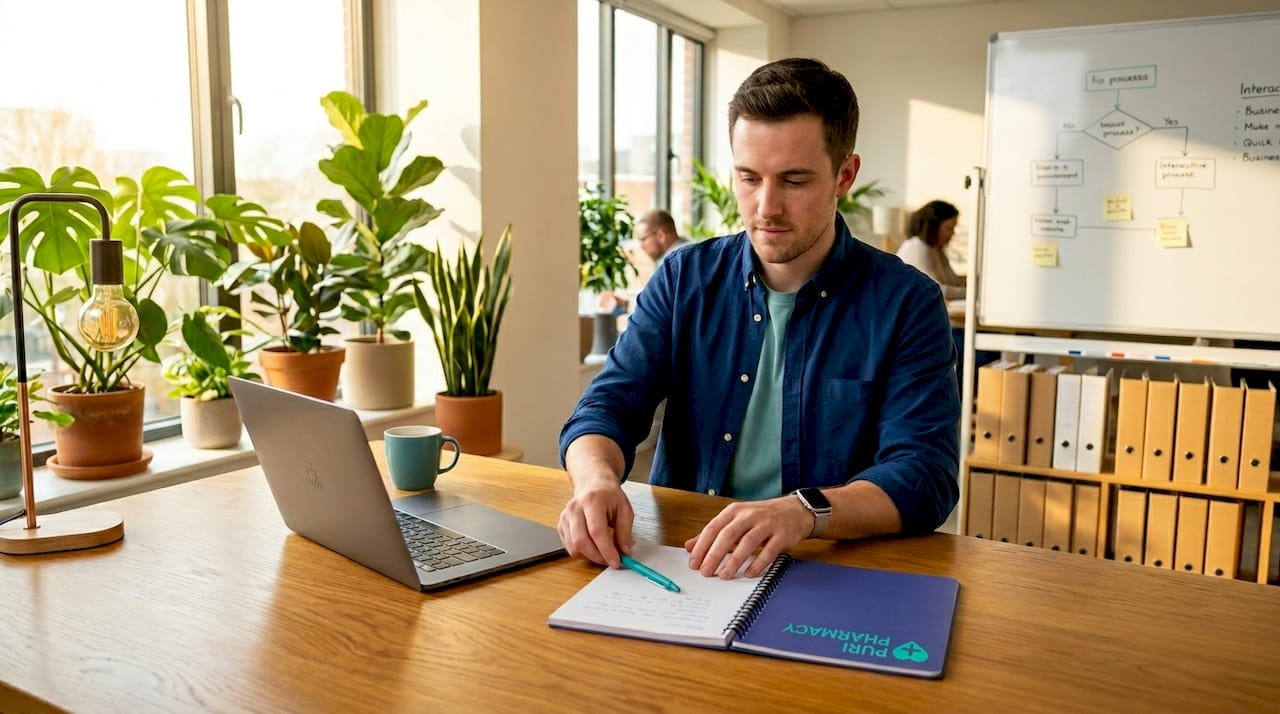
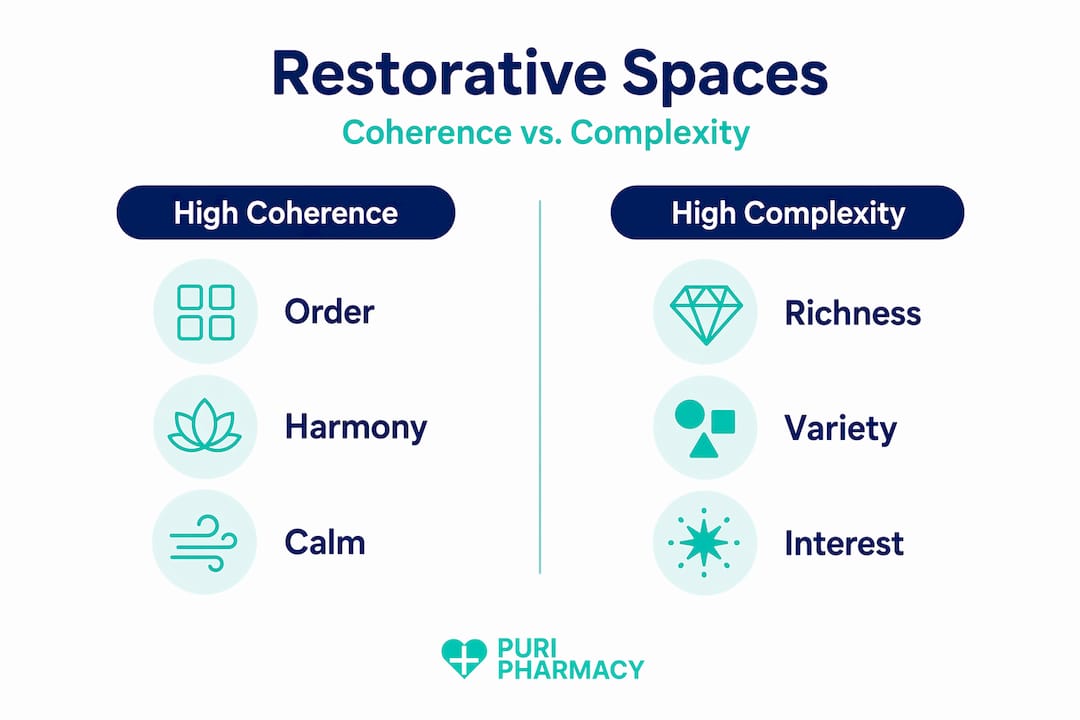
Two key properties of visual environments determine how restorative they are: coherence and complexity. Coherence refers to the legibility and order of a scene, how easily your brain can make sense of what it sees. Complexity refers to the richness and diversity of visual information on offer.
A study of 282 participants using virtual reality found that vegetated scenes with moderate-to-high coherence and complexity significantly improved both physiological stress markers (measured by skin conductance) and perceived restoration compared to control environments. It is not enough to add greenery. The way that greenery is organised matters too.
The interaction between coherence and complexity is the key insight here. Visual coherence enables the positive effects of complexity. Without some underlying order, visual richness tips into chaos and becomes cognitively overloading rather than restorative. Designers and architects who understand this principle can create spaces that genuinely support mental recovery.
| Environmental factor | Effect on wellbeing | Example |
|---|---|---|
| High coherence, low complexity | Calming but potentially dull | A plain white room with minimal furniture |
| Low coherence, high complexity | Stressful, cognitively overloading | A cluttered, disorganised workspace |
| Moderate coherence, high complexity | Most restorative and engaging | A well-ordered garden with varied planting |
| High coherence, high complexity | Stimulating and restorative | A thoughtfully designed public park |
A waterfront trail study further confirmed this pattern, connecting scenic beauty estimates directly to psychological restoration outcomes. The visual attributes of a landscape, its order, its variety, and its natural elements, predict how much cognitive and emotional recovery it supports.
Pro Tip: When redesigning a room or workspace, resist the urge to choose between minimalism and richness. Aim for ordered variety: clear visual structure with diverse, interesting details within that structure.
Arts engagement and mental wellness
Engaging with the arts, whether by attending a concert, joining a drawing class, or simply listening to music with intention, produces mental health benefits through multiple overlapping pathways. This matters because it explains why arts interventions work across such a wide range of psychological conditions and population groups.
Researchers have proposed an “arts exposome” framework to describe this. Rather than a single mechanism, arts engagement activates 50 distinct mechanisms simultaneously, spanning emotional processing, social bonding, identity formation, behavioural change, and cognitive engagement. These mechanisms reinforce each other, meaning the benefits compound rather than add up linearly.
The key pathways include:
- Emotional regulation: Arts provide a safe space to process difficult feelings, reducing anxiety and depression symptoms.
- Social connection: Participating in group arts activities builds a sense of belonging and shared identity.
- Cognitive stimulation: Creative engagement challenges the brain in ways that support attention, flexibility, and memory.
- Identity and meaning: Arts help people construct and express personal narratives, supporting psychological resilience.
- Physical expression: Performing arts in particular involve bodily movement, which has its own wellbeing benefits.
A systematic review of 27 studies on performing arts interventions in educational settings found consistent improvements in social bonding, coping skills, and emotional wellbeing. Notably, the benefits were more consistent for socially oriented outcomes, such as connection and group belonging, than for purely intrinsic psychological processes like optimism or identity.
This does not mean intrinsic benefits are absent. It means that if you want to use arts engagement to support your wellbeing, doing it with others is likely to produce the strongest results. A choir, a life drawing class, a community theatre group. The context amplifies the effect.
Individual and cultural differences in aesthetic experience
Not everyone experiences beauty in the same way or with the same intensity. The Global Flourishing Study, which surveyed 131,487 participants across 22 countries, examined demographic and childhood predictors of regular beauty experiences. The findings reveal a more complex picture than simple universal aesthetics.
Key patterns from the research include:
- Higher levels of education are consistently associated with more frequent and meaningful experiences of beauty.
- Both positive and adverse childhood experiences shape aesthetic sensitivity in adulthood, though through different mechanisms.
- Cultural background significantly affects which types of beauty are perceived and valued.
- Religious and spiritual frameworks often mediate the relationship between aesthetic experience and wellbeing.
Cross-cultural variation has real implications. An aesthetic intervention that feels restorative in one cultural context might feel alien or even uncomfortable in another. This is not a reason to avoid aesthetics in wellbeing planning. It is a reason to personalise it.
There is also an important distinction worth drawing here. Aesthetic appreciation linked to positive affect and reward is genuinely beneficial. Appearance-based social comparison, which can arise when aesthetics focuses on bodies and physical standards, is associated with stress and reduced wellbeing. Recognising which mode you are operating in matters. Looking at a beautiful painting is not the same psychological experience as comparing your body to a social media image, even if both involve “aesthetics” in the broadest sense.
Bringing aesthetics into your daily life
The research points clearly in one direction: aesthetics is a lever you can pull deliberately to support your mental and physical health. Here is how to do it practically.
- Audit your environments. Look at the spaces where you spend the most time and ask whether they offer both order and variety. Rearranging furniture, adding plants, or introducing artwork can shift the coherence-complexity balance meaningfully.
- Engage with arts regularly, not occasionally. The benefits of arts engagement accumulate through repeated, varied exposure. Build it into your routine rather than treating it as an occasional treat.
- Practise mindful aesthetic appreciation. Slow down when you encounter something beautiful and actually attend to the experience. This activates emotional regulation circuits and supports positive affect.
- Seek group creative contexts. As the research on performing arts shows, the social dimension of arts engagement substantially increases its wellbeing impact.
- Distinguish appreciation from comparison. When engaging with visual aesthetics, particularly around bodies and appearance, notice whether you are appreciating beauty or measuring yourself against it. The first supports wellbeing. The second undermines it.
- Use aesthetics in recovery contexts. If you are managing stress, illness, or mental health challenges, aesthetically rich environments and arts engagement are not luxuries. They are part of a genuinely evidence-based approach.
My take: aesthetics deserves a seat at the table
I have watched wellbeing conversations for years, and aesthetics almost always gets treated as the frivolous cousin of “real” mental health interventions. Exercise, sleep, therapy, nutrition. Fine. But beautiful surroundings? A regular visit to a gallery? That feels optional, even self-indulgent. I think this framing is wrong, and the science is beginning to make that case more forcefully.
What strikes me most about the neuroaesthetics research is how low the barrier to entry actually is. You do not need specialist equipment or a clinical programme. You need intention. The decision to make your immediate environment visually coherent and interesting. The habit of engaging with music, art, or nature in a way that is genuinely attentive rather than passive.
In my experience, the people who integrate aesthetic awareness into their lives, who care about what their home looks, sounds, and feels like, who make time for arts engagement, tend to have greater psychological resilience. Not because beauty solves problems, but because it consistently replenishes something. I think that deserves to be taken seriously.
— R
How Puripharmacy supports your overall wellbeing
Wellbeing is not one thing. It is sensory, psychological, physical, and environmental. At Puripharmacy, our services are built around that understanding. When your senses are working well, everything from aesthetic appreciation to social engagement becomes more accessible.

Our professional earwax removal in Yiewsley service addresses one of the most commonly overlooked contributors to sensory comfort. Hearing clearly affects how you engage with music, conversation, and your surroundings. It is a small thing with a disproportionate impact on quality of life. We also offer earwax removal near Beaconsfield for patients across west London and the surrounding area. Alongside this, Puripharmacy provides weight management support, travel vaccines, and aesthetic treatments, all delivered by professionals who understand that health is holistic. Visit us to talk through what your wellbeing picture looks like.
FAQ
What is the role of aesthetics in wellbeing?
Aesthetics plays a functional role in wellbeing by activating brain reward and emotional regulation circuits, reducing physiological stress, and supporting motivation. It is not merely decorative but a measurable contributor to mental and physical health.
How do aesthetic environments reduce stress?
Environments with moderate-to-high visual coherence and complexity, particularly those featuring natural elements, measurably reduce physiological stress markers and improve perceived restoration, as shown in VR-based research with over 280 participants.
Can arts engagement genuinely improve mental health?
Yes. Research identifies up to 50 distinct mechanisms through which arts engagement benefits mental health, spanning emotional processing, social bonding, and cognitive stimulation. Group arts participation shows the most consistent evidence for improved wellbeing.
Does everyone benefit equally from aesthetic experiences?
No. Education level, childhood experiences, and cultural background all influence how strongly someone benefits from aesthetic experiences. The Global Flourishing Study across 22 countries found significant demographic variation in the frequency and impact of beauty experiences.
What is the difference between aesthetic appreciation and appearance comparison?
Aesthetic appreciation, focused on experiencing beauty in art, nature, or environments, is linked to positive affect and reward. Appearance-based social comparison, particularly around bodies, is associated with increased stress and reduced self-worth. The distinction is psychologically significant.