Vaccine passports explained: Easy verification for UK travel

TL;DR:
- Vaccine passports serve as official proof of vaccination, tests, or recovery, facilitating international travel. Most now rely on digital QR codes, with paper backups recommended, to verify compliance efficiently at borders. As requirements evolve, staying updated through trusted sources and consulting local health services ensures smooth, stress-free travel in 2026 and beyond.
Vaccine passports have caused no small amount of confusion since they first appeared on the travel scene. Whether you’re preparing for a long-haul holiday, a quick European break, or simply trying to understand what documentation your destination actually requires, the terminology alone can feel overwhelming. These documents are not just relics of the COVID-19 era. In 2026, verifiable digital certificates with QR codes remain a standard part of international travel, and understanding how they work can save you significant stress at the airport.
Table of Contents
- What exactly is a vaccine passport?
- How do vaccine passports work when you travel?
- Vaccine passport requirements: COVID-19 and beyond
- Tips for securing and using your vaccine passport
- A closer look: Why vaccine passports matter in 2026
- How Puri Pharmacy supports your vaccine passport needs
- Frequently asked questions
Key Takeaways
| Point | Details |
|---|---|
| Digital is now standard | Most vaccine passports use secure QR codes for hassle-free travel checks. |
| Requirements vary by destination | Always confirm if you need a COVID-19, yellow fever, or other specific certificate before travelling. |
| Pharmacies offer expert help | Local pharmacies can provide and update vaccine passport documents for travel. |
| Keep your passport up to date | Regularly check expiry dates and update your certificate for new vaccines or boosters. |
What exactly is a vaccine passport?
A vaccine passport is an official document, either digital or paper based, that confirms your vaccination status for one or more diseases. It acts as proof that you have received specific vaccines, and in some cases, it may also show recent negative test results or confirmed recovery from an illness. Think of it as your health credentials for travel.
The term itself covers several different formats and names. You may have heard it called a health pass, a digital COVID certificate, a vaccination certificate, or an immunisation record. These labels are sometimes used interchangeably, though they can refer to slightly different things depending on the country or context.
Here is what a typical vaccine passport may include:
- Proof of vaccination: Which vaccines you’ve received, the dates, and the administering provider
- Test results: A negative PCR or lateral flow test, sometimes required even if vaccinated
- Recovery confirmation: Proof you have recovered from a specific illness within a recent timeframe
- Personal identification details: Your name, date of birth, and sometimes a passport number to match the document to you
- QR code: A scannable code that allows authorities to verify the authenticity of your document electronically
As airline credentialing systems have become more sophisticated, the digital format has largely replaced paper records for international travel. Paper backups still have value, but most border agencies and airlines now expect a digital certificate.
“A vaccine passport is not a new idea. Yellow fever certificates have been required for travel to certain countries for decades. What changed recently is the scale and speed at which digital systems were built to handle COVID-19.”
The digital version is now so standard that many countries will not accept a handwritten or informal paper record. For West London residents heading abroad, understanding the digital format is essential. If you’re unsure about your COVID-19 documentation status, it’s worth checking COVID-19 testing options to confirm what evidence you may need before departure.
Pro Tip: Always carry a printed paper copy of your vaccination certificate as a backup, even if you have a digital version. Phones run out of battery and apps crash at the worst possible moments.
How do vaccine passports work when you travel?
With a basic understanding in place, let’s move to the step-by-step process of how these vaccine passports function during travel from or to the UK.
The process is more straightforward than it might appear. Here is a typical journey:
- Check your destination’s requirements: Before anything else, visit your destination country’s official government website or your airline’s health requirements page to find out what vaccine certificates are needed.
- Download the relevant app or access your NHS records: For COVID-19, this usually means accessing your NHS app. For other vaccines, you’ll need official documentation from the clinic or pharmacy that administered them.
- Obtain your digital certificate: Your certificate will include a QR code that authorities can scan to verify authenticity. This is issued automatically for COVID-19 via the NHS app.
- Present your certificate at check-in: Many airlines now require you to show vaccination or test status at check-in, not just at the destination border.
- Border control scans your QR code: When you arrive, border authorities use an electronic reader to scan and validate your certificate. The result appears on their screen within seconds.
- Outcome: If your documents meet the local requirements, you proceed normally. If not, you may face quarantine requirements, fines, or even be refused entry.
Digital systems have made QR code verification extremely quick at borders. The EU Digital COVID Certificate, for instance, can be scanned and verified in under five seconds. Authorities see only what they need: whether you meet the entry condition. They cannot access your full medical history.
Here is a quick comparison of how different travel stages use your vaccine passport:
| Travel stage | What is checked | Format accepted |
|---|---|---|
| Online check-in | Vaccination or test status | Digital certificate or app |
| Airport check-in desk | Document and QR verification | Digital or paper |
| Departure gate | Spot checks possible | Digital preferred |
| Destination border control | Full QR scan and verification | Digital strongly preferred |
| Venue or event access | Proof of vaccination or test | Either, depends on country |
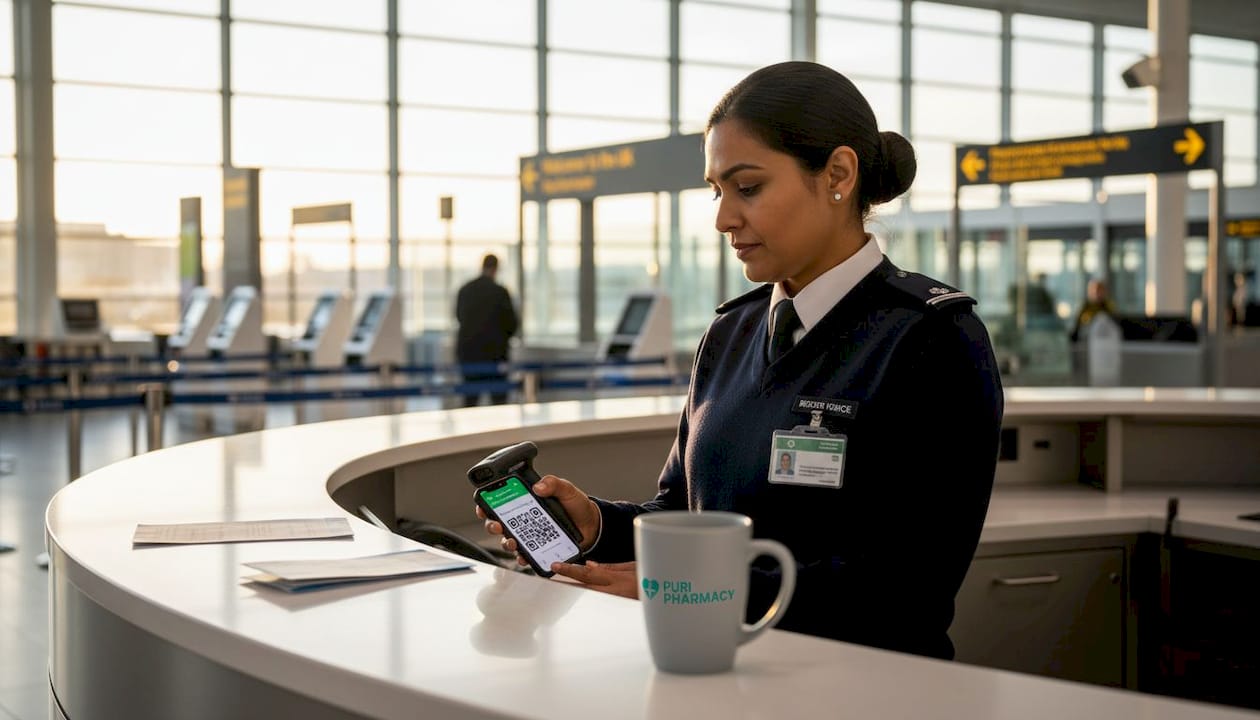
IATA Travel Pass has become one of the key tools airlines use to aggregate and verify health requirements, helping passengers and airlines know in advance what is needed before they even reach the airport.
Pro Tip: Download a PDF of your certificate to your phone’s storage rather than relying solely on an app. This way, you can access it even without an internet connection or mobile signal.
What happens if requirements are not met? Outcomes vary by country. Some destinations impose a short quarantine period. Others issue on-the-spot fines. A small number of countries may refuse entry entirely, which means a return flight at your own expense. It is far simpler to check your COVID-19 travel test options well ahead of departure than to deal with the consequences at the border.
Vaccine passport requirements: COVID-19 and beyond
Since requirements can differ by destination or disease, it’s essential to compare how COVID-19 and other types of vaccine certificates function in the real world.
One of the most common mistakes travellers make is assuming all vaccine passports are about COVID-19. They are not. Yellow fever certificates have been a legal requirement for travel to parts of Africa, South America, and Southeast Asia for well over fifty years. Meningitis vaccination is required for entry to Saudi Arabia, particularly during Hajj and Umrah seasons. Some countries still request proof of polio vaccination for travellers arriving from higher-risk regions.
The key distinction, as vaccination proof systems now make clear, is between destination-specific disease requirements and the broader COVID-19 digital certificate infrastructure. They operate in parallel but serve different purposes.
Here is how they compare:
| Feature | COVID-19 digital certificate | Yellow fever certificate |
|---|---|---|
| Format | Digital QR code, app-based | Paper booklet (International Certificate of Vaccination) |
| Issuing body | NHS or national health authority | Approved vaccination centre |
| Validity | Varies by country requirement | 10 years (lifetime in many countries) |
| Required for | Entry to many countries, venues, events | Specific countries in tropical regions |
| Accepted by | Governments, airlines, venues | Governments, border health officials |
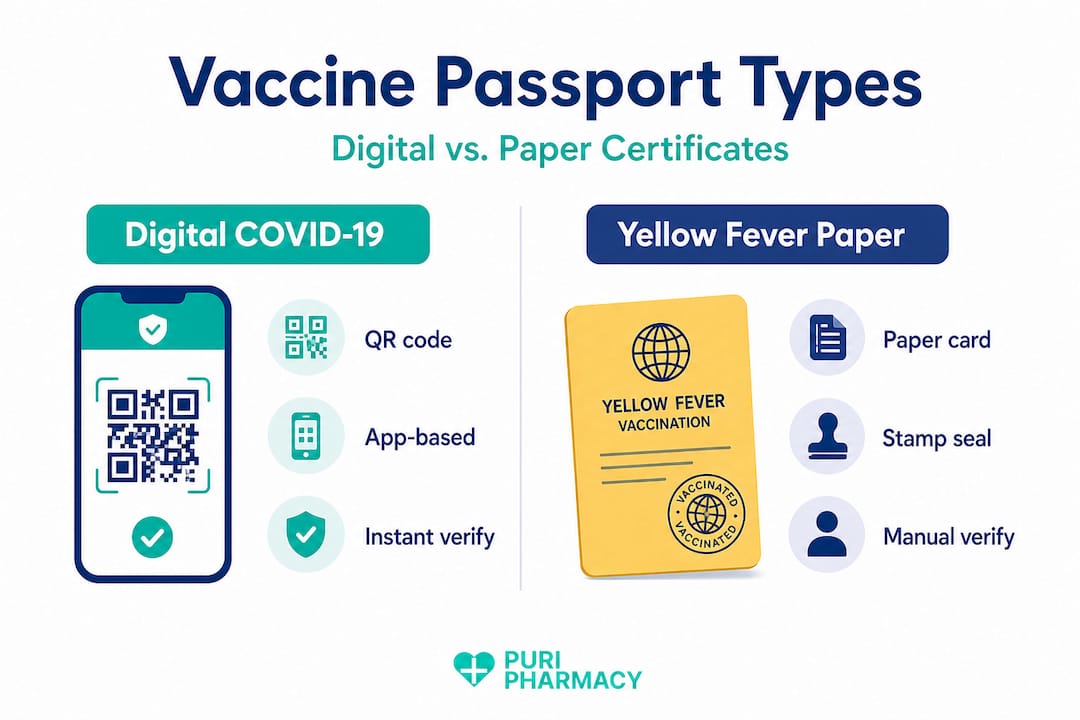
For West London residents planning travel to tropical destinations, yellow fever vaccination is particularly important. It must be administered at an approved travel clinic or pharmacy, and the paper certificate must be presented physically at border control. No QR code exists for yellow fever. This is a crucial detail that often surprises travellers.
If you are unsure which certificates your destination requires, here are the most reliable ways to check:
- FCDO travel advice: The UK Foreign, Commonwealth and Development Office publishes destination-specific health requirements
- Your airline’s website: Most major carriers list health and documentation requirements during booking
- The destination country’s embassy website: Official and up to date
- A travel health consultation: Pharmacies and travel clinics can advise based on your itinerary
What if you lose your vaccine certificate? For COVID-19 digital certificates, you can usually re-download through the NHS app using your login credentials. For yellow fever certificates, contact the clinic that originally administered the vaccine. They maintain records and can issue a replacement, though some processing time is involved. For this reason, many experienced travellers keep a secure digital scan of all their paper certificates stored in cloud storage.
You can visit our pharmacy locations in West London for travel vaccine consultations and to ensure your certificates are in order before you fly.
Tips for securing and using your vaccine passport
Now that you’re clear on the options and requirements, here are practical tips for securing, updating, and using your vaccine passport for stress-free travel.
Knowing where to obtain your vaccine passport is the first practical step. Here is the process most West Londoners will follow:
- COVID-19 certificates: Access via the NHS app on your smartphone. If you are not registered, set up an NHS login using your NHS number, which you can find on any letter from your GP or hospital.
- Yellow fever and other travel vaccines: Visit a registered travel vaccination clinic or pharmacy. Puri Pharmacy in West London is an approved provider. The certificate is issued on the same day as vaccination.
- Download and save your digital certificate: From the NHS app, save your certificate as a PDF and store it in multiple places: your phone, email, and a cloud service like Google Drive or iCloud.
- Print a paper copy: Keep this with your passport in your travel documents folder.
- Update your certificate after boosters: If you receive a booster dose, check that your NHS app reflects the updated vaccination record before travel. There can be a short delay before records update.
As digital certificate verification becomes more embedded in travel, staying on top of updates is increasingly important. Countries can change their requirements with relatively little notice, so checking your documentation two to three weeks before travel gives you time to act if anything needs updating.
Technical troubleshooting is an area many travellers overlook until they are standing at a check-in desk. If your QR code fails to scan, the most common reasons are:
- Screen brightness: Turn your screen brightness to maximum before presenting for scanning
- Expired certificate: Check the validity date on your document
- App version: Ensure your NHS app is fully updated
- Poor screenshot quality: Use the original PDF rather than a photo of your screen
Pro Tip: If you experience persistent issues with your NHS app or vaccination records, your local pharmacy can often help you retrieve and print your certificate. Pop in ahead of your travel date rather than leaving it until the last minute.
Visit our West London pharmacy locations for hands-on help with vaccine certificates, including assistance with printing, verification, and travel health advice.
A closer look: Why vaccine passports matter in 2026
Having covered the practical aspects, let us now explore why vaccine passports have become so central and what the future may hold.
When vaccine passports first appeared in 2021, many people viewed them as a temporary inconvenience, something to tolerate until the pandemic passed and travel returned to normal. What has actually happened is more interesting. Rather than disappearing, the infrastructure built for COVID-19 certificates has been adapted and expanded. Countries have recognised that verifiable digital health documents serve a broader purpose than one pandemic.
The honest truth, from our experience working with West London travellers over the past several years, is that confusion persists not because the systems are particularly complicated, but because no one explained them clearly from the start. People turned up at airports with screenshots of emails, printed NHS letters, and handwritten notes, and were turned away. That confusion caused real harm: missed holidays, disrupted business trips, significant financial loss.
What we see now is a much more settled situation. The digital certificate model works. QR codes are quick to scan, hard to forge, and easy to carry. The challenge in 2026 is keeping up with which countries require which documents, and ensuring that certificates are current. This is where the value of a local travel health consultation becomes obvious. Rather than spending two hours navigating government websites at midnight before a trip, you can sit down with someone who knows the requirements and leave with everything sorted.
Privacy remains a legitimate concern. Many people are understandably uncomfortable with the idea of health information being scanned at borders. It is worth knowing that the QR code verification systems used at borders reveal only the minimum necessary information: a pass or fail against the specific entry requirement. Your full vaccination history, medical records, and personal health data are not accessible to the scanning officer.
The community impact in West London has been notable. As a diverse area with a high proportion of international travellers, residents here have had to navigate a particularly complex web of destination requirements. We have seen families nearly separated at airport check-ins, and international workers caught off guard by changing rules. Better local access to clear information and efficient vaccine services genuinely changes outcomes for people.
The future direction points towards integrated health travel documents, where vaccination records, test results, and potentially other health requirements live in a single verified digital wallet. Some airlines and destination countries are already moving in this direction. For West Londoners, staying informed and keeping documentation updated is not just a bureaucratic task. It is how you protect your travel plans.
How Puri Pharmacy supports your vaccine passport needs
Preparing for travel involves more than packing your suitcase. At Puri Pharmacy in West London, we help travellers get every health document in order before they fly.
Our travel health services cover vaccinations for yellow fever, typhoid, hepatitis A and B, meningitis, and more, all with same-day certification from our approved clinic. We also offer a flu vaccination service that is particularly relevant for travellers heading into peak flu season. If you need COVID-19 testing for a destination that still requires a negative test result, we can provide that efficiently and with results turnaround to suit your travel schedule. We can also help you access and print your vaccine certificates, troubleshoot NHS app issues, and advise on exactly what your destination requires. Book a travel health consultation at one of our West London locations and travel with confidence.
Frequently asked questions
Is a vaccine passport the same as an NHS COVID Pass?
An NHS COVID Pass is a specific type of vaccine passport for COVID-19, while other vaccine passports cover diseases like yellow fever, as proof of vaccination requirements vary by destination and disease type.
Do I need a vaccine passport to travel from the UK in 2026?
It depends entirely on your destination, as airline health credentialing and individual country entry rules still require proof of certain vaccinations for many international routes.
How can I get a digital vaccine passport?
You can obtain it via the NHS app, a registered travel clinic, or a pharmacy, and it will be issued as a verifiable digital certificate with a QR code for electronic verification at borders.
What should I do if my QR code doesn’t scan?
Increase your screen brightness, ensure your NHS app is updated, and download a fresh PDF copy. If issues persist, your local pharmacy can help you retrieve and print a valid backup copy.