Weight loss explained: How modern science drives real results

TL;DR:
- Weight loss is biologically complex, involving metabolic adaptation, hormonal shifts, and subconscious activity reduction.
- Modern medications like Wegovy and Mounjaro help counteract these resistance mechanisms and improve long-term results.
Most people approach weight loss thinking it’s a simple maths problem: eat less, move more, and the results will follow. If only it were that straightforward. The reality is that the body actively resists weight loss through powerful biological mechanisms, including a reduced resting metabolic rate (RMR), hormonal disruption, and unconscious drops in daily movement. Understanding these forces is the first step to working with your body rather than against it. And with modern treatments like Mounjaro and Wegovy now accessible in West London, the odds have genuinely shifted in your favour.
Table of Contents
- The science: Why does weight loss feel so hard?
- How hormones hinder your weight loss progress
- Treatment options: From lifestyle changes to next-gen medications
- Why do weight loss plateaus and rebounds happen?
- What most people don’t realise about sustainable weight loss
- Get expert support for your weight loss journey
- Frequently asked questions
Key Takeaways
| Point | Details |
|---|---|
| Weight loss is physiological | It’s primarily your biology, not just willpower, that resists slimming down. |
| Hormones drive hunger | Changes in hormones explain persistent cravings and plateaus after dieting. |
| GLP-1s boost results | New medications like Wegovy can double or triple weight loss when paired with healthy habits. |
| Sustainable habits are key | Combining treatments with lifestyle changes prevents rebound and supports long-term success. |
The science: Why does weight loss feel so hard?
To clarify why so many people struggle with diets, let’s examine what is actually happening inside the body during a calorie restriction period. Weight loss requires you to burn more energy than you consume. That much is true. But your body doesn’t sit quietly while this happens. It fights back with a series of compensatory adaptations that steadily erode your progress.
The first and most significant response is metabolic adaptation. When you cut calories, the body reads this as a threat to survival and responds by lowering the resting metabolic rate by 10 to 15%. This means that if you were burning 2,000 kcal per day before your diet, you may only burn 1,700 to 1,800 kcal doing exactly the same activities. The gap between what you eat and what you burn narrows, slowing weight loss dramatically.
The second adaptation is even sneakier. Your body reduces non-exercise activity thermogenesis, or NEAT. This is the energy burned through everyday movements like fidgeting, walking to the kettle, or shifting in your chair. You don’t decide to move less. You just do, entirely subconsciously. These small movements can account for hundreds of calories per day. When they reduce, the deficit you worked hard to create quietly disappears.
“The body responds to caloric restriction not just with hunger, but with a coordinated physiological effort to restore lost weight, reducing energy output at multiple levels simultaneously.”
This table summarises the key adaptations the body makes during calorie restriction:
| Mechanism | What happens | Estimated impact |
|---|---|---|
| Resting metabolic rate | Decreases significantly | 10 to 15% reduction |
| NEAT | Falls subconsciously | 200 to 300 kcal per day |
| Hunger hormones | Ghrelin rises, leptin falls | Increased appetite |
| Energy expenditure | Total daily burn decreases | Stalls calorie deficit |
Key barriers to weight loss are therefore:
- Metabolic slowdown that makes maintaining a deficit harder over time
- Reduced NEAT that occurs without any conscious decision
- Hormonal shifts that amplify hunger and cravings
- Psychological fatigue from constant food vigilance
These are physiological barriers, not character flaws. If you have struggled with diets in the past, your body was working against you more than your willpower was letting you down. Many people find additional structure through the NHS Digital Weight Management programme, which combines behavioural coaching with professional oversight to help navigate these challenges.
How hormones hinder your weight loss progress
With the basics of energy and metabolism covered, we next explore how powerful hormonal forces keep the odds stacked against sustained weight loss. This is arguably the most underappreciated aspect of the entire process, and it explains why so many people feel ravenous, obsessed with food, and defeated even when they are doing everything “right.”
Two hormones sit at the centre of this challenge. Leptin is produced by fat cells and tells your brain you are full and have enough stored energy. As you lose fat, leptin levels fall. Your brain then misreads this as starvation and ramps up hunger signals. At the same time, ghrelin, the hormone that stimulates appetite, rises sharply. The result is a relentless, biologically driven urge to eat more.
What makes this especially frustrating is the duration of these changes. Research from Biggest Loser participants showed that contestants who lost significant weight had their RMR remain suppressed for up to six years after the programme ended. This isn’t a short-term discomfort. These hormonal changes can linger for well over a year after active dieting stops.
“Key hormones including leptin, ghrelin, GLP-1, and GIP are disrupted after weight loss in ways that amplify hunger, increase preference for high-calorie foods, and make maintenance feel like a constant uphill battle.”
The hormones GLP-1 (glucagon-like peptide-1) and GIP (glucose-dependent insulinotropic polypeptide) are also suppressed. These gut hormones normally help regulate satiety and blood sugar after meals. When they are reduced, it becomes harder to feel satisfied from food, and the brain develops a heightened sensitivity to calorie-dense, rewarding foods. This phenomenon is sometimes called “food noise,” a persistent mental preoccupation with eating that has nothing to do with genuine hunger.
Key hormonal disruptions during and after weight loss:
- Leptin falls, removing the body’s primary fullness signal
- Ghrelin rises, creating persistent and intense hunger
- GLP-1 and GIP are suppressed, weakening post-meal satisfaction
- Insulin sensitivity may remain altered for months
- Food noise intensifies, making high-calorie foods feel irresistible
Staying informed about the latest obesity treatment news can make a genuine difference, especially as new research continues to refine how we understand and address these hormonal barriers.
Treatment options: From lifestyle changes to next-gen medications
With a grasp of the science and hormones, let’s see how different solutions measure up against these formidable biological forces. Not all weight loss interventions are created equal, and the evidence for each is quite clear.
Lifestyle interventions including dietary changes, increased physical activity, and behavioural therapy typically produce weight losses of 3 to 10% of body weight. The challenge is maintenance. Fewer than 20% of people maintain their weight loss at the five-year mark. These approaches are valuable and essential foundations, but for many they simply cannot overcome the physiological forces described above.
Bariatric surgery remains the most effective single intervention for severe obesity. Weight loss of 25 to 35% is typical, and roughly 60% of patients maintain meaningful results long-term. The mechanisms include restriction of food intake, hormonal changes similar to those targeted by medication, and altered gut signalling.

GLP-1 receptor agonists, including semaglutide (Wegovy) and tirzepatide (Mounjaro), represent the biggest shift in obesity medicine in decades. These medications mimic the gut hormones that are blunted during weight loss, directly addressing the hormonal resistance discussed earlier. First-generation GLP-1 drugs achieve around 15% weight loss, whilst the newer dual-action medications reach up to 22.5%. You can learn more about accessing Wegovy weight loss treatment through a qualified prescriber.
| Method | Average weight loss | Long-term maintenance |
|---|---|---|
| Lifestyle only | 3 to 10% | Less than 20% at 5 years |
| GLP-1 medications (1st gen) | Around 15% | Moderate with continued use |
| GLP-1 medications (2nd gen) | Up to 22.5% | Higher with lifestyle support |
| Bariatric surgery | 25 to 35% | Around 60% long-term |
- Lifestyle changes: Most accessible, low risk, but limited effectiveness alone for many people
- GLP-1 medications: Strong evidence base, helps address hormonal resistance, requires sustained commitment
- Bariatric surgery: Highest effectiveness, but invasive and not suitable for everyone
GLP-1 medications also have an additional benefit. They tend to preserve lean muscle mass during weight loss better than calorie restriction alone, which matters enormously for long-term metabolic health and physical function.
Pro Tip: Weight regain often occurs after stopping GLP-1 medication if healthy lifestyle habits are not firmly established. Think of medication as a powerful tool that gives you breathing space to build those habits, not a permanent fix on its own.
Why do weight loss plateaus and rebounds happen?
Knowing the available options, it’s vital to understand why setbacks happen and what you can genuinely do to safeguard your progress over the long term. Plateaus and regain are not signs of failure. They are predictable, biological responses.
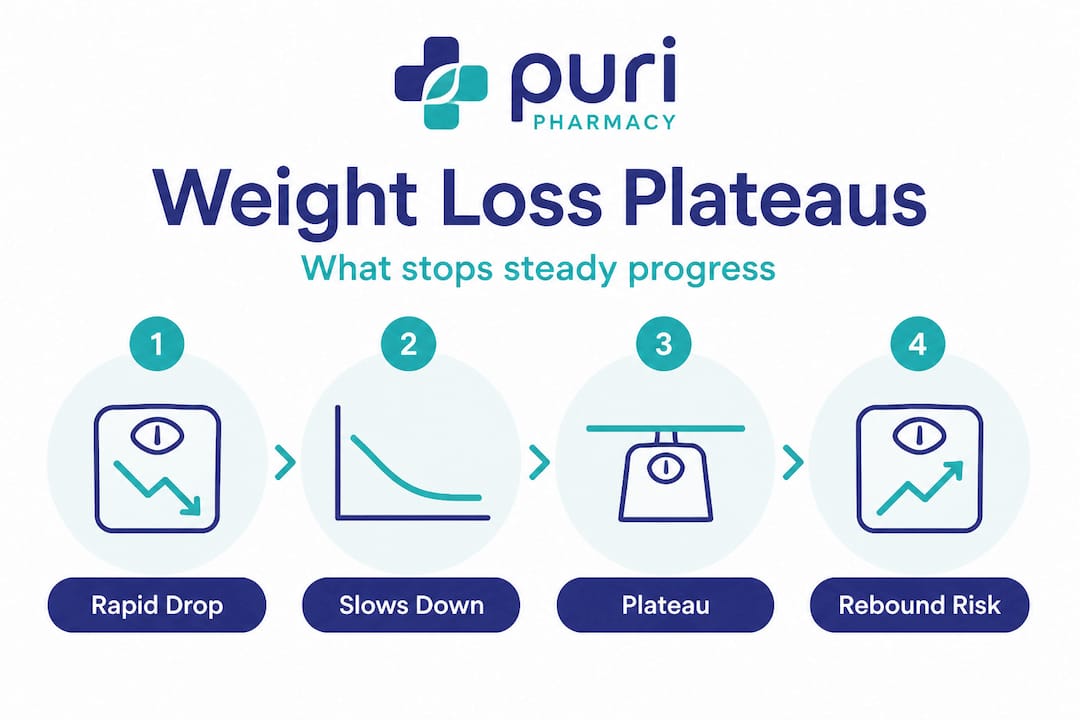
Early in a weight loss programme, the scale often drops quickly. Much of this initial loss is water weight and glycogen depletion, not fat. When the rate of loss then slows dramatically, people often think they have failed or their method has stopped working. In reality, the body is simply adapting through water and muscle shifts rather than true fat regain. This is a crucial distinction.
Yo-yo dieting, the cycle of losing and regaining weight repeatedly, is particularly damaging to metabolic health. Each cycle tends to worsen metabolic adaptation and may increase the proportion of fat to muscle regained after each round. The body becomes progressively more efficient at storing fat and more resistant to losing it, creating a worsening pattern over time.
Medical conditions including hypothyroidism, polycystic ovary syndrome (PCOS), and certain medications such as antidepressants and corticosteroids can complicate weight loss significantly. If you are struggling despite genuine effort, these factors are worth investigating with your GP or prescribing pharmacist.
Main reasons for plateaus and weight regain:
- Metabolic adaptation reducing total daily energy expenditure
- Muscle loss lowering the baseline calorie burn rate
- Hormonal shifts increasing hunger and preference for calorie-dense foods
- Returning to old habits once motivation or medication support reduces
- Underlying medical conditions affecting metabolism and fat storage
- Psychological factors including stress and poor sleep disrupting cortisol levels
Pro Tip: Research suggests that maintaining a “high flux” state, where both calorie intake and physical activity are relatively high, is more sustainable for keeping weight off than extreme restriction. Moderate, consistent exercise allows you to eat more while staying in energy balance, which makes the process far more liveable. Local weight loss support can help you design a sustainable approach, and exploring longevity tools can add useful strategies for long-term health optimisation.
What most people don’t realise about sustainable weight loss
Here is something that isn’t said nearly enough in conversations about weight management: relying solely on willpower is not a strategy. It ignores decades of biological science. When someone regains weight, the instinct from society, and sometimes from healthcare providers, is to assume a lack of effort or discipline. The evidence simply does not support that view.
What the research actually shows is that most weight regain is physiological. The body mounts a coordinated, multi-system response to restore its previous state. Hormones shift, metabolism slows, movement decreases, and food becomes more mentally distracting. This happens whether you are highly motivated or not. It is a feature of human biology, not a personal failing.
The most effective, sustainable approach we see in practice combines three things: medical tools that directly address the hormonal environment, consistent lifestyle habits that support a healthier baseline, and a clear understanding of how the body adapts over time. None of these three works as well in isolation as they do together.
There is also an uncomfortable truth about the true value of Wegovy and similar treatments. These medications are not shortcuts. They are pharmacological tools that level a very uneven playing field, giving people the physiological breathing room to make lasting changes. The stigma that surrounds medication-assisted weight loss often deters people who would genuinely benefit and who have already tried everything else.
In West London, where busy schedules, stress, and limited time for meal planning are daily realities, having access to properly supervised, evidence-based support is not a luxury. It is a practical necessity for many. The goal is not a perfect diet or a gruelling gym routine. It is a realistic, informed strategy that works with the body you have.
Get expert support for your weight loss journey
If you have read this far, you already understand that weight loss is more complex than popular culture suggests. The good news is that you do not have to navigate it alone, and you do not have to rely on outdated advice.

At Puri Pharmacy in West London, we offer personalised weight loss support that reflects the latest evidence. Whether you are exploring Wegovy as a clinically supervised option, looking for a structured starting point through our weight loss clinic, or want to access the structured NHS digital programme to build sustainable habits, we can guide you towards the right path. Our team works with you as an individual, not as a number on a scale, with the expertise and empathy the science demands.
Frequently asked questions
Why does my weight loss slow down after the first few weeks?
Weight loss slows because RMR drops 10 to 15% after dieting begins, meaning the body burns fewer calories daily, and hunger hormones simultaneously rise, narrowing the calorie deficit that drives fat loss.
How effective is Wegovy compared to dieting alone?
Wegovy enables 15 to 22.5% weight loss compared to the 3 to 10% typical of lifestyle changes, with significantly better long-term outcomes when healthy habits are maintained alongside the medication.
What causes weight loss plateaus during a programme?
Plateaus are largely explained by water and muscle loss rather than fat, whilst ongoing metabolic adaptation continues to lower the body’s daily calorie requirements, making the original deficit insufficient.
Can medications prevent weight regain after stopping?
GLP-1 medications do help preserve lean mass and reduce regain risk, but if previous habits return after stopping treatment, weight recovery is very common and can be rapid.